

Advertiser content
Does your land have potential for housing?
This is probably the most common question any town planner gets asked.
With the constant cries from government for more homes and newspaper headlines reporting on the rapid expansion of our towns and villages, you would be forgiven for thinking that all land can be developed.
The reality is that there are no fixed rules but there are some key factors which make some sites more suitable than others.
© Catesby Estates PLC
Location, location, location
To coin a phase, location is the most important factor when determining the suitability of a site as delivering sustainable development is at the heart of decision and policy making.
Whilst the government now determines the number of homes a council is required to deliver, it is for the individual authority to determine where those houses are to go.
Each council will set out a spatial strategy; those settlements with the greatest access to services and facilities such as schools, jobs, shops and public transport links will be considered the most suitable for housing.
Smaller towns, villages and rural communities should also be allowed to grow to ensure their continued vitality, however this will be proportionate to the size of the settlement.
A good indicator for the suitability of a location is whether the settlement has had any new housing in recent years and if so how much?
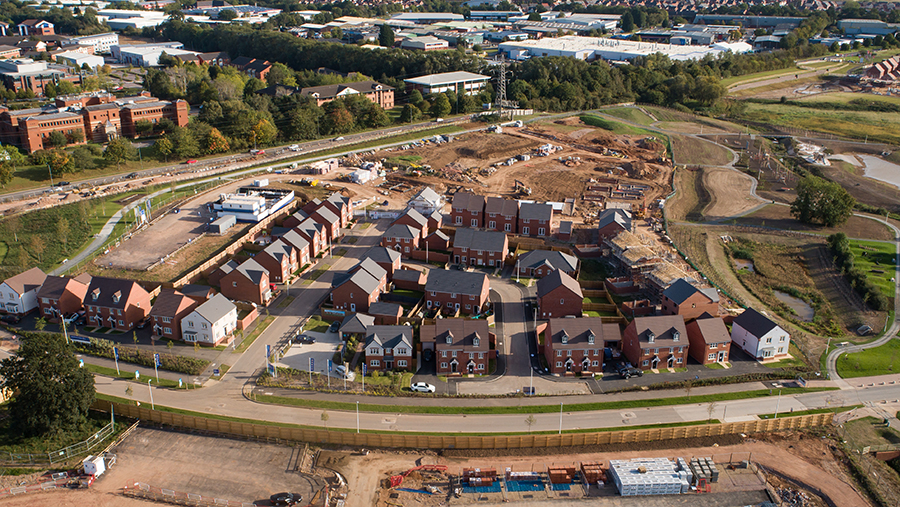
Does the land adjoin the settlement edge?
New development should connect into the existing built form of the village or town. However where larger number of houses are required consideration should be given to whether the land could form part of a wider development utilising adjoining land which better relates to the settlement edge.
© Catesby Estates PLC
Will it impact the wider landscape?
The matter of landscape impact is a subjective matter which is open to considerable debate.
Landscaping schemes and careful design can help soften the visual appearance of development, however land which is already well contained by existing trees and hedgerows will have a head start over those sites which are more open to the wider landscape.
Planning policy provides the highest protection to areas within national parks and Areas of Outstanding Natural Beauty. The South East is a very constrained area containing large areas of AONB (Area of Outstanding Natural Beauty), National Parks and Green Belt.
This provides particular opportunities to those sites which are not covered by these designations. Yet with the high level of housing need, councils will need to deliver housing in these areas as well.
Other matters to consider is the proximity of the site to listed buildings and conservation areas.
This doesn’t necessarily preclude development but it is an important consideration when considering the suitability of the site.
Is the site deliverable?
Can the site be accessed and does it flood are also key. Does the site access onto a suitable road and can pedestrians safely access nearby facilities?
Proposals can provide highway improvements such as new accesses and pavements but if the site is only accessed via a single track lane then it is unlikey suitable access can be achieved without requiring third party land.
Flooding is another hot topic. All land is categorised into Flood Zones 1, 2 and 3. Flood Zone 1 is calculated to have the lowest risk of flooding and is therefore suitable for housing.
Flood Zones 2 and 3 are generally considered unsuitable unless it can be proven that there are no suitable alternative sites. The Environment Agency is a good source of information and has a flood map of the UK.
Get involved
Your site can have all the attributes but unless the council know it is available then it is unlikley to receive that golden ticket.
Councils will run ‘Call for Sites’ when preparing their Local Plans, this provides landowners with the opportunity to inform the council that their land is available for development.
Landowners should also check to see whether a Neighbourhood Plan is being prepared for the area and look to get involved.
However there is no magic formula and we shouldn’t underestimate the importance of a good promotion strategy and a carefully designed scheme.
Could your land have development potential?
Find out more about land promotion and its benefits for landowners:
Email: info@catesbyestates.co.uk
Or call us on 01926 836910
Provided by
Strategic land promotion: Maximising land value for farmers and landowners.
Catesby Estates works in partnership with farmers and landowners to promote land through the planning system for new homes. We are highly regarded as one of the foremost experts in strategic land promotion and infrastructure delivery in the UK.
At no cost to you we use our in-house expertise and financial resources to fund the land promotion. We obtain planning consent and then market the land to housebuilders or developers securing the highest possible financial return for you.