

Flood insurance rules stalled
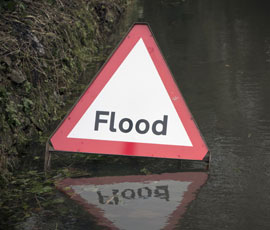
Farmers could be left in limbo over flood insurance as the government looks set to fail to come to an agreement with insurers.
Flood insurance rules were supposed to change in July, after a 13-year-old agreement between the government and insurers comes to an end.
However, is it widely thought no agreement will be reached before July, and even if a deal were made now, it could not be on the statute books by the end of June when the current rules expire.
“It appears we are little closer to a solution than when the plan was hatched five years ago,” said Neil Gladwin, director of Chesterton Humberts’ Taunton office.
This news comes after the chief executive of Axa UK, Paul Evans, warned that property would become “unsellable” if a deal was not reached.
Flood insurance
Flood insurance is provided under the Statement of Principles (SoP), which expires in June 2013. This was a temporary agreement reached in 2000 between the insurance industry, the UK government and the devolved governments to make insurance available for those in flood-risk areas.
In exchange, the government agreed to improve flood defenses in those areas at significant risk in the next five years.
The government described the SoP as a temporary “sticking plaster”, which was not a long-term solution for the following reasons:
- Customers typically tend to have no choice of insurer
- Affordability is not safeguarded
- New entrants to the home insurance market start from a position where they have no commitments under the agreement. This gives them a significant commercial advantage
Mr Gladwin warned that under new rules farmers may be required to take more anti-flooding precautions.
The Environment Agency advises:
- Assess flooding risk – not just rivers and sea but from surface and groundwater flooding too
- Try to keep floodwater out – adapt doors, walls and floors and fit non-return valves to drains and pipes
- Minimise damage if water enters – dry-line walls, use water-resistant materials on skirting, flooring, doors, windows and fittings. Raise electrical sockets. Fit an underfloor pump. Protecting against shallow flash floods can cost as little as £2,000-6,000 according to the Association of British Insurers, but £20,000-40,000 to keep out prolonged flooding.
Discussions have been “protracted” and it is widely recognised that there will be no agreement by the July deadline, said Ian Moodie, NFU flood management and access adviser.
“We’re expecting it to roll forward a year or so to 2014. The route into this looks like the Water Bill,” he said.
This announcement is likely to be made by the end of June, he added, and the Statement of Principles (SoP) [see box below] will continue until the new framework is in place.
Flood Re
In the absence of any DEFRA proposals, the insurance industry has composed a replacement for the SoP known as Flood Re. What replaces SoP is likely to be based on this model, according to Mr Moodie.
Insurance companies would pay a levy to subsidise premiums for those in high-risk areas. These would be collected into a not-for-profit fund, which pays out on flood insurance claims.