

Advertiser content
Get ahead of compliance and be inspection ready
Getting ahead of compliance
Since 2021, the Environment Agency has carried out nearly 19,000 farm inspections on farms in England.
We know many farmers will have felt uncertain or nervous if they’ve opened a letter or received an email to arrange an inspection.
Lots of questions might have come to mind – why have they chosen me? What are they going to check? Are they going to take action against me?
But it doesn’t have to be something to worry about. Whilst regulations are based around good practice and protecting the environment, only around 50% of farms we have inspected since 2021 have been fully compliant. If you understand the regulations and have the basics in place, you can help push that number higher.
Here’s our advice on how to best prepare for an inspection and get ahead of compliance.
What happens during an inspection?
To help farmers get ahead, we’ve put together a video and two-page leaflet (PDF), available to download on the Farming Advice Service website, that tell you how to prepare for an inspection and what you can expect to happen.
We look at requirements of Farming Rules for Water. That’s nutrient planning and soil testing, but also how you manage pollution risk when applying fertiliser, from soil erosion and the impact of livestock on land.
The Silage and Slurry Fuel Oil Regulations (SSAFO) cover your storage structures – whether they’re up to the necessary standards, with proper drainage and pollution protection. They also cover whether you have sufficient storage capacity, which is a minimum of 4 months legally required for slurry, rising to 5 months in NVZs. We advise 6 months as good practice for compliance with rules on spreading.
If you’re in a Nitrate Vulnerable Zone (NVZ) we’ll need to check your records and ensure you are complying with the closed periods.
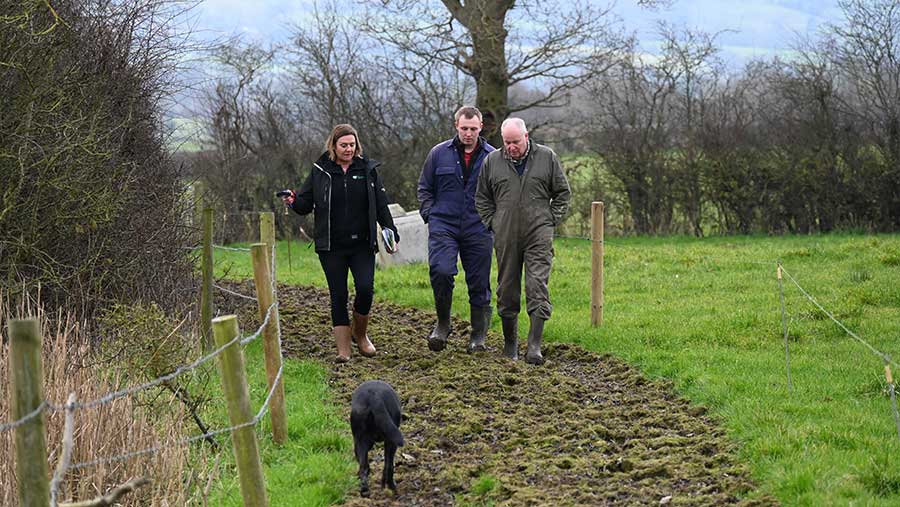
© Environmental Agency
What if there’s a problem during my inspection?
We take an advice-led approach to enforcing regulations. What this means is that if we identify non-compliances, in most cases our first step will be to work with you to rectify them.
We will advise you on what needs to be done and agree deadlines for completion. If investment is required, we can refer you to the Catchment Sensitive Farming Service for support on accessing grants.
In the majority of cases, farmers work with us and often appreciate the benefits to their business that the changes have brought.
However, there are cases where farmers are not willing to make the changes required, or there are serious non-compliances and pollution risk.
If that is the case, we will take further enforcement action to protect the environment, and ensure a level playing field for those farmers who are obeying the law.
Don’t wait
You don’t need to wait to hear from us before you take action on compliance. Regulations are geared towards good practice – many of the requirements will benefit your business and bottom line.
Fact: Getting these two things in place will help towards compliance and could save you money
Nutrient management planning and soil testing are a requirement under Farming Rules for Water, but they also help you use nutrients efficiently, reducing a vital input cost.
Getting these two things in place mean you will be compliant, and you will be saving money. And if you have a plan, make sure you can demonstrate how you’re using it.
Fact: Over the past five years, we have issued over 4,000 actions to farmers to improve drainage, guttering and roofing in yards to reduce pollution risk and slurry volumes
Making sure rainwater is separate from manure and other contaminants is a major contributor to reducing slurry volumes and pollution risk.
Keeping an eye on building maintenance can reduce the need for big investment and keeps slurry storage requirements manageable.
If you keep putting it off until you get an inspection, you may end up spending more money, in less time, to rectify any environmental risks.
You can contact Catchment Sensitive Farming at any time for free, independent advice on grants and funding to help with infrastructure improvements.
What do the regulations say?
We have put all the regulatory requirements for water quality, and lots of good practice, into one easy to use booklet: Harvesting Success.
The guide is available in hard copy – contact enquiries@environment-agency.gov.uk to request yours, and digitally on the FAS website: Harvesting Success.
Understanding what Farming Rules for Water say about nutrient use and what SSAFO says about slurry storage requirements are vital for compliance and running an efficient business.
Fact: Farmers completed 3268 improvement actions in the first three quarters of the 2025-26 financial year, including nearly 900 actions to improve nutrient management and soil testing
We know from the responses to our inspections that many farmers recognise the need for action and work with us to put change in place.
Many of our officers have farming backgrounds and are still immersed in the sector – they know the pressures of running a farm and will be realistic about timeframes.
We’ll give the final word to Rob Kynaston, one of the farmers in our video:
“Walking around with the EA, I think it’s that fresh pair of eyes. We see things every day…but you just don’t really see them or don’t see the problems. So, it was good to have someone…saying ‘you need to do something about this’ and not in a ‘you’ve got to do this or I’m going to throw the book at you’-way, but in a ‘you’ve got a problem here, if you do this, it will stop the problem’- way, which was fantastic”.
For more information or to speak to your local EA agriculture officer:
Call: 03708 506 506
Email: enquiries@environment-agency.gov.uk
Provided by
The Environment Agency works to create better places for people and wildlife, and supports sustainable development.