

Advertiser content
How diversifying into glamping can boost farm business income
Farmers are adapting to financial pressures on food production by diversifying into the growth market of glamping, capitalising on their special rural settings to generate a profitable income stream.
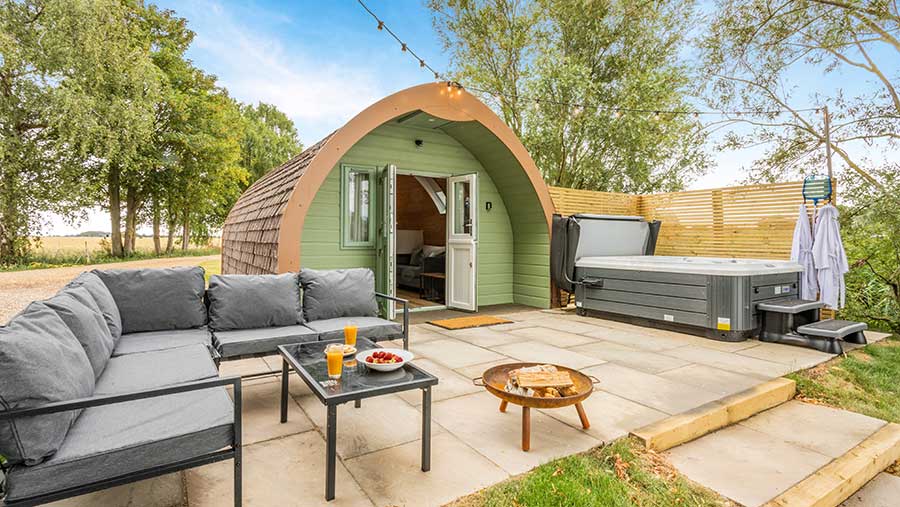
Data from Glampingstays shows why more farmers are choosing to maximise the value of their location and other unique features by offering visitor accommodation in shepherd’s huts, cabins, pods, even treehouses.
© Glampingstays
The UK market was worth £170m – £180m in 2024 and is expected to grow to £350m – £380m by 2032, reports Joby Mussell, chief commercial officer at Glampingstays, part of the Travel Chapter holiday letting agency.
Ongoing growth is being driven by several factors, not least consumer demand – bookings are up by 5% year on year for Travel Chapter properties, including those marketed on glampingstays.co.uk.
There are many reasons why glamping offers a good diversification opportunity for farmers, Joby believes.
“If farmers get it right glamping can generate strong returns with appealing profit margins.’’
Average earnings per unit across all glamping accommodation marketed by Travel Chapter in 2025 was £19,494, but additional features such as hot tubs elevate that earning potential.
It is a scalable business. “Dip your toe in with one or two units and scale up incrementally as you generate returns, you don’t have to go all in at the beginning,’’ Joby advises farmers.
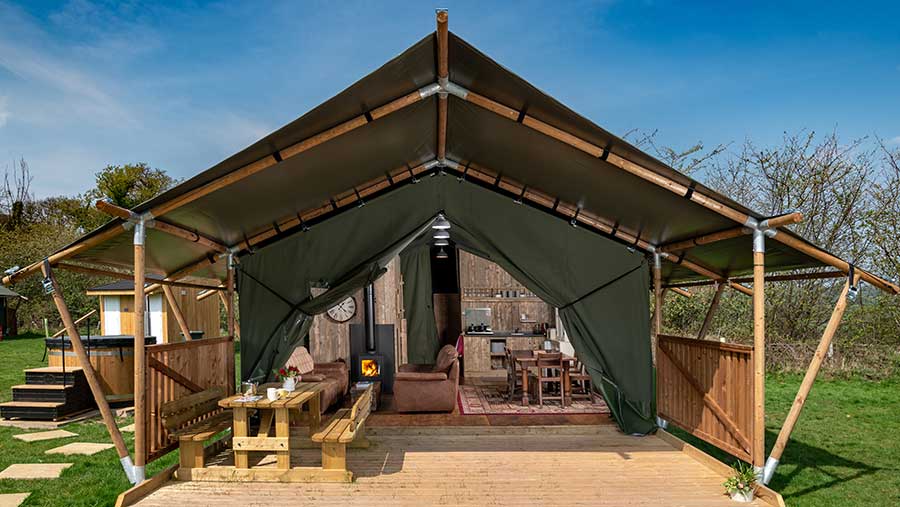
Shepherd’s huts endure as the most popular glamping unit for guests, with bespoke cabins, and treehouses next on the list, followed by yurts and luxury safari tents.
© Glampingstays
Regardless of the property type, expectations of those guests are high and providing quality accommodation will always yield stronger booking levels.
What’s more, new regulatory requirements are encouraging operators to professionalise their businesses, helping to ensure those consumer demands are met.
Owners of holiday let accommodation in England, including glamping sites, will be required to register with a new statutory registration scheme for short-term lets, expected to be introduced in late 2026.
In Scotland, a licensing system is already in place for all holiday lets and in Wales a statutory registration and licensing scheme for all visitor accommodation is expected in autumn 2026.
Business rates eligibility is also an area worth looking into, particularly in Wales where stricter eligibility criteria apply, and can vary by local authority.
And any requirement for planning consent is another consideration, where permission is likely if the glamping unit is fixed, such as in the case of a cabin or pod.
Nevertheless, for investors, glamping units represent a flexible accommodation type with relatively low set up costs.
Capital investment can range significantly depending on unit type and its quality and finish.
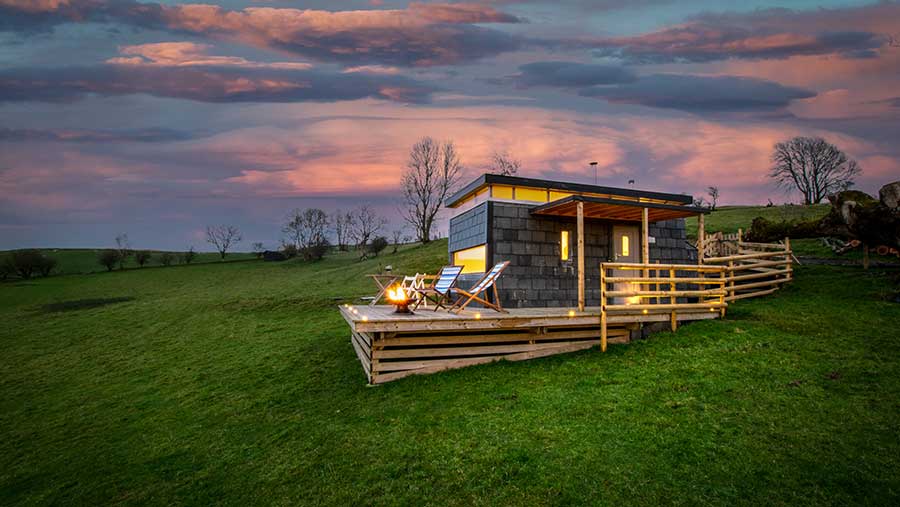
For a bell or safari tent, costs range from £3,000-£10,000, a basic glamping pod £12,000-£20,000, a shepherd’s hut £20,000-£40,000, and a tree house or luxury lodge from £50,000 to upwards of £150,000. But investing in quality will attract strong weekly yields too.
© Glampingstays
“There is an expectation of wi-fi connectivity, bathrooms, heating, kitchens, hot tubs, fire pits, home comforts guests have at home with additional features to enhance their overall experience,’’ says Joby.
Of course, having the right property in the right location makes a big difference to return on investment – accommodation in high demand locations where people want to holiday will generate a much higher income than long term lets for example.
However a range of factors can influence the return on that investment, such as offering short breaks – these account for over 60% of Glampingstays’ bookings.
The appeal of a property is enhanced if visitors are permitted to bring a dog and the provision of an enclosed garden or space private area. Having good quality furnishings and fittings allows the provider to command a higher weekly price.
And if providers can offer a waterside view, whether sea, lake or river, glamping properties will typically secure 33% more bookings and generate 42% more in revenue.
Expectations are increasing all the time, says Joby, but responding in the right way can boost returns.
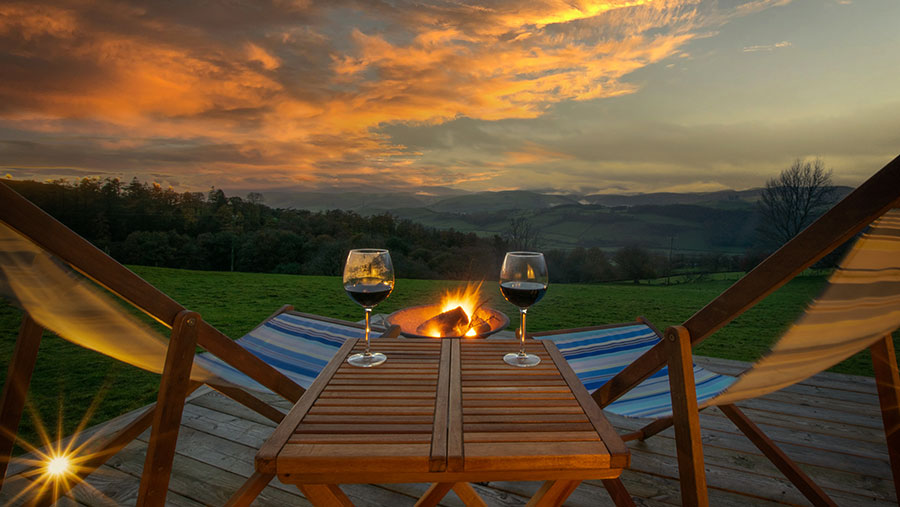
“An open fire or wood burner, for example, can increase annual revenue by an average of 9% and bookings by 5%, and can help secure bookings in the more off-peak months, while a hot tub can increase stays by 31%.’’
© Glampingstays
Marketing is also key. Operators are advised to have a visually engaging website that is easy to navigate and to ensure their properties are visible across all social media platforms. Use of online travel agents extends reach too.
“If that all sounds like a lot of work, a holiday letting agency can market your property, optimise pricing and attract the right guests – effectively taking all the hassle away for you,’’ says Joby.
One successful operator who uses this approach is Powys farmer Keri Davies, who runs a high-end glamping site with his wife Julie and three children on their working organic farm in the Brecon Beacons.
Travel Chapter had been “pivotal’’ in exploring the options for their business, Crai Valley Eco Lodges, as it has grown, he says, including use of smart pricing which had made a “massive difference’’ to booking levels.
The Davies family apply high levels of attention to detail, a key to maintaining strong bookings.
“Don’t cut quality, go the best you can,’’ Keri advises. “It is easier to sell bookings for spring and summer but if you want to capture the winter market you have to be sharp at your game.
“Adapting to winter demand can really boost profitability.’’
Keri also recommends investing in professional photography and having an online presence. “Spend the right money, you get one chance to sell your property.”
As well as capital and regulatory factors, there are tax considerations for farmers to bear in mind, in particular the rules on trading investment income with greater tax reliefs available on trading income.
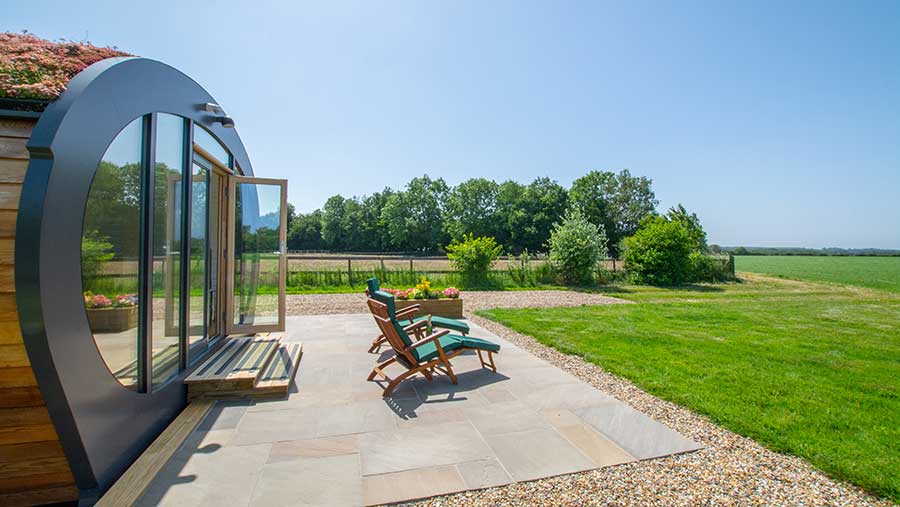
© Glampingstays
Accountant John Endacott says if a business operates other diversification activities, farmhouse B&B or a wedding venue for example, income from glamping is likely to be treated by HMRC as trading rather than rental income – rental income is regarded as investment income and has fewer reliefs.
Income tax and the tax systems operating around finance and capital expenditure must also be borne in mind.
“Get professional advice to make sure you are not missing something,’’ John advises.
VAT is another consideration as VAT on income over £90,000 is likely to be a direct cost to the business as it generally can’t be recovered by guests and would therefore need to be absorbed.
Options could include operating the glamping business as a limited company separate from the farming side of the enterprise, but this does come with cost and complication.
Capital tax relief on the units themselves also varies, says John. It mostly comes down to whether or not a unit is classed as a building, to what extent it is movable, whether it is plumbed in – again advice is needed as each situation will be different, says John.
Download the Glampingstays letting guide.
Provided by
Here at Glampingstays, we offer one of the largest and most eclectic collections of glamping accommodation in the UK.