‘Challenging’ year sees profits fall at Frontier Agriculture
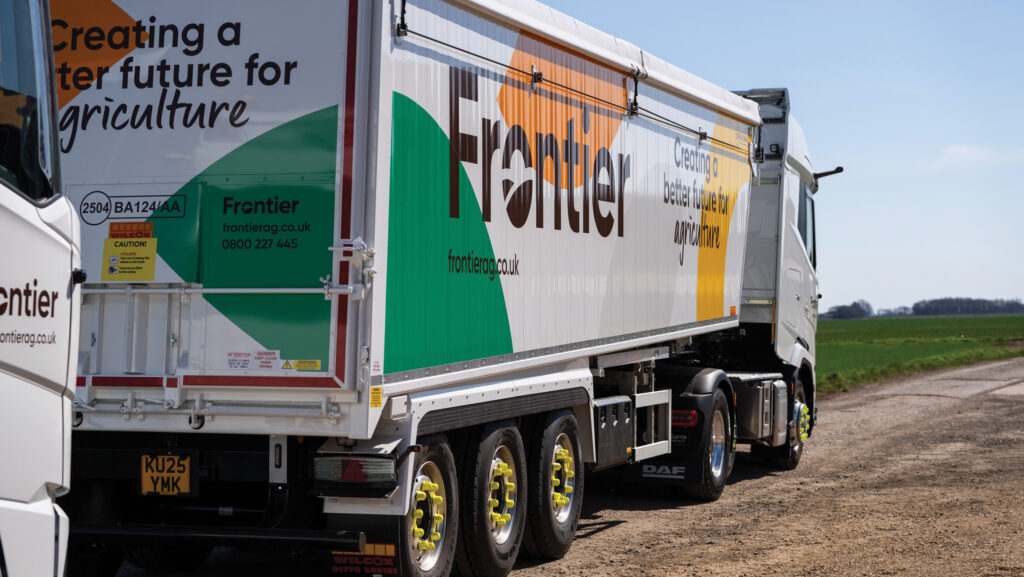 © Frontier Agriculture
 Profit before tax at grain merchant Frontier Agriculture dropped to £9.4m for the financial year ending 26 June 2025, down from £40m the previous year.
Revenue dipped from £1.76bn to £1.72bn during the same period, after one of the most “challenging years” for UK agriculture and the business.
A reduced UK cropping area, low grain prices, and more frequent unpredictable weather events have all impacted the arable sector.
See also: Global wheat surplus keeps prices in check into new year
The firm accounts for roughly 23% of the UK grain market, trading about 3.7m tonnes of grain and selling 139,000t of seed in the past year.
Group managing director Diana Overton described it as one of the toughest years for the sector, following an equally challenging 2024.
She said: “Extreme weather, regulatory changes and global market volatility negatively impacted farm incomes and grain prices.”
Unexpected and significant changes to support schemes in England had increased uncertainty about future farm incomes, she added.
Frontier works with more than 14,000 farm businesses.
It has put forward transformation plans to respond to a rapidly evolving marketplace and aims to focus on its inputs and outputs business model and improve its customer value proposition.
Ms Overton said: “Our transformation plan is well under way, supported by record investment in technology and a refreshed operating model that puts customers first.
“These changes will strengthen our resilience and position us for core growth in the years ahead.”
Flatlining EU yields and production
Average wheat yields in the EU are expected to be in the region of 5.6t/ha in 2035, according to the EU Commission’s Agricultural Outlook 2025-2035, putting it back in line with 2013-2015 levels.
Wheat yields in the EU have stabilised at 5.5t/ha in recent years and despite the expectation of innovations and technologies to boost yields, adverse factors such as extreme weather events, a shift to lower yielding farming practices, and reduced affordability and availability of inputs are likely to limit improvements.
Yields for barley and maize in the EU are also projected to flatline until at least 2035 at 4.8t/ha and 7.2t/ha, respectively.
Total EU cereals production in 2035 is expected to be 0.6% higher than current levels at 267.7m tonnes.