

How farmers can use trend insights to target profitable markets
 © Emily Fleur
 Market intelligence is a vital tool in the Transition toolbox because it can highlight shifting demand and identify potential business opportunities, according to the AHDB.
With that extra insight, marketing and production strategies can be fine-tuned to better align with consumer demands that can help make the business more sustainable.
See also: Why story and standards are key in marketing farm produce
Current trends
Trust in British farming
Consumer trust in British farmers has risen to a record high, says AHDB lead retail insight manager Grace Withers.
Surveys carried out by the AHDB and Blue Marble show 77% of consumers believe farmers are trustworthy, with responses indicating the importance of traceability, provenance and animal welfare standards linked to British produce.
The survey showed that trust means consumers are seeking out British products which is a potentially valuable advantage for home-produced food, explains Grace.
Natural products
Consumers are turning their backs on ultra-processed food and are looking for healthy, natural alternatives. For example, lean meat, block butter and whole milk have shown positive trends over the past 12 months, says Grace.
Weight loss
Health drives are also increasing demand for red meat and dairy protein. Drug-based rapid weight loss programmes are increasingly popular but can cause a degree of associated muscle loss.
To combat this, people are turning to nutrient-dense red meat and dairy products such as natural yogurt which supply roughly four times the amount of protein compared with some plant-based alternatives, she says.
Cost focus
While consumers are seeking out protein-rich foods, the cost of more expensive cuts remains beyond some household budgets. This has seen a trend away from certain beef cuts and volume growth in lamb and pork.
Treats and eating in
Pressure on budgets has also seen a trend towards eating out less frequently.
This has boosted demand for premium retail products such as specialist cheeses and yogurts as people look to replace the feel-good factor of eating out with treats at home.
Export growth
Britain’s positive reputation for high-quality, healthy and traceable food extends beyond home markets, says AHDB international trade development director Jonathan Eckley.
Last year UK meat and dairy exports exceeded the £2bn mark for the first time, driven by upturns in both volume and value.
The EU is still the key market but export activity to the Middle East, Africa, Asia and the US are increasing in quantities and scope of products that British farming can supply, says Jonathan.
This demand for protein is expected to keep growing as incomes and populations increase.
There are also crucial export regulations being negotiated, he points out. In January this year the UK government signed the UK-US Economic Prosperity Deal which paves the way for sales of 13,000t of British beef each year.
In May, negotiations between the UK and the EU on Sanitary and Phytosanitary (SPS) regulations are expected to be at an advanced stage.
Once the agreement is finalised it will align the UK and EU SPS standards, making exports less complicated, which will benefit UK businesses and could grow the export market still further.
Strategies to capitalise on consumer trends
Farmers can use market intelligence tools to spot emerging trends and align production and marketing with changes in demand, Grace explains.
Marketing strategies
The growth in consumer trust, local food sourcing and naturalness can be used as leverage in price negotiations, justifying a push for premium positioning of brands with retailers.
Targeted marketing should emphasise exactly what purchasing trends suggest is important, such as the local, home-reared aspects of the product and guarantees of its production methods and wholesomeness, she suggests.
Social media is an increasingly powerful marketing tool and farm businesses can capitalise with regular, upbeat posts that demonstrate higher production, welfare and environmental standards.
Social media can now also act as a direct selling platform. The TikTok shop was launched recently and has been used successfully to sell farm produce direct to customers.
Dairy strategies
Increases in demand for natural products such as butter and cheese might favour a diversification into processing.
For example, cottage cheese has seen strong market growth, accounting for a third of the increase in cheese in the past year.
Another significant growth area is the health product kefir, with February sales figures up 44%, according to market analyst NielsenIQ 52 (NIQ 52).
It is easy to produce, so venturing into this market could provide a valuable diversification, she says.
Longer term considerations could include switching to the organic market. Sales in organic milk saw an 11.1% year-on-year increase, NIQ 52 figures show.
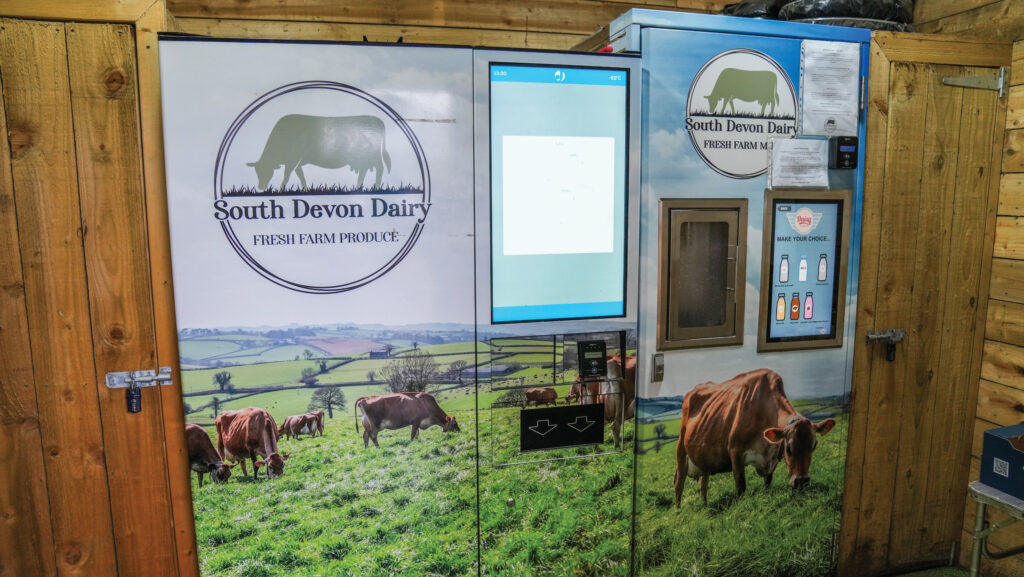
Direct selling through vending machines has also proved valuable in the dairy sector.
Red meat strategies
Potential openings for red meat could also be via direct retail through farm shops, box schemes and online stores to exploit the increased demand for local, unprocessed food.
Alternatively, farm businesses could join forces with already established online or local direct-selling outlets. Native and local breeds can add weight to the local story.
However, demand has also increased for wagyu meat due to its perceived eating quality so wagyu genetics may yield benefits.
Traditional breeds also help pork and bacon sales but the big differential for consumers remains outdoor-bred, which commands a significant premium.
Export strategies
The export market for British meat and dairy is an exciting space to be in and the AHDB is on hand to help with insight and advice, says Jonathan.
There are two routes into this potentially lucrative and growing market.
One is to export direct. While this is a potentially valuable strategy, it does require significant investment in administration and equipment which must be inspected and meet the precise requirements of the chosen market, he says.
The second route is to partner with a business that is already exporting and act as a supplier of produce that meets the specific requirements of whichever market they are selling to.
Because the commitment is significant, consumer insight and market intelligence are vital research points, Jonathan says.
A successful approach to exporting requires watching the markets over an extended period of time to spot emerging opportunities, he says.
It is then down to forging relationships with buyers. A starting point is to get to the people who represent the market by visiting trade shows.
Some are held in the UK so this would be a relatively easy step before looking to other global events. Crucial, though, is to keep the British reputation in the forefront of your mind, Jonathan stresses.
It is vital to maintain and improve standards of production, health and welfare because buyers are rigorous and valuable markets could be jeopardised if standards slip.
Case study: Fergus Howie, Howie & Sons, Essex
© Howie & Sons
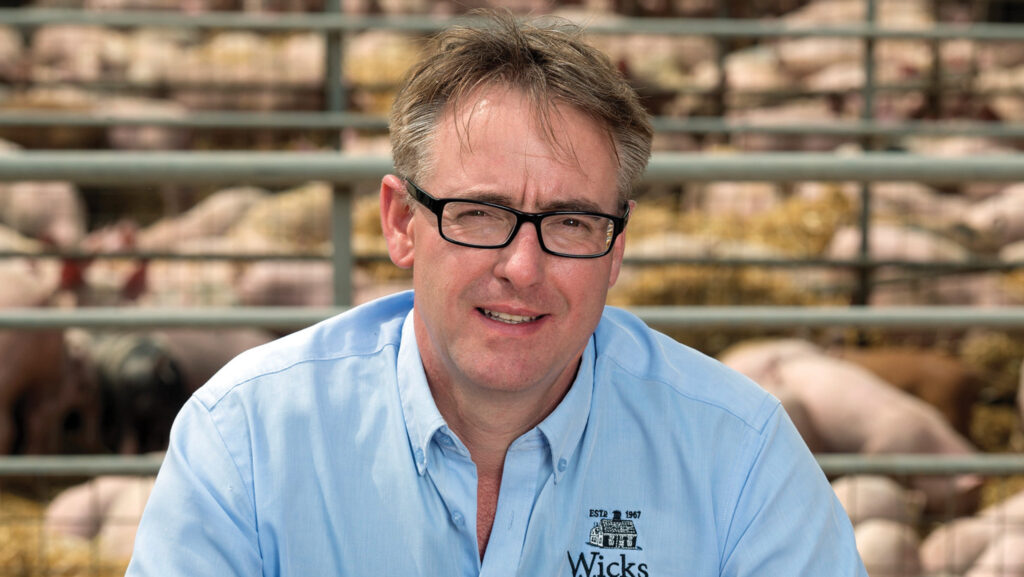
Arable and pig producer Fergus Howie has used market research to develop strategies for both the home and export markets.
The 220-sow breeding-to-finish herd is run alongside a 3,600-acre contract farming business near Tiptree in Essex.
Central to the marketing strategy for the pig unit has been the move to distance the farm from the threat of cheap, imported pigmeat undercutting UK ex-farm prices.
Fergus says he couldn’t compete on price with cheap, intensively produced imports, but market research showed there was demand for a higher welfare, high-quality product.
“So instead we developed the Wicks Manor brand and invested in a cutting line to produce our own bacon, ham and sausages.
“The brand was formed around a high-quality reputation and underpinned by Red Tractor standards. Initially we sold at 18 different farmers’ markets every month.”
But the strategy was switched to supplying local outlets and now, 20 years later, the farm sells to Tesco, Asda, Waitrose and Co-op stores in the Essex area.
“We know roughly what supermarkets want profit margin but from there we can set our own, sustainable price,” says Fergus.
As part of the brand’s development, further research revealed that quality and traceability were key factors for overseas markets.
Fergus was supported by the AHDB and travelled to a trade fair in Hong Kong, where he saw first-hand that there was a significant demand for UK produce.
“As Wicks Manor visited more trade shows and took space on the AHDB stands, demand grew. We found that the huge Asian market wanted the same as the British consumer – quality and traceability,” he says.
The word “British” and the union flag are seen by overseas buyers as marques of quality. “They still think of a British man wearing a bowler hat and playing everything with a straight bat, so we have a head start with marketing,” he says.
But production is nevertheless strictly licensed and the administration process is time-consuming and costly.
To be export-approved, a Food Standards Agency accreditation is needed.
Then regulations for countries may well differ, requiring more paperwork and investment, says Fergus.
For example, Wicks Manor has just achieved accreditation for the Japanese market. But the gain required further investment in facilities.
However, the hard work, market insight, commitment and investment have paid off for Wicks Manor.
The farm, pig business and processing now employ 50 people, and throughput has grown utilising sourced Red Tractor pork to complement the farm’s production of roughly 110 pigs a week.
Explore more / Transition
During the series we follow our group of 16 Transition Farmers through the challenges and opportunities as they seek to improve their farm businesses.
Transition is an independent editorial initiative supported by our UK-wide network of partners, who have made it possible to bring you this series.
Visit the Transition content hub to find out more.
