Why a private project is looking to buy farmland for forest
 © Heart of England Forest
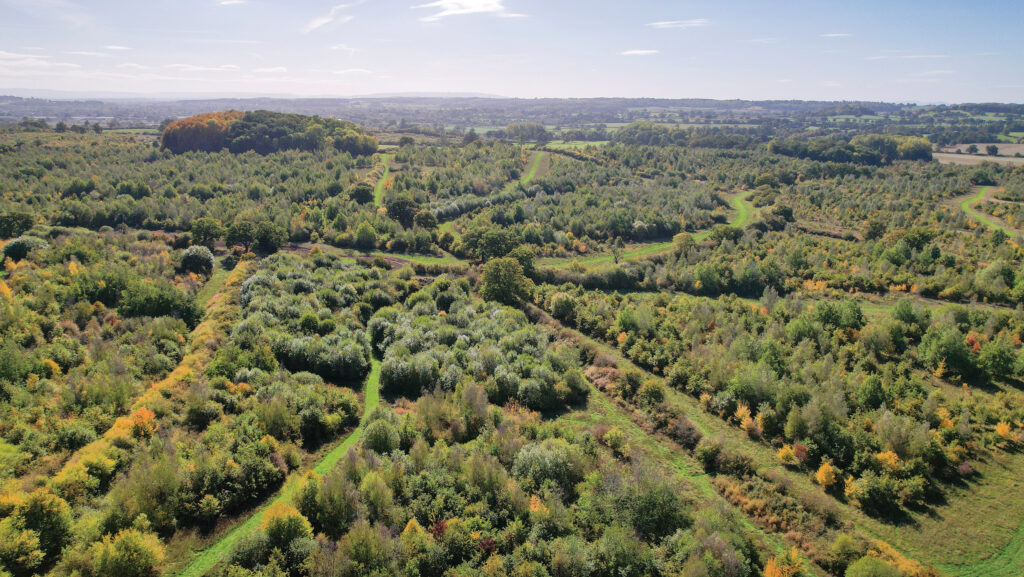
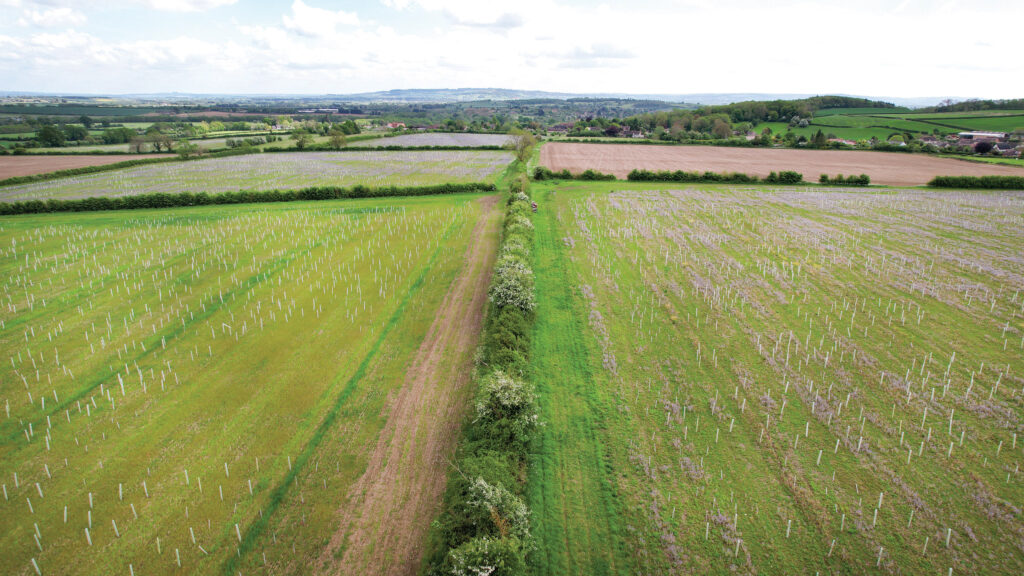
 The Heart of England Forest currently spans 3,650ha across Worcestershire and Warwickshire, with ambitions to expand to 12,140ha.
But what really sets it apart is not its size, but the model for its development.
Unlike many other large-scale woodland creation projects, the charity behind it is not simply encouraging tree planting on other people’s land.
See also: Tips to make the most of existing trees and hedges on farm
Instead, it is buying land outright and managing the process itself.
That contrasts with initiatives such as the government-backed National Forest programme and England’s network of Community Forests, which typically work to promote planting across land owned by multiple private individuals, with support from public bodies.
Founded by the late Felix Dennis, the publisher famous for launching Maxim and Viz magazines, among many other publishing ventures, the Heart of England Forest charity’s goal is to establish a native broadleaved forest which will remain protected in perpetuity for the benefit of wildlife and people.
The charity maintains that owning the freehold will give it the long-term control it needs to ensure this.
Forest facts
- Forest currently covers 3,650ha
- More than 2.2m trees have been planted across 1,950ha since the charity began in 2003
- To achieve the target of a 12,140ha forest, it will need to plant 12m trees
- Within the forest there is also 240ha of mature and ancient woodland, two sites of special scientific interest, six local wildlife sites, 10 potential local wildlife sites and more than 150 ponds.
Integrated approach
The farming industry has consistently argued that tree planting should be “the right tree in the right place” and that it must complement, rather than displace, food production.
Although the Heart of England Forest is primarily focused on woodland creation, it stresses that its estate is and will remain a mosaic of habitats and that there is a place for farming within its boundaries.
New woodland creation currently sits alongside ancient woodland, grassland, heathland, wetland and blocks of farmland.
© Heart of England Forest
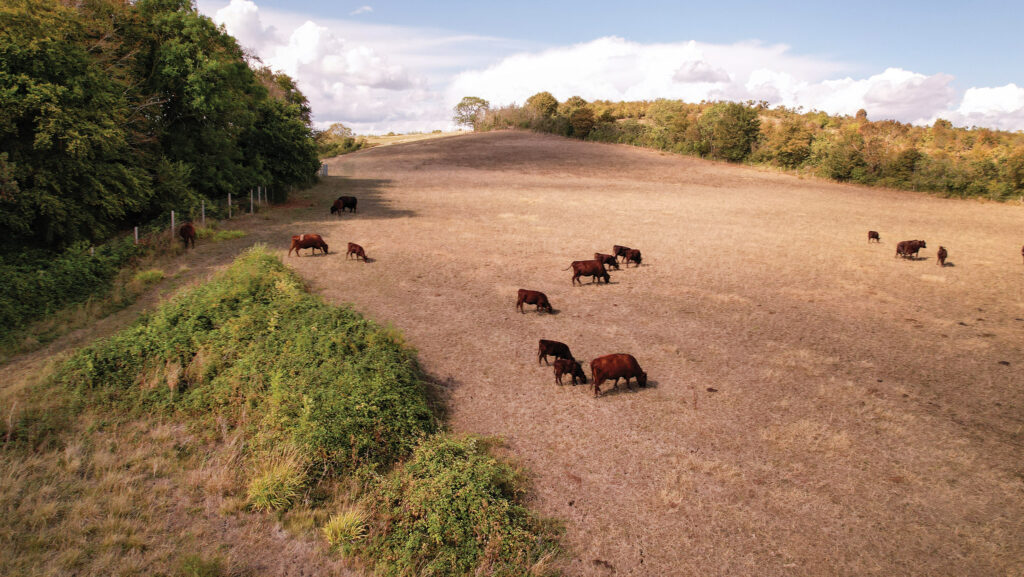
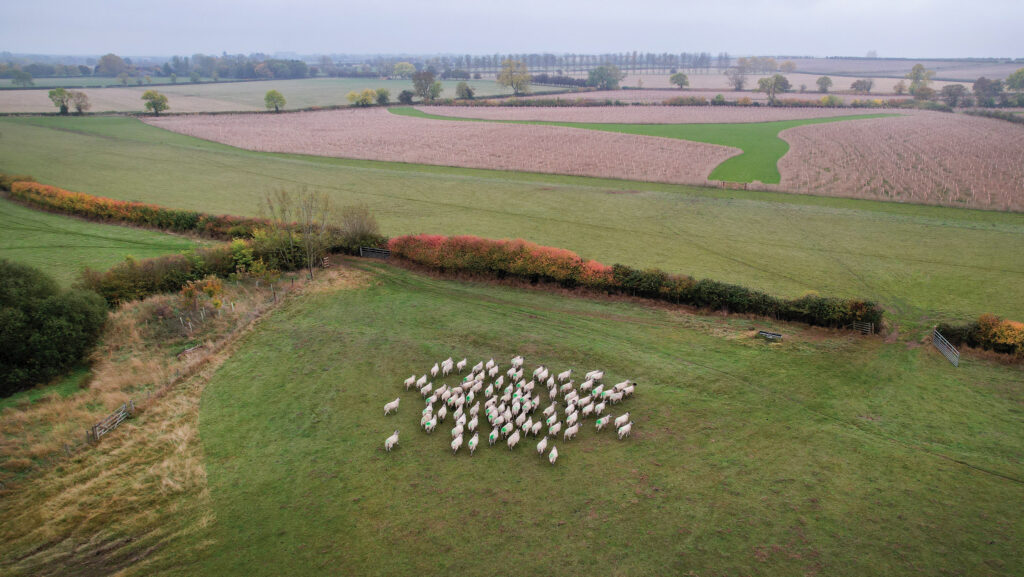
Tom Davies, its director of forest operations, says the charity works with a range of local livestock farmers, renting them grazing land on either a licence or farm business tenancy agreements.
About 750 acres across 25 land parcels are currently let in this way to 16 farmers.
“When I do the designs for the woodland schemes, I’ve a rough rule of thumb that it is probably going to be two-thirds planted and one-third unplanted, although this can vary site to site,” says Tom.
“The pockets of land where we are not going to plant, I might then think about putting in a decent stock fence and water so we can rent it out to a local livestock farmer.”
It makes sense to have farmers manage this land, rather than the charity have to mow it, he says.
He also believes grazing has a role to play within woodland landscapes, something more common in parts of continental Europe.
In sensitive areas the grazing licences may carry certain conditions to ensure they can meet conservation grazing objectives, he says.
However, in other areas the tenancies will operate much like any other commercial farming agreement.
Land acquisition strategy
The charity has become a major buyer of farmland in the region.
Since 2019 it has acquired more than 426ha, including whole farms, smaller blocks of land and a former golf course.
Most of the land bought so far is Grade 3 arable, with some permanent pasture.
The purchases are funded through an investment portfolio placed in trust as part of Felix Dennis’s estate.
Land has been bought both on the open market and as a result of people approaching the Heart of England Forest to sell directly.
© Heart of England Forest
For some farmers – particularly those nearing retirement without a successor – it does offer a straightforward exit route.
Local communities tend to be supportive as the charity represents an alternative to development, whether that be housing or a solar farm.
“I’m not expressing an opinion of those two types of developments, but it is something that people say to us,” says Tom.
The charity is conscious of its influence in the local land market and the perception that it could be seen to be outbidding local farmers looking to expand.
“We are always the competition and people know that,” says Tom.
But he says the organisation consciously tries not to skew the market.
© Heart of England Forest
“We are not going to throw cash at vendors just to secure land. Sometimes we are successful and sometimes we aren’t. There have been farms which we would have really liked which do go elsewhere – that’s just the nature of the market.”
Strategically, the focus is on consolidation. The goal of the charity is to make the forest contiguous, so land adjacent to the existing holding is of particular interest, even if the parcels are relatively small.
“Ideally we want to join the dots between our existing woodland and don’t want to go too far afield.”
Local community
Public access is not offered across the whole of the property, but the charity has created new permissive routes, in addition to existing rights of way.
“It is not open access, but we have created some really interesting assets and a lot of locals enjoy using the walks we have created.”
Tom says that as with any landowner there is always room for improvement in its relationships with neighbours but he feels progress has been made to head off potential tensions.
Historically, there were some complaints about a lack of active management allowing ragwort and thistles to spread from areas where trees have been planted.
However, the charity is working to resolve those issues by carrying out regular pulling and spraying.
“I want to work with our neighbours and respect the fact that this is principally an agricultural community.”
Climate challenge
The hot, dry summer of 2025 resulted in the loss of about 50% of saplings which had been planted the previous winter – a significantly higher loss rate than the usual 5-15%.
All losses have since been replaced, alongside a further 100,000 new trees across 51ha.
The species used most commonly in Heart of England’s planting schemes are common oak and hornbeam, all of which are grown in the charity’s own nursery.
However, it has also included aspen, field maple and a variety of shrubs, particularly at the edge of the wood, as shrubs are important to support different insect species.
Faster-growing nurse trees, such as birch, willow and alder have also been included, to protect and encourage the growth of the slower-growing species.
The charity funds its woodland creation through the England Woodland Creation Offer planting and maintenance grants and is increasingly looking at ways to open up new natural capital income streams.
This includes generating carbon credits through the Woodland Carbon Code and exploring biodiversity net gain opportunities.