Outlook 2026: Belt tightening needed as farm support dwindles
 © Phil Weedon
 Britain’s taxpayers are generally feeling less well off than last year. The government has no reserves, its debt is mounting, and costs are rising.
A number of the wealthiest (best) taxpayers are emigrating. These people are also wealth creators, so their spirit of entrepreneurialism is leaving with them.
Meanwhile, the costs and risks of employing people are escalating, with national insurance hikes, minimum wage increases, rising employee benefits (such as long-term sick leave) and so on discouraging hiring.
See also: Small IHT concessions in overwise damaging budget
Summary
- UK’s financial problems and wider global pressures show no signs of easing
- As state support for agriculture crumbles, much work is needed to ensure the industry can operate without special treatment
- While farming can provide what customers want, commodity prices and political whims can change quickly
More and more people have a draw on government coffers.
According to the Office for National Statistics, 53% of UK households receive more in direct government spending (health, education, benefits) than they pay in tax.
This leaves very little for indirect costs, including farm support. Given the inevitable urban bias in government, there appears to be little interest in, or funding for, long-term agricultural policy.
Overshadowing all this is the national debt. At the time of writing this stood at £3trn, larger than the country’s entire gross domestic product, although history shows it can be reduced.
The government’s answer to the UK’s financial problems is economic growth to create greater tax revenues.
However, high wages for unskilled workers, escalating taxes, penalties for entrepreneurs and ‘redistributive’ payments have outstripped the relaxed planning laws brought in to help drive growth, which themselves take time to get going.
Globally, the level of economic tetchiness is palpable, whether it is apparently overvalued stock markets led by tech-hype, the protectionist movement closing the routes of competition, wider tariff costs mounting globally or the possible escalation of geopolitical unrest and the myriad implications that could have.
Labour costs
What does all this mean to UK farming?
Certainly, labour costs will rise faster than the value of farm produce, continuing a long-term trend that is easily overshadowed by other, more visible costs like machinery or variable costs.
Borrowing costs look set to remain around current levels. The ultra-low rates that prevailed for over a decade in the wake of the financial crisis are unlikely to return anytime soon.
Growth will continue to be elusive, and consumers could be reluctant to spend. This will hit diversified farm businesses that rely on discretionary spending.
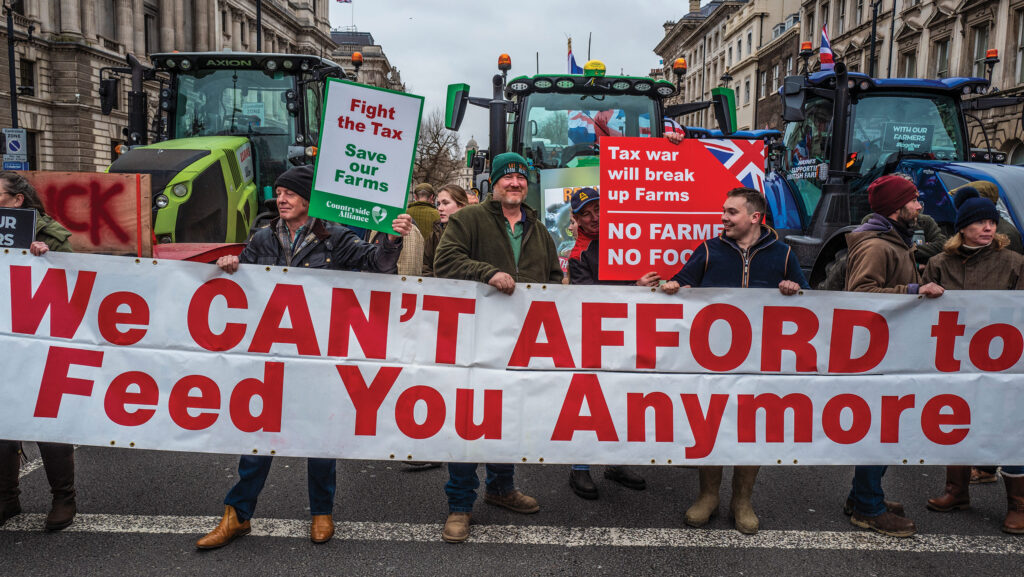
Crucially, further tax raids may be forthcoming on a sector perceived to be ‘wealthy’.
However, farming has been in a far poorer state of financial affairs over the past few decades than currently. We know what our customers want, so we can provide it.
Commodity prices can change suddenly; political whims change quickly.
As state support for agriculture crumbles nationally, we have a lot of work to do to ensure the industry can operate without special treatment any longer.
Farm profitability
Income from UK farming in 2025 is expected to remain broadly in line with 2024 at around £7.7bn.
The figure, based on Andersons’ forecasting model, may sound surprising to many, given the significant challenges in the arable sector.
However, livestock, red meat and poultry have performed well, says senior agri-business analyst James Webster-Rusk.
The standout performer in 2025 was the beef sector. The price of beef was 27% higher compared with 2024. Even with a slight decline in output, this resulted in an extra £1.1bn of revenue.
Dairy benefited from a strong milk price for the first nine months of 2025, although returns look set to decline into 2026. The egg and broiler sectors continued to perform well.
Costs are forecast to have marginally increased for 2025 compared with 2024.
This is driven largely by higher labour charges stemming from increases in the minimum wage and employers’ national insurance contributions. In total income from farming (Tiff) terms, this was somewhat offset by lower animal feed costs.
Farm support is being eroded by inflation and changes in government spending, while the Sustainable Farming Incentive comes with a delivery cost, reducing overall returns.
Looking further ahead, Tiff is forecast to fall to £6.48bn in 2026. Key drivers include weak global commodity prices, potentially higher fertiliser bills, rising labour costs and an ongoing decline in farm support.
While the figure would still match the 2015-2024 Tiff average, the overarching feeling in many sectors now is a tightening of belts, replanning cash flow and revisiting capital expenditure plans.