Outlook 2026: Small returns for best combinable crop growers
 © Tim Scrivener
 The past two seasons have been incredibly challenging for all combinable crop growers – physically for all and financially for most.
Fundamentally, yield, or rather lack of it, has been the challenge.
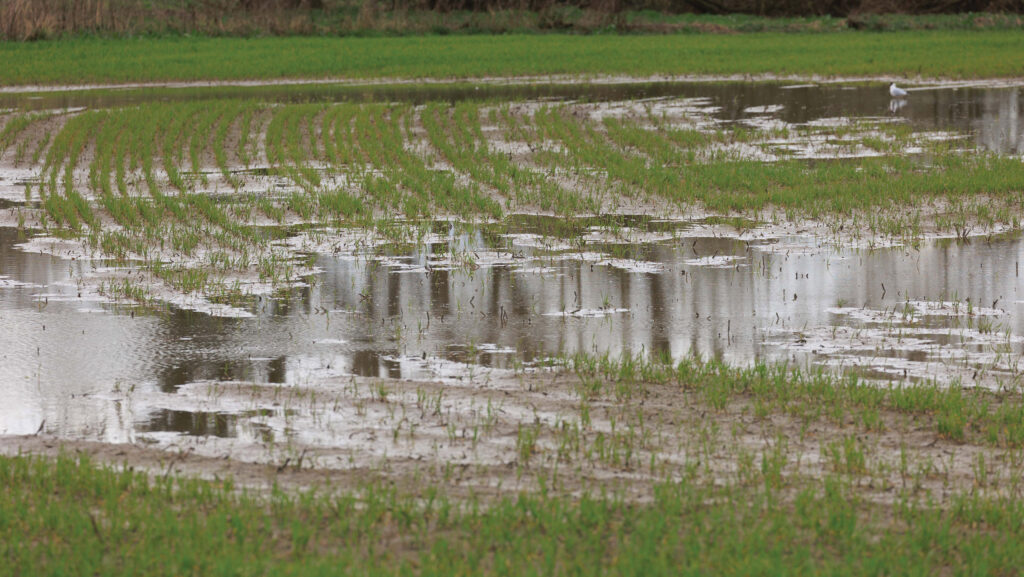
Many contributing factors have been out of growers’ hands, including two very wet autumns hindering or preventing crop establishment, one very wet spring and one very dry spring/summer.
These weather extremes, together with rising costs and lack of reward from the market, have put pressure on the sector to re-evaluate its production strategies and business models, according to Andersons’ Joe Scarratt and Sebastian Graff-Baker.
See also: Why variety and drill date are key to yield and disease
Summary
- Weather extremes, rising costs and poor commodity prices have put pressure on the sector to re-evaluate production strategies and business models
- After two challenging seasons, margins from production will improve but profit potential is limited
- Businesses must understand how their costs compare to know where to focus
- Too much reliance on ‘insurance-based’ agronomic approaches is costing some growers dearly
- Be honest with resources – capacity of machinery and labour, capability of certain blocks of land and associated travelling costs
- Some rents are coming down, but not sufficiently to match poorer productive capacity of some soils
- Profitability will increasingly depend on precision targeting of inputs and adaptability, especially with reduced or even no support
The industry is being nurtured into a more regenerative, reduced-input system. Provided costs can be cut accordingly, or the market or policy pays for it, that could work well.
However, given the increase in cost base most businesses have incurred, there is perhaps some concern over the risk of lower output.
This year highlights the impact of low output without any adjustment in cost levels.
Andersons’ Loam Farm, a notional business growing 600ha of wheat, oats, beans and barley (see panel), indicates an increase in power and labour costs of 50% over the past 10 years.
Even the most entrepreneurial of business owners would have found that difficult to navigate.
Scale solution
Scale has been seen as the solution by many over the years, but this can sometimes lead to attention-to-detail challenges that negate much of the benefit.
Looking ahead to 2026, commodity prices for cereals are, at the time of writing, unexciting.
The five-year average feed wheat price is about £200/t, some £20 above current forward prices for new crop.
However, that average includes the highs of 2022 and 2023. Remove that 12-month spike and the average declines by about £20/t, more in line with harvest 2026 prospects.
While the profit potential from this is uninspiring, the very best will still manage to achieve a small return.
Recent history would suggest that current forward prices are akin to those expected in the medium term and, as such, are the basis for future business planning now, whether we like it or not.
Loam Farm’s cost of production for wheat harvest 2026 is £168/t.
Clearly, yield is a significant factor affecting production costs, but in all other areas the best businesses spend significantly less per hectare than the average.
This continues to demonstrate the attention to detail needed to succeed. To understand where to focus, businesses need to first understand how their costs compare.
Knowledge gap
To be controversial, there are perhaps still some growers who lack sufficient knowledge on their key area of expertise – crop production.
There is far too much reliance on “insurance-based” agronomic approaches, which can be costly in some cases.
There is a need to be honest with resources – the capacity of machinery and labour linked to high autumn workloads; the capability of certain blocks of land and the cost of travelling to them.
Some rents are coming down, but not in all areas, and not sufficiently to match the productive capacity variations of different soil types. Land providers’ expectations have to change in the medium term.
Incremental gains
The top-performing businesses are now making decisions to ensure every element of their business is the best – small incremental gains that collectively will allow an acceptable level of margin.
Fully understanding the productive capacity of soils and the costs of cropping land at distance will be key to targeting all inputs.
While many businesses have been willing to crop unprofitable land because of logistical simplicity and ease of management, the balance between loss-making and profitable cropping activity has, for some, swung too far.
Addressing this fundamental aspect can be both frightening and liberating.
Combinable crop farming seems to stand at a pivotal moment. Short-term it is fighting cash flow pressure and poor commodity prices in relation to a high cost of production due to low yields.
Profitability will increasingly depend on precision, to target inputs where they are most effective, and adaptability, especially with reduced or even no support.
For many businesses, success will lie not in doing more, but in doing the job much better.
Loam Farm
Loam Farm data clearly illustrates the financial squeeze that many combinable crop businesses face.
After the two very good years of 2021 and 2022, returns are now below historical averages.
The Andersons Loam Farm model, which grows 600ha of wheat, oats, beans and barley, is partly owned/rented with a working proprietor, one full-time member of staff and harvest casual.
After a reasonable 2023 harvest year, the ensuing prolonged wet period from autumn through into spring reduced yields in 2024.
Grain prices were also lower than the previous year. The farm made a loss from production and required Basic Payment Scheme (BPS) and SFI receipts to bring it back into surplus.
The 2025 crop delivered a further lacklustre set of returns as the weather turned full circle, resulting in the long, dry spring and early summer.
Yields again slipped below Loam Farm’s average, prices showed no improvement and overhead costs continued to increase.
Negative margins
Overall, the margin from production is still negative.
In addition, there has been a big drop in BPS, with the maximum £7,200 per business in 2025 equating to just £12/ha on Loam Farm.
SFI payments have increased a little as the farm “upgraded” its agreement by going for some extra 2024 options.
Nevertheless, the overall business surplus is set to slip into the red.
Farmers generally think “next harvest will be better”. This may be true. We cannot know the weather for 2026, but a reversion to the average harvest would see output increase.
Variable costs appear quite stable for 2026, provided fertiliser was purchased early.
After two poor years, the farm is cutting back slightly on investment, which helps keep overheads in check by reducing depreciation.
However, the farm is budgeting £25,000 on drainage works to address some of the issues of the past couple of seasons.
The margin from production at least ends positive, a much-needed upturn given that BPS declines to £1/ha.
The overall business surplus improves, but is still below the long-term average for this model farm.
Loam Farm model (£/ha) |
|||||
|
Harvest year |
2022 |
2023 |
2024 |
2025* |
2026** |
|
Output |
2,136 |
1,716 |
1,377 |
1,386 |
1,550 |
|
Variables |
460 |
754 |
547 |
542 |
545 |
|
Gross margin |
1,676 |
962 |
830 |
844 |
1,005 |
|
Overheads |
507 |
545 |
601 |
634 |
627 |
|
Rent and finance |
243 |
256 |
266 |
264 |
261 |
|
Drawings |
80 |
82 |
86 |
89 |
89 |
|
Margin from production |
847 |
79 |
(123) |
(143) |
28 |
|
BPS and SFI*** |
163 |
128+40 |
93+95 |
12+122 |
1+122 |
|
Business surplus |
1,009 |
246 |
64 |
(9) |
150 |
|
Note: *Provisional ** Budget *** Costs of complying with SFI are included in farm costs Source: Andersons |
|||||