Double lives of women farmers revealed through photo project
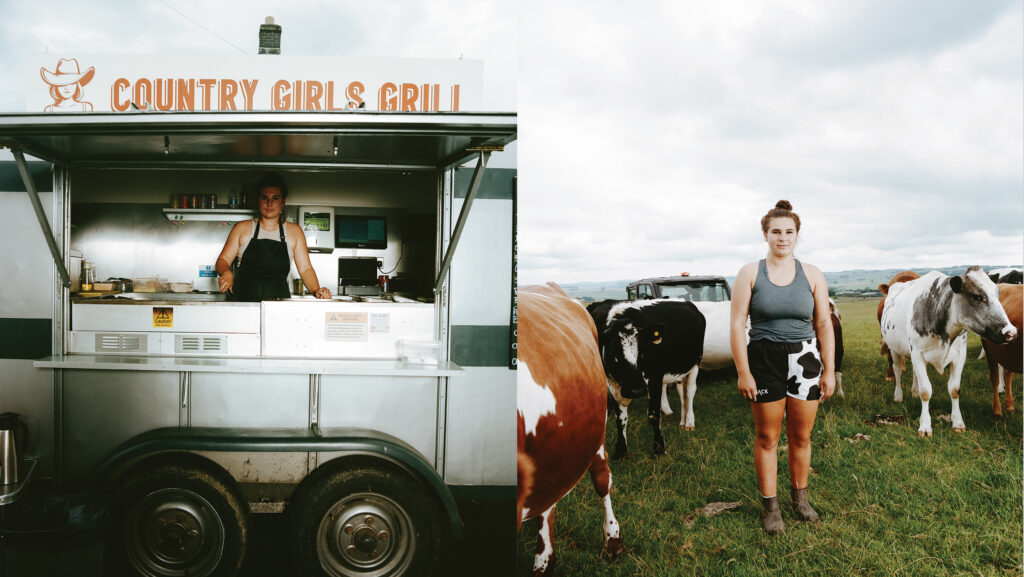 Meg Mycock © Kat Wood
 A photographic project is casting a light on the resilience of women farmers in the north of England.
“Beyond the Fields” captures women who, in many cases, are sustaining not only their land, but also their communities through the demanding balance of double lives.
Created by photographer Kat Wood, the series documents 12 women through paired portraits and personal narratives.
See also: Soil-to-sourdough traceability is key focus for farm bakery
The photos reveal how economic pressures, shifting rural economies, and climate change are reshaping the everyday realities of farming.
Shot on medium-format film, the portraits capture each woman in two contrasting spaces: on her farm, immersed in the physical labour of tending livestock and working the land, and in her secondary role outside agriculture.
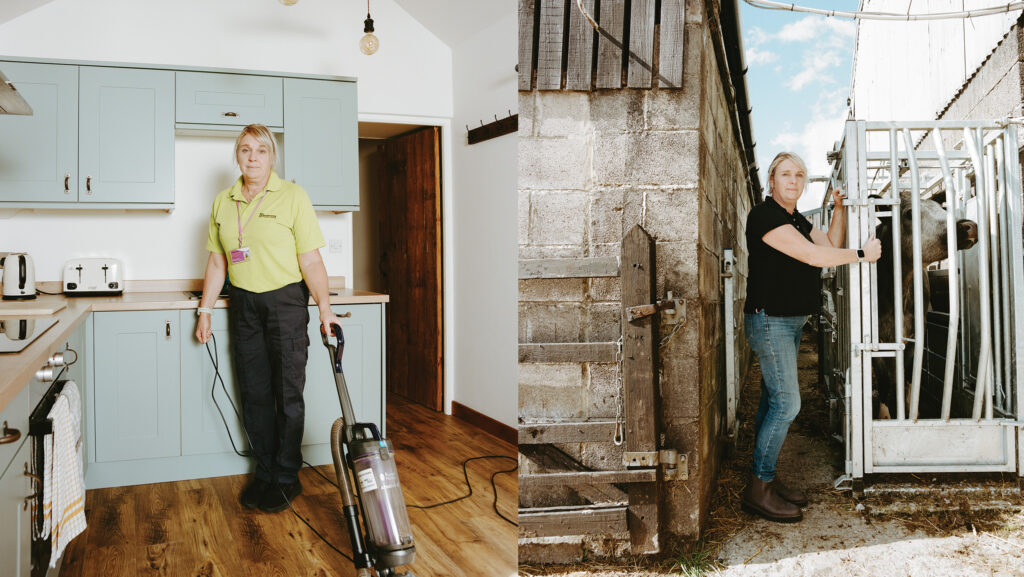
Deborah Skidmore © Kat Wood
These combinations – care worker and farmer, mobile hairdresser and farmer, community singing group leader and farmer – illustrate the intricate web of responsibilities required to keep farms viable today.
The visual juxtaposition challenges traditional, often romanticised images of rural life, offering a fuller, more textured depiction of female farmers.
Personal roots
The project has deeply personal roots for Kat. “I grew up on a hill farm in Derbyshire,” she explains.
“It was my grandma and granddad’s place, and my mum still works there; my sister will take it on next.
“I love the farm. I help with lambing whenever I can, and a lot of my photography projects are tied to rural politics.”
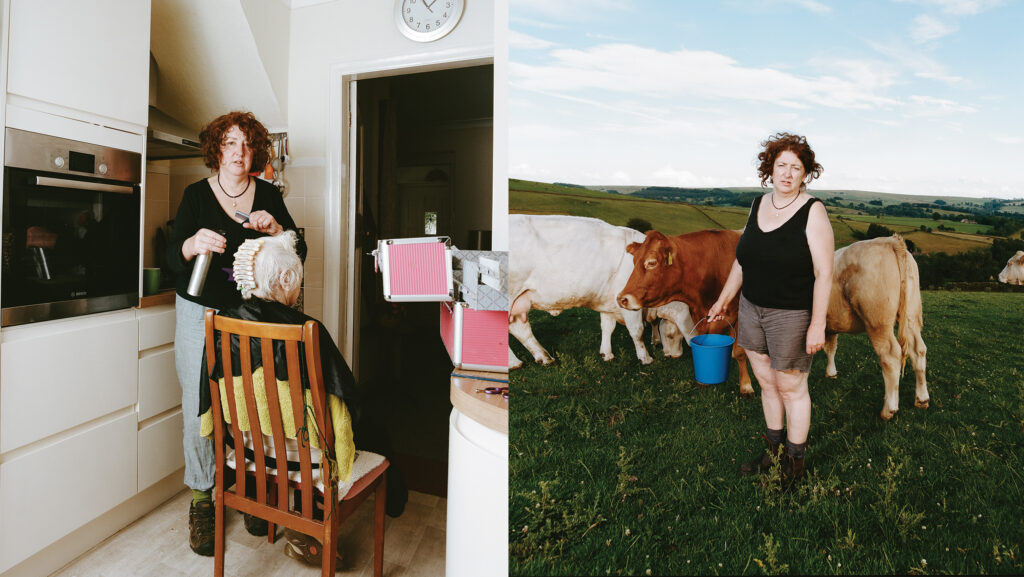
Kat’s mother Joanne Wood in her dual roles of farmer and hairdresser © Kat Wood
Watching her mother, Joanne Wood, navigate two roles – running the sheep, cattle, and poultry farm while working as a mobile hairdresser – first sparked the recognition that many women were managing similar juggling acts.
“The more farm visits I did, the more I realised women were diversifying in such interesting ways,” she says.
“They have these double lives away from the farm, and they’re fascinating and show such resilience.”
Survival strategy
Showing both sides of their lives is, for Kat, central to the project’s purpose.
Diversification, she notes, is no longer optional, but a survival strategy.
“I wanted to show the struggles honestly, but also celebrate them – celebrate how these women are there keeping the farms working.”
Ultimately, Kat hopes the project will bridge the widening disconnect between urban audiences and the agricultural communities that feed them.
She plans to exhibit the work in a city-centre venue in early spring and will show it at the Oxford Real Farming Conference in January 2026.
“People in the city are often detached from farming. Exhibiting the project there is a way to highlight rural struggles, and rural ingenuity.”
Case study: From poultry production to wedding tent
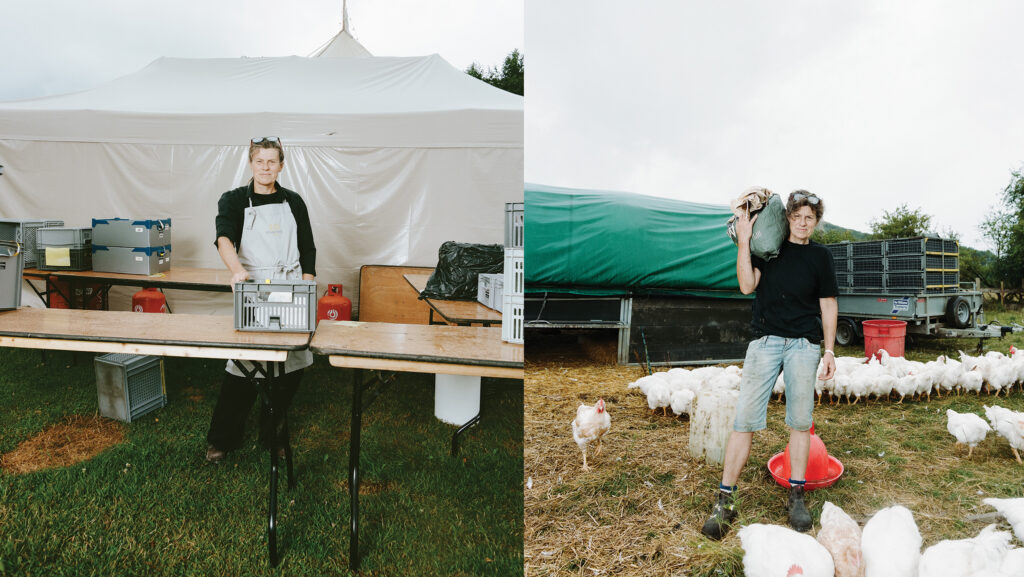
Katie Rubython © Kat Wood
One of the women photographed is Katie Rubython, who farms in Hope Valley, Derbyshire, managing pigs and poultry, and also bartends at local wedding venues.
“I’ve always felt a strong desire to work the land and stay connected to the natural environment.
“Owning even a small piece of land feels like a privilege, and I feel a deep responsibility to use it sustainably, nurture the soil, and care for the woodland.
“Over the past year, the challenges of running a small-scale operation forced me to close my village butcher’s shop, so I’ve taken on a second job to make ends meet.
“I enjoy the work – there’s no pressure, I meet lots of people, and it’s easy – but it’s not what I truly want to be doing.
“The job I had at the wedding venue was to earn enough money to support me paying an employee to help on the farm, while I go through a financial transition with the farm,” she says.
Ultimately, farming is Katie’s passion.