Festive lessons connect children with farming
 © Lawrence Looi/NFU
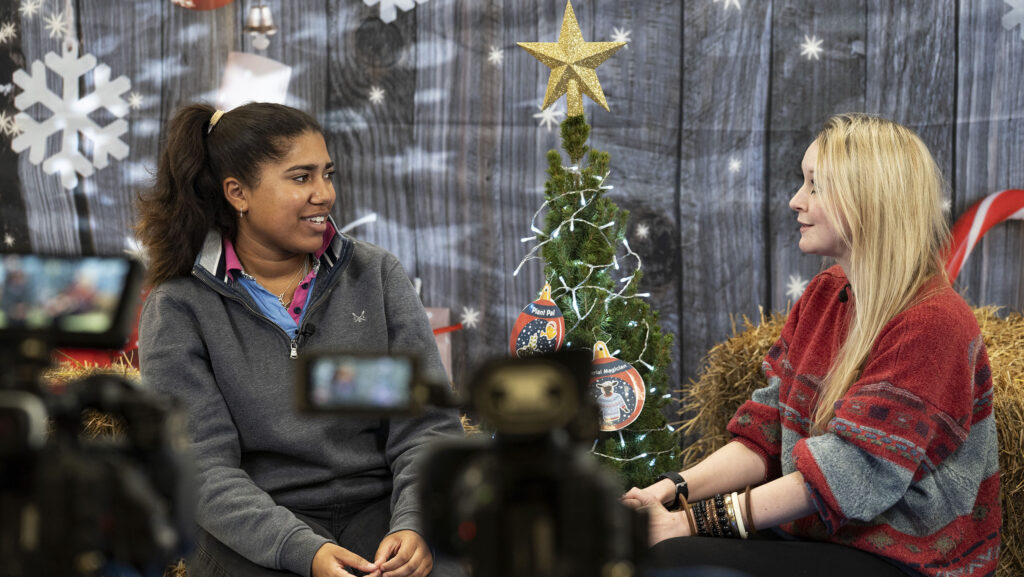
 More than 82,000 pupils from over 800 schools across England and Wales took part this week in NFU Education’s festive lessons, which showed schoolchildren how British farming underpins Christmas traditions and seasonal foods.
The Festive Farming Quest, the latest instalment in NFU Education’s live lessons series, introduced pupils to the people, animals and crops behind familiar festive favourites.
The programme followed the success of last year’s Harvest Carnival lessons and brought farming into classrooms nationwide.
See also: Festive tractor runs return across the UK for Christmas
Key Stage 1 groups earned festive quest baubles as they learnt where Brussels sprouts and Christmas trees originate, and how to care for camels and a flock of sheep.
Key Stage 2 pupils took part in a themed “work experience”, discovering what it involves to be a farm vet, how mistletoe is grown, how turkeys are raised, and how Christmas puddings are produced.
Children were also able to question farmers live, asking why turkeys gobble, how to look after pregnant animals, and what is involved in becoming a farmer.
NFU vice-president Rachel Hallos said: “Farmers and growers are proud to play such a central role in our festive traditions, and the Festive Farming Quest is a brilliant way to bring that story into classrooms.
“We know that teachers and children are eager to learn more about where their food comes from, and these live lessons give them the chance to connect directly with the people, animals and crops behind Christmas.”
NFU Education says its live lessons throughout 2025 have reached more than half a million children.
One participating teacher said: “The children absolutely loved the Christmas theme. They were excited to learn that girls can be farmers too, and a number of them said they would like to work in farming now.
“Their knowledge of plants and animals has definitely improved, and the lesson coincided nicely with what they had been learning about mammals.”