How a Welsh livestock mart kept its social heart
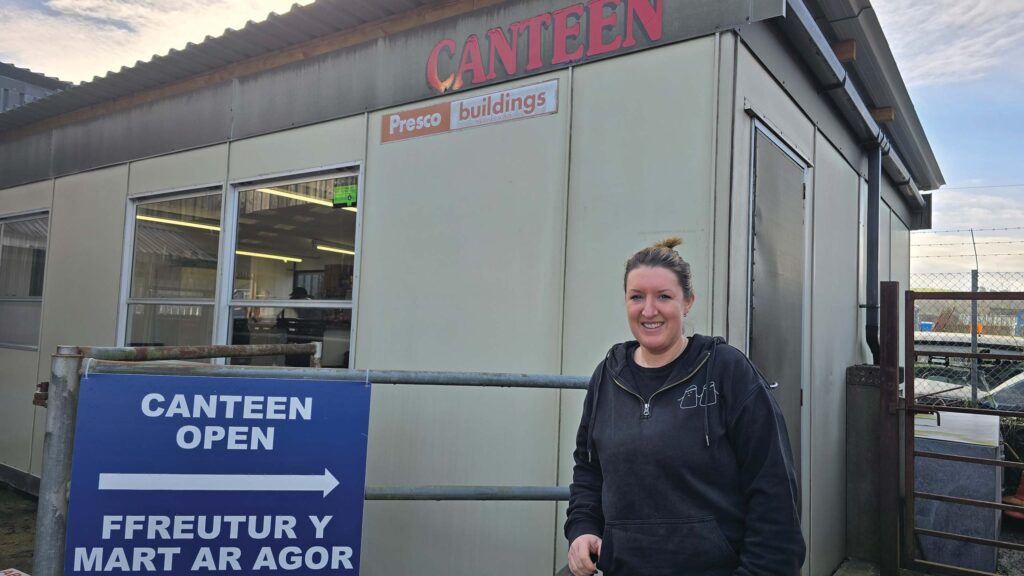 Morfedd Pugh © MAG/Anne Dunn
 When Tregaron Livestock Mart’s café was threatened with closure, many feared it was the end of an era.
To some, it was simply another rural service under pressure.
But for local farming stalwart and businesswoman Morfudd Pugh, it represented something far more vital – a social lifeline for the west Wales farming community.
See also: Farmer demand for mental health support rises
Former proprietor Dilwyn Williams had operated the café for 18 years under a council lease, but deteriorating health meant he could no longer manage its upkeep.
When the business came within months of shutting, Morfudd, who had helped out in the café on market days for years, stepped forward to help save it.
More than food
Environmental Health had issued a notice citing inadequate ventilation and warned that the canteen would close by the end of March 2024 unless improvements were made.
Initially, Morfudd casually stepped in to maintain the café’s operation under Dilwyn’s name, ensuring farmers wouldn’t lose the service overnight.
However, it soon became clear that without someone willing to assume permanent responsibility and take on a financial risk, closure was inevitable.
The council’s preferred solution was to replace the indoor canteen with a food van, an option that didn’t sit well with Morfudd.
“They knew I already had a catering trailer and pushed that as the best option. But there was a warm, dry environment for people to go and sit in and have food, so why would you take that away?” she says.
“The main reason people go there and have food is that they’re able to go in, sit down, have a chat and, you know, socialise.
“It’s more than just the fact that they’re getting food. It means that they’re able to actually go somewhere and have that chat afterwards.”
Personal investment
Facing a firm closure deadline and with little flexibility from the council, Morfudd made a decision.
She offered to personally fund the required ventilation work – costing about £2,000 – provided she received a written assurance that, if the mart or canteen ever closed, her investment would be repaid.
Meanwhile, the farming community rallied behind her. Mart workers, among the café’s main customers, were prepared to launch a petition if progress stalled.
“There was a lot of support,” she says. Eventually, the council relented.
Within a week, the improvements were completed and the food hygiene rating rose from one to four, securing the café’s future and preserving what many consider the mart’s social heart.
Social hub
Morfudd and the farmers who use the café see it as far more than a place to eat. It’s an informal hub where farmers can share worries, exchange news and combat isolation.
Sian Jones, the current proprietor at Tregaron mart, has been involved for more than 50 years.
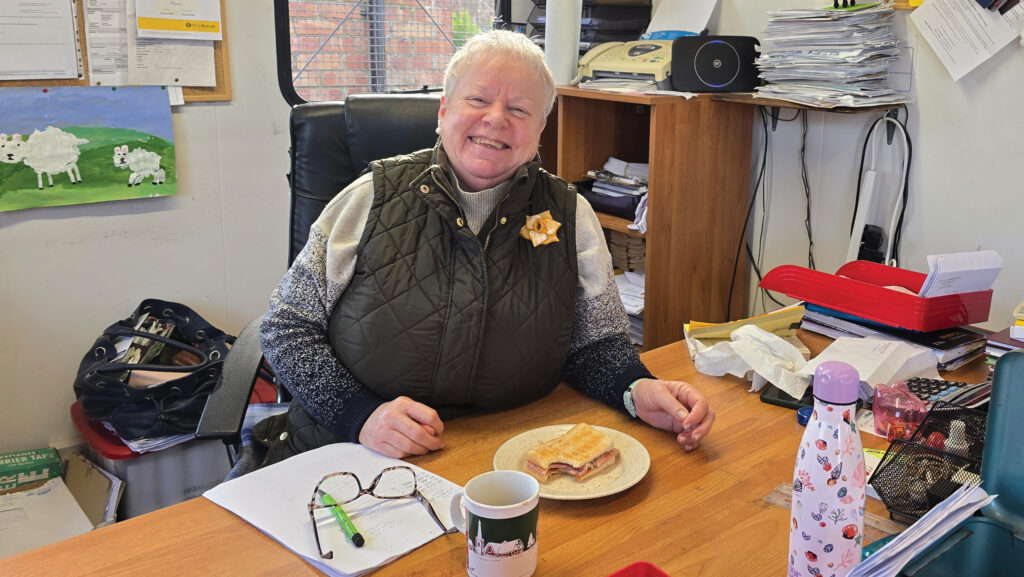
Sian Jones © MAG/Anne Dunn
“I was worried about it closing. We need the café; it’s part of the mart’s social fabric. Our retired farmers still come here to meet their friends,” she says
Alun Evans remembers coming to the café 40 years ago.
“Right at the beginning, you had bread and butter on the table, and you paid a fixed price for that. Ham was an extra. But it’s always been a place to sit down and catch up with other farmers,” he recalls.
The younger generation also sees merit in it being there.
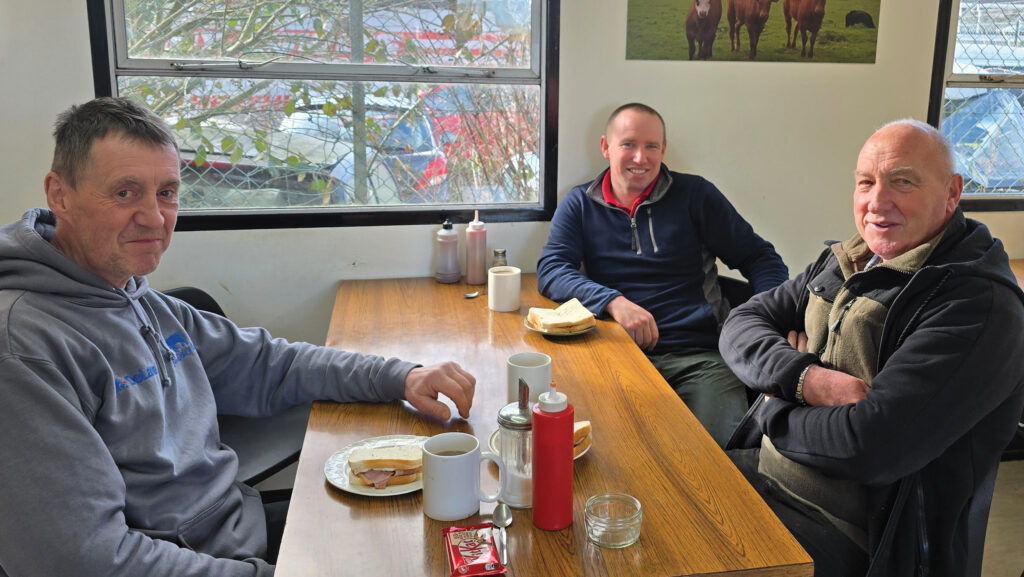
From left: Emyr Evans, Alun Evans and Iwan Jenkins © MAG/Anne Dunn
Ceredigion dairy farmer Emyr Evans, who sells calves through the mart, says: “It would have been a big loss if it had closed.
“It’s where you can come for a good meal, a chance to catch up on what’s going on, especially if you don’t have family at home.”
Today, Morfudd balances family life, a town café, a vintage catering van on Aberystwyth seafront, the mart café itself, and keeping 450 sheep with her husband Owain.
For her, the effort comes down to a simple belief: “I’d rather have tried and failed than never tried at all.”
A vital lifeline in a solitary profession
While mart days revolve around buying and selling livestock, a good market café can be just as important as the sale ring, providing somewhere warm for farmers to sit, talk, worry, laugh and be quietly looked after.
It provides one of the few regular opportunities for face-to-face interaction in a sometimes solitary profession.
Linda Jones, Wales manager at the Farming Community Network, says the social value of these spaces should not be underestimated.
“For many farmers, mart day is not only about buying and selling animals; it is also one of the few regular opportunities to meet others face to face,” she says.
For some farmers, the café may be the only place they feel comfortable opening up about difficulties, even indirectly.
“In this way, mart cafés contribute not just to the rural economy, but to the emotional resilience and overall wellbeing of farming communities,” says Linda.
Charlotte Green, business co-ordinator at the Livestock Auctioneers Association, agrees that the role of mart cafés has grown as farming has become increasingly isolated.
“The café has become more than somewhere to refuel,” she says.
“With farmers working remotely, their trip to the café is that safe place to socialise, share knowledge, offload and check in with others.”