Level the Field survey reveals widespread physical challenges
 © SolStock/iStockphoto
 Farming has always demanded physical resilience. But Farmers Weekly’s latest research suggests that for many in the industry, resilience is no longer about strength or stamina – it is about learning how to keep going while living with pain.
New data on the physical health of UK farmers, gathered from more than 1,700 people as part of the Level The Field 2026 campaign, reveals physical strain is commonplace, health conditions are widespread, and support for those struggling remains patchy.
But the research also shows farmers are adapting where they can, with some actively planning for the future if their health continues to worsen.
See also: Find all our Level The Field campaign content in one place
Physical challenges
One of the most striking findings is that half of respondents live with a physical health condition, injury or disability that affects their ability to farm or carry out certain tasks.
While the survey was self-selecting, nearly half of those who took part (48%) reported having no health condition at all, lending weight to the scale and significance of the results.
Of those who did report a condition, four in five mentioned musculoskeletal problems such as arthritis, joint damage and chronic back pain.
Three-quarters said their mobility was affected, and many described daily pain as routine rather than exceptional.
At least one respondent reported addiction problems linked to routinely overdosing on painkillers in order to continue working.
“I have had a bad back for years,” said another person who was surveyed.
“Tractor work sets it off, especially rough land work on uneven ground, but it has to be done, [even] when I know I will have some poor nights’ sleep for days or weeks after it.
“Farming incomes are driving farmers to work through ill health and with injuries, because we just cannot afford to do otherwise.”
Manual tasks
© Tim Scrivener
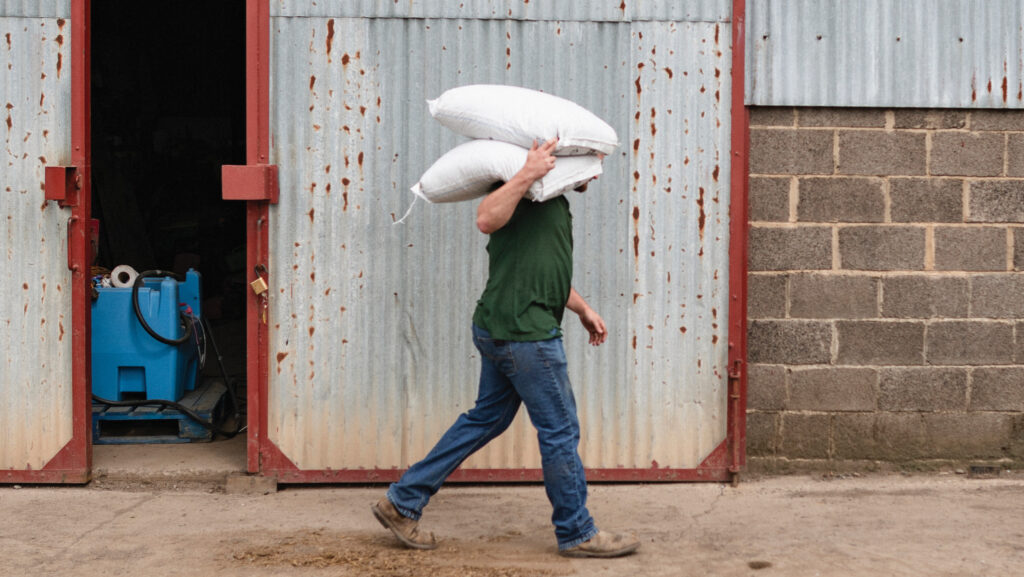
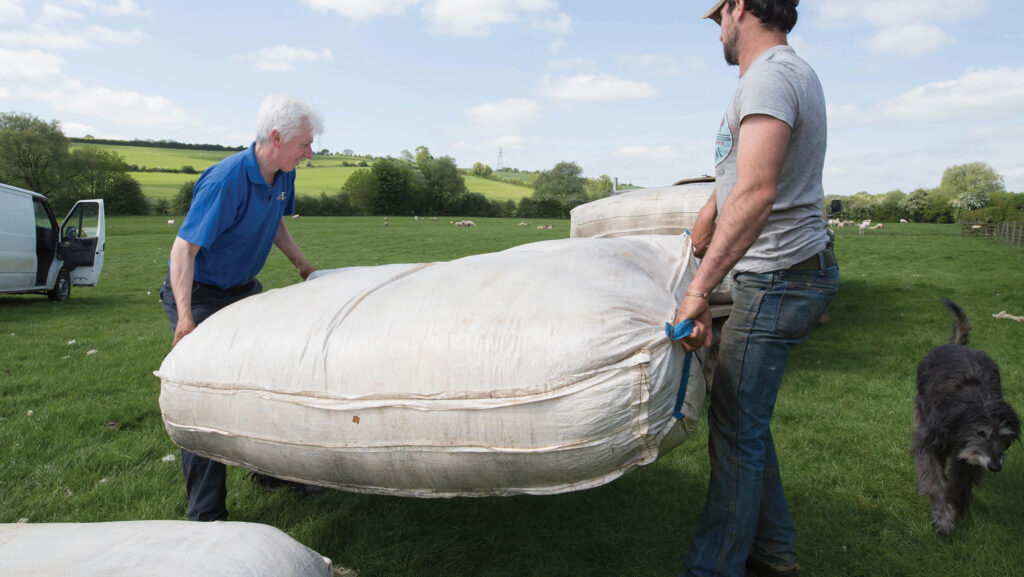
Heavy lifting and manual handling were cited as the most difficult tasks, followed by prolonged standing or walking.
These findings echo patterns seen in other physically demanding industries such as construction.
In farming, such tasks are often continuous, time-critical and tied to daily animal care, leaving little scope to pause or defer work when pain or injury set in.
“Farming is hard,” one respondent said. “It’s even harder with a condition, but looking after livestock is not a job you can just dip in and out of. Welfare of the animals becomes more important than personal welfare, which is the wrong way round, but that’s how it is.”
Adaptation
There is, however, evidence of adaptation. Two-thirds of farmers with a condition have made changes to help manage their health, most commonly by altering tasks, responsibilities or how work is organised.
“The smallest [changes] can make a big difference,” said one respondent. “Farmers do this every day, as they are innovative in the extreme.”
But adaptations are often informal and have their limits. Those limits are visible in another key finding – that 60% of farmers have had to stop or reduce certain tasks entirely because of physical health.
Several respondents said they had already stepped back from entire enterprises, mostly livestock, because their health no longer allowed them to continue.
Others had been forced to scale back operations or rent out land.
Virtually no respondents had received funding or support for health-related adaptations, largely because most did not know it existed.
Only one in 10 knew where to go for advice on working with a physical disability in agriculture.
Lack of support
This gap between need and support is significant. In industries such as construction, workplace adjustments for physically demanding tasks are more systematically embedded in operational practice, with regular risk assessments and industry guidance shaping how work is adapted, mechanical aids are used, and duties are adjusted.
By contrast, adjustments in farming tend to be informal, self-funded and driven by necessity rather than structured planning.
Time for recovery is also short, with farmers working an average of 49 hours a week, and almost one-third putting in more than 60 hours.
While long hours are common among the self-employed in other sectors, farming combines extended working weeks with sustained physical effort, often carried out alone.
Safety concerns
The research also highlighted potential safety concerns. Overall, 42% of respondents reported that they have felt unsafe carrying out a task due to a physical limitation.
One said they “often take risks others would see as dangerous”, while another reported that they “cannot do all they want to do and be safe”.
Others pointed out that people pushing through pain can compromise safety. These experiences come from a workforce that is, on average, older.
About 80% of respondents to the survey were aged 45 or over, reflecting the ageing profile of the sector.
This aligns with Health and Safety Executive data showing that older workers are disproportionately represented in farm fatalities.
In the 2023-24 reporting year, nearly 40% of fatal injuries to farm workers involved individuals aged over 65.
While the research does not establish a causal link between physical health conditions and accidents, the findings indicate an overlap between reported physical limitations and a sector with a comparatively high rate of workplace fatalities.
Pressure points
Many farmers also described working under sustained pressure.
Eight in 10 respondents said they regularly or sometimes felt pressure to keep working, despite being in physical pain or unwell.
This mirrors wider evidence on self-employed work, where people are far more likely than employees to work through illness due to lack of sick pay or cover.
In farming, that pressure is amplified by responsibility for livestock, land and family businesses.
When asked what single change would most improve their physical health at work, respondents were remarkably consistent.
The most common answer was extra staff and not working alone, followed by working fewer hours and having more time to rest.
Better equipment and machinery were also frequently cited, and particularly tools designed to reduce lifting, and improve ergonomics.
Forward looking
Encouragingly, two-thirds of respondents have started planning for how they might continue farming if their health worsens, whether through changing scale, investing in labour-saving technology, or adjusting roles.
Farming compared with other self employed roles
Long hours
Research across the UK workforce consistently shows self-employed people work longer hours than employees.
Average weekly hours for the self-employed typically sit in the mid-40s, with a significant minority working more than 60 hours. Farming sits at the upper end of this range.
Working while unwell
Self-employed workers are more likely to work through illness, largely due to the absence of sick pay and replacement labour.
Eight in 10 farmers report feeling pressure to keep working while in pain. This places farming at the upper end of reports in wider self-employment research.
Musculoskeletal conditions
Musculoskeletal disorders are the most common work-related health issue across construction, logistics and manufacturing. Farming mirrors this pattern.
Adjustments and support
In many sectors, adjustments are increasingly formalised through HR processes and occupational health. Among the self-employed, access is more limited.
Farming stands out for how many people make informal, self-directed adjustments, but lags in uptake of external support.
Disclosure and stigma
Self-employed workers often report reluctance to disclose health conditions for fear of losing work.
Farming compares relatively positively here, with almost nine in 10 willing to disclose or consider disclosing a physical condition – though stigma remains a significant barrier.
Level the Field
Our campaign, Level the Field, aims to make agriculture fairer, more equitable and more inviting for everyone.
By engaging people and organisations across our industry, Level the Field will champion inclusivity for the benefit of farm businesses and all who work in them.
This year, the campaign puts the spotlight on physical health in agriculture. Previous years have focused on women in farming, and neurodiversity.
See more on our Level the Field campaign hub.