Will’s World: We can’t keep calm and carry on importing
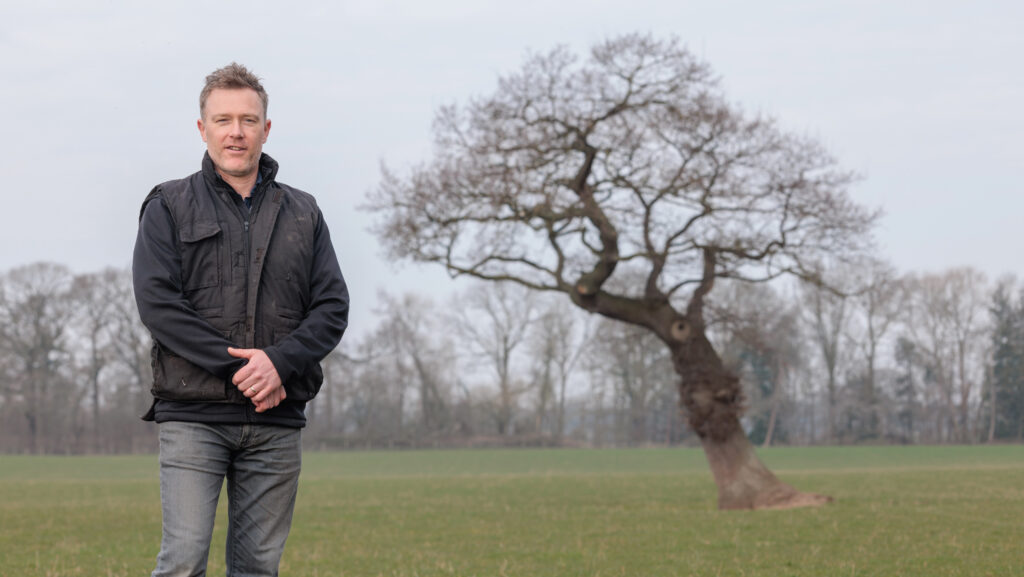 © Lee Boswell Photography
 At the height of the Battle of Britain, during the critical month of October 1940, Winston Churchill emphasised the importance of agricultural production in a letter to the National Farmers Union.
He said: “I need not tell you that the food production of our country is, at this hour of crisis, one of the vital factors in our ability to resist and overcome a formidable enemy.”
Being a hopeless Second World War nerd, it’s never far from my mind anyway, but given the parallels between the geopolitical situation of the late 1930s and the current day, it’s something I’ve been reflecting on lately.
See also: How new slurry store sets up dairy to optimise spreading
Once again, fragile and egotistical men in suits who’ve never won a battle against anything more formidable than an obdurate printer are loudly threatening invasion and war, safe in the knowledge that it won’t be them or their billionaire cronies’ children who’ll be doing the fighting and dying for them in far, foreign lands.
Perhaps all this was inevitable as the generation who fought so valiantly against the abject evil of Nazism begins to pass from living memory, and the lessons learned from that terrible time are forgotten.
We can only hope that the better angels of our nature prevail, and those in power decide to concentrate on fixing the real problems facing our collective societies.
Food insecurity
But what if they don’t? What if the Liberal World Order as we’ve known it for 80 years is crumbling, and Britain is plunged into a new global conflict.
Will food production, once again, become one of the vital factors in our ability to resist and overcome a formidable enemy – and is the government remotely prepared for this scenario?
The UK’s food self-sufficiency is currently about 60%; an alarming drop from the peak of 78% in the mid-1980s.
We’re relatively secure when it comes to cereals (perhaps not for much longer, though, with prices where they are), but when it comes to fresh fruit and vegetables we rely on imports for about 65% of our total supply by volume.
That means roughly 80% of fruit and nearly half of vegetables are imported.
We also bring in more than 3m tonnes of soya every year, primarily for the pig and poultry sector, with the majority coming from Brazil, Argentina and the United States.
Given the importance of cheap and available protein in people’s diets during wartime, if I was the minister responsible for securing the nation’s food supplies, I’d be having sleepless nights over this.
Department reshuffle
So, where to begin? I’d get serious straight away by bringing back the Ministry for Agriculture, Fisheries and Food, and scrapping the hideously bloated waste of time and resources that is Defra.
Deep down I’d be bitterly regretting the decades of neglect that have left the nation’s farming businesses so depleted and demoralised, but as I’m now a politician I couldn’t possibly admit that.
I’d be grappling with the fact that, unlike in the Second World War, we’re also fighting a war against climate change, and the need to balance dramatically increasing production with environmental security.
If ecosystems collapse, our ability to maintain food security does too. So can we really plough up every available piece of land again to plant crops?
Even if we decide we have no choice, given the fact that the agricultural and horticultural workforce is now so tiny, with so much expertise and experience being lost since the turn of the century, will we have the labour and resources to do so?
As a simple farmer, I’m not so sure, but I sincerely hope the government is thinking about all this more than I am.