Will’s World: Why our household is always braced for impact
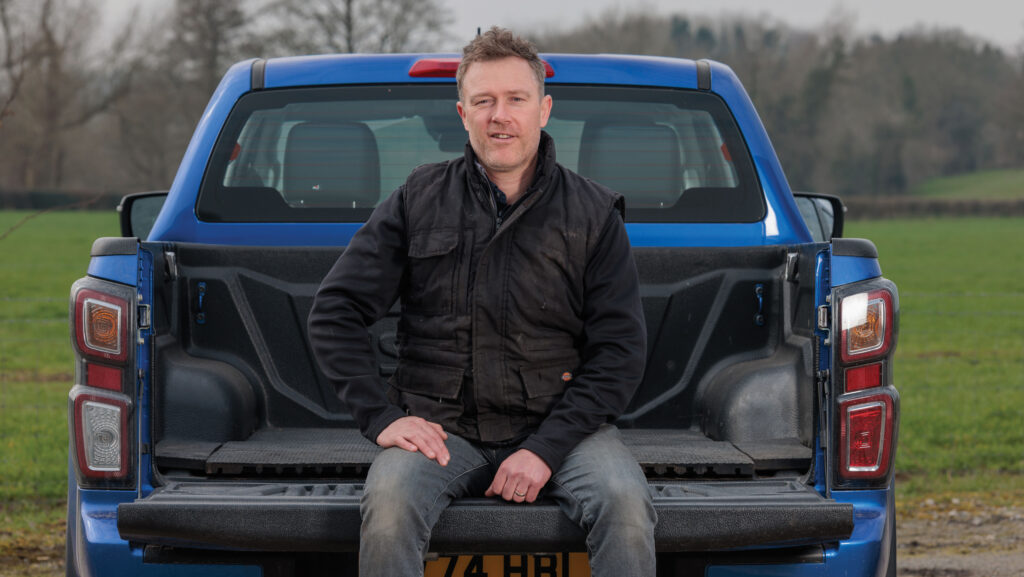 © Lee Boswell Photography
 Is anyone else married to a hideously clumsy oaf?
You have my heartfelt sympathies if you are, and particularly if your offspring have also inherited the dubious trait.
This isn’t some scandalously unfair revelation about the present Mrs Evans, by the way.
See also: Pros and cons of lameness data analysis for cattle mobility
About the author

Family and friends of ours will be nodding their heads in knowing sympathy as they read this, thinking of the many, many pranged vehicles I’ve had to deal with over the course of our relationship.
Then there are the almost daily occurrences of smashed crockery, snapped blind cords, and damaged kitchen cupboard hinges that are the result of her Incredible Hulk levels of heavy-handedness.
In fairness, though, she inherited the clumsy oaf gene from her father, my greatly esteemed father-in-law, who makes Mr Bean look like the epitome of grace and precision.
This is a man who once, when driving a tractor and grain trailer down a country lane and meeting an oncoming vehicle, stuck it into reverse.
When unexpectedly meeting some mild resistance, he enthusiastically pressed the throttle even further.
It was only when he got out to investigate the problem that he realised there was a greatly distressed woman with a 10t trailer full of wheat now firmly wedged over the bonnet of her prized Mini Cooper.
Posterity doesn’t record the exact words she said to him, but I’d like to have been there to hear them.
Early signs
One can only imagine how far back this particular family characteristic goes.
I have visions of a tribe of North Shropshire cavemen, sitting around a fire, chomping on woolly mammoth steaks while angrily complaining about one of their number cracking the flint knife yet again – “For crying out loud, Stig, be more careful!” – and that’s who the present Mrs Evans is descended from.
Anyway, as you’ll have gathered, I spend a great deal of my time fixing things the numerous females in my life have broken.
The latest example is the living room door latch, which doubtless one of the teenage specimens broke while slamming the door in a fit of pique.
This being January in Wales, and as we inhabit an ancient farmhouse that regularly produces the sort of draughts that could blow a particularly stout prop-forward over, I was immediately called upon to remedy the situation.
It’s one of those beautifully crafted Victorian mortice locks that you typically see in houses like ours.
The first job was to prise it off the door while trying to leave an acceptable amount of the 50-or-so layers of paint in place, at which I only vaguely succeeded.
Still, needs must, and once I’d had a look inside, it was quickly apparent where the problem lay – a broken feather spring.
Spring action
Unremarkable, you may think. But when I sought the old man’s advice on where I might be able to acquire a replacement, a smile of smug satisfaction spread across his face.
You see, like most farmers of the vintage variety, he never, under any circumstances, throws anything away, and I’ve always pulled his leg about it.
“You’d better keep that bucket with the hole in it, it might come in handy one day,” I’ll say, with tongue firmly in cheek.
But he was right in this instance, producing a small box from the back of the workshop with a hand-drawn picture of a feather spring on it, and one of them did the job perfectly.
Turns out, it was my granddad who’d originally kept them, conclusively proving that the “you might need it someday” theory, much like the clumsy oaf gene, works through the generations.