Yorks ag engineer shares epic US harvest experience
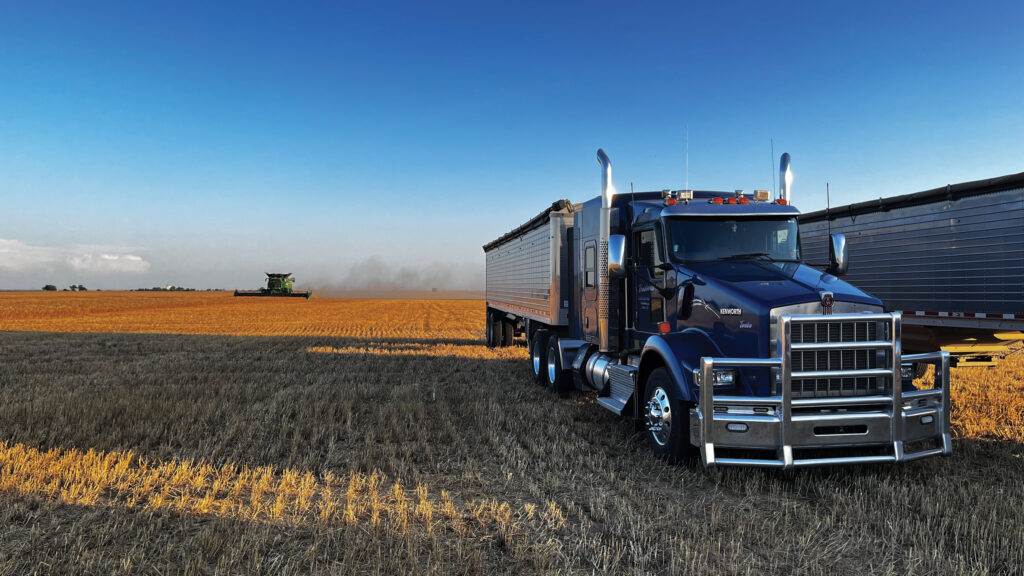 © Oliver Vance
 A Yorkshire agricultural engineer crossed nine US states in eight months in 2025, working long harvest days with a Kansas-based family firm to experience American agriculture at scale.
Oliver Vance, 21, joined Frederick Harvesting, headquartered in Alden, Kansas, as part of a team of seasonal workers from across the US and overseas.
The business began in the 1980s as a one-machine, one-truck operation and has grown into a large, progressive harvesting company following the grain harvest north each year.
See also: Global wheat surplus keeps prices in check into new year
Crews typically begin in Oklahoma’s Red River Valley and northern Texas before moving through Kansas, eastern Colorado, Montana and the Black Hills of the Dakotas.
The season runs from May through to November.
Oliver harvested in nine locations across five states.
“It was such an incredible experience, a real once-in-a-lifetime opportunity for anyone interested in agriculture. I learned so much out there,” he says.
Variety
During the season, he worked across a wide range of crops, including three types of wheat – winter, spring and durum – as well as barley, canola, corn, soya beans and sunflower seeds.
Periods of intense work were balanced by enforced downtime when weather conditions halted operations.
“We got time off to go sightseeing a little bit while waiting on crops to dry,” he says.
“It was an amazing opportunity to do that.”
Oliver does not come from a farming background.
Exposure to local farms sparked his interest, leading him to enrol in agricultural engineering at Myerscough University, near Preston.
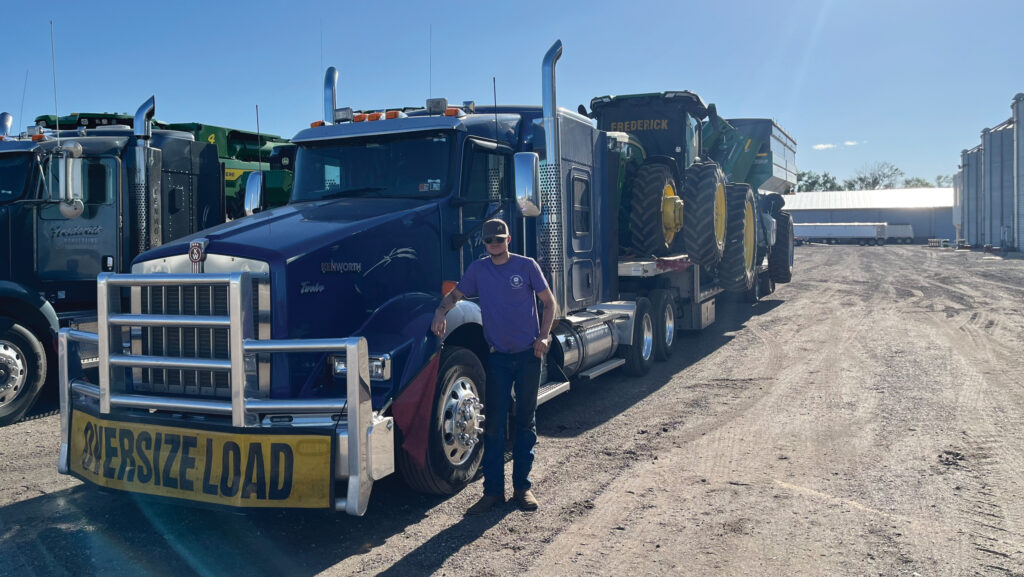
© Oliver Vance
The opportunity to work in the US arose through an Ohio State University programme promoting international agricultural opportunities.
Programme co-ordinators regularly attend UK farming exhibitions such as Lamma to recruit interested people.
Life on the harvest circuit changed dramatically as crews moved between regions.
“Each location was vastly different,” Oliver says.
“Sometimes, you are thinking the days are never-ending, but then you also don’t want them to end.”
Tornadoes
Much of the work took place in the central US, including areas prone to extreme weather.
“Sometimes you are on tornado watch, and we were in Tornado Alley.
“The storms were amazing to watch, but not amazing to be in,” he says. “When it rains, it pours!”
A typical day started early, with long hours dictated by weather windows and crop readiness.
“Most mornings you’d wake up at 7ish and go to work at 8am. You are either in the fields in the combine, or picking up crops,” he says.
“Each day was its own experience.”
The physical scale of the American landscape left a lasting impression.
“It sometimes felt like the flattest place on Earth,” he says. The horizons feel further away, and the landscape is incredible.”
Frederick Harvesting runs several crews, with workers living closely together in trailers for months at a time.
“There are usually six of you in a camper van. You get to know each other quickly, and become like family.”
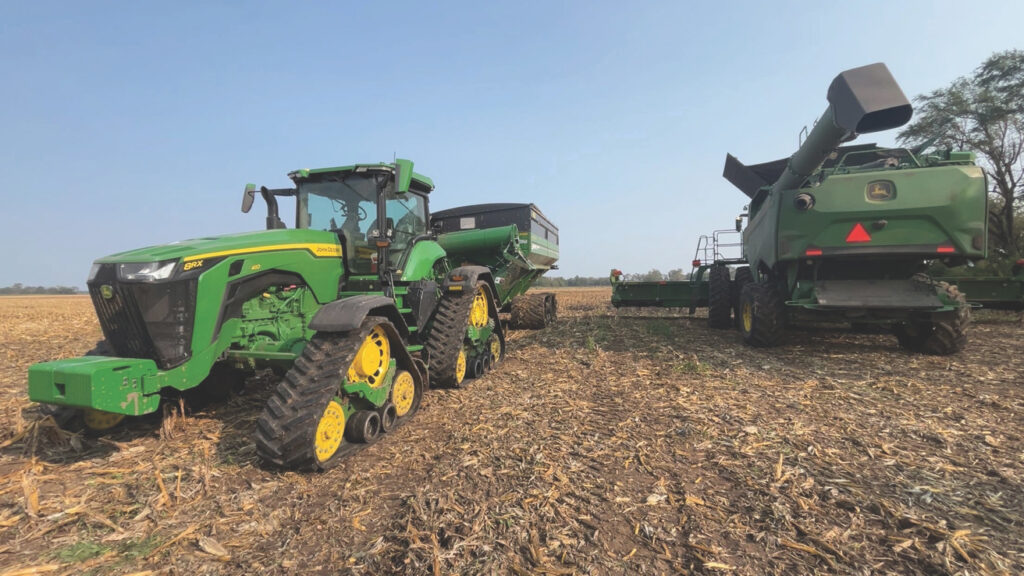
© Oliver Vance
Travel opportunities came when the pace of harvest slowed. In July, after completing the summer harvest in Nebraska, crews were given a week off.
“We took the vans over to Colorado Springs,” Oliver says.
Activities included white-water rafting, hiking and visiting Denver. “It felt like a bucket-list trip; it was really something else.”
Complementary learning
Professionally, the experience provided practical exposure that complemented university learning.
“I only knew a lot about crops and farming in theory from uni, but being there, I physically did it and learned so much,” Oliver says.
“I learned about a different way of doing things, like strip farming. Instead of having a complete field, you have short strip sections that divide the land up.”
The sheer scale of American agriculture was another defining feature.
“Where I’m from, I’m used to just seeing grass,” he says.
“Over there, you see almost everything; if the ground can take it, it’s having it. Some of their tillage equipment looked like houses.”
Oliver returned to the UK with new technical and mechanical skills, particularly from working out of a mobile service truck during the season.
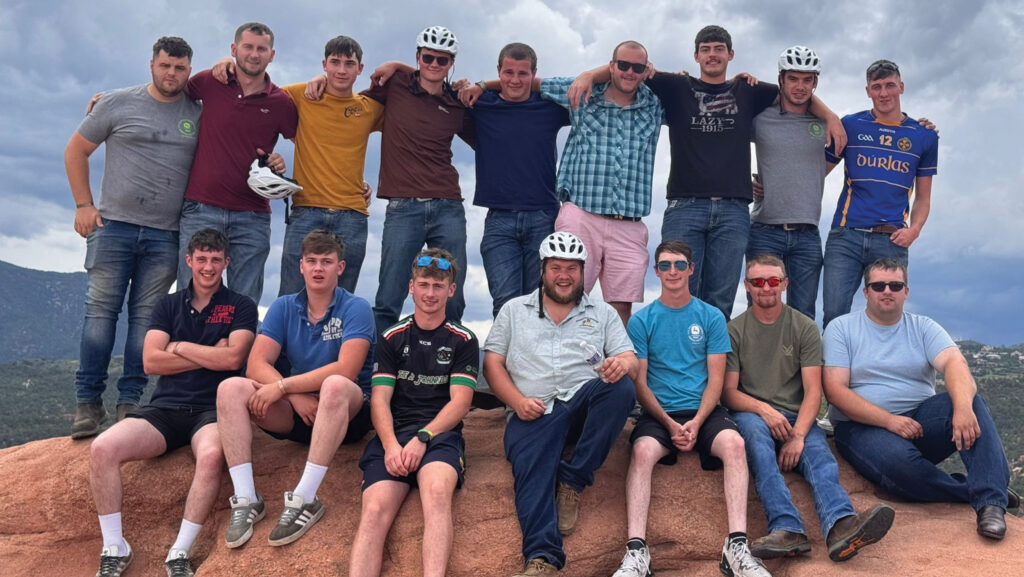
The Frederick Harvesting crew © Oliver Vance
Development opportunity
Beyond technical knowledge, Oliver says the experience contributed to broader personal development.
“You don’t just get experience on the farming side, you learn a lot of individual and social skills, and learning to look after yourself away from home,” he says.
“You aren’t just working there, you are having a living experience, too.”
For others considering a similar path, his message is clear. “Do it before it’s too late.
“If I had chosen not to do it, I would have been kicking myself for the rest of my life.”
Custom harvesting in the US
Custom harvesting crews cross the US from May to November and follow ripening crops northwards, with UK workers increasingly supported through visa schemes and recruitment programmes.
Crews typically spend seven to eight months on the road, beginning with crops such as wheat and canola in the spring, before moving on to corn and other autumn harvests.
Paul Hore works with the University of Minnesota through Harvest Support USA UK, an organisation that helps place overseas workers into US custom harvesting roles.
“There are around 600 crews in the US custom harvesting, with average crews having around four to six combines,” he says.
“It’s a big operation. Harvest has to be done quickly in the US due to the weather; that’s why they have big groups that go out and do it.”
Paul began working on US harvests 15 years ago and completed three seasons himself before moving into recruitment.
“I facilitate the applications and work with crews in the US to place people from the UK,” he says.
“I help people get their visas, flights and insurance, and I’m on hand for any queries and support.”
Paul emphasises how welcoming and friendly the American crews are.
“There is so much to see, and the territory is beautiful.
“What you will learn during the season is something you will treasure for the rest of your life and bring so much back for your career.”
Paul says he reviews applications year-round.