

How a vaccine transformed crypto control for one beef system
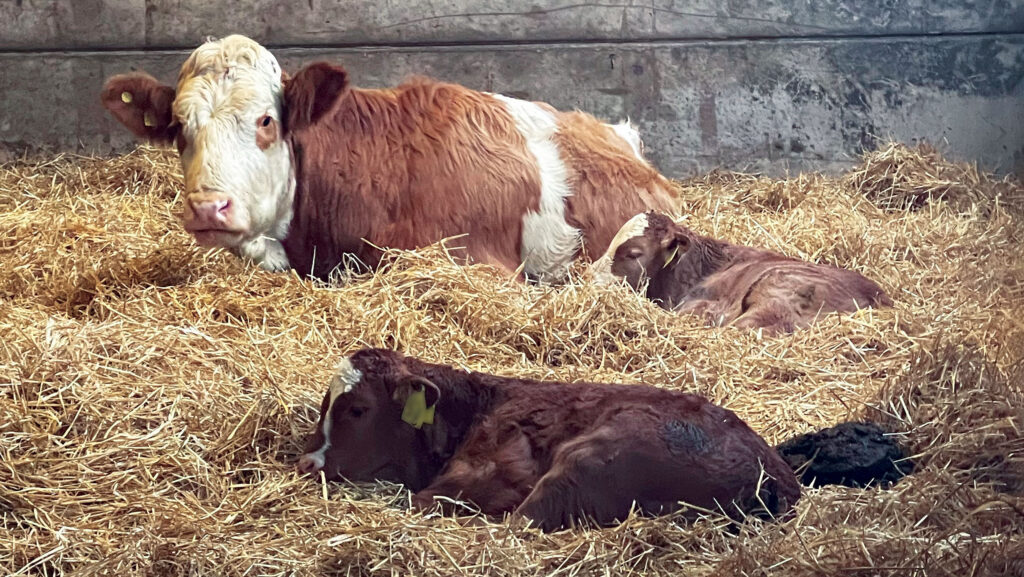 © Olivia Martyn
 A new vaccine for cryptosporidium has markedly improved calf health and eased labour demand on a Perthshire beef farm – but it relies on excellent colostrum management to be effective.
See also: How to make sure suckler cows produce top-quality colostrum
Each year, the Martyn family, from Wester Bleaton Farm, Blairgowrie, buy in 200 maiden heifers, calve them and sell the heifers with 10-week-old calves at foot.
The system is labour intensive in a good year – but throw cryptosporidiosis into the mix and it borders on unsustainable.
Farm Facts
Wester Bleaton Farm, Blairgowrie, Perthshire
- Hill farm at 243-366m above sea level
- Calving maiden heifers at 36 months and selling pairs
- Buying and selling at auction market
- Vaccinating for rotavirus, coronavirus, E coli, leptospirosis, bovine viral diarrhoea and cryptosporidiosis
- 600 breeding ewes
Ten years ago, the calves got scour and the family lost 10 calves in a week. Faecal sampling revealed crypto was the cause, and problems recurred every year, until vaccination was trialled.
Previously, once a calf was infected, it would receive Halocur oral solution plus 6 litres of oral rehydration solution every day for five days.
This meant separating the freshly calved heifer and calf and running the calf through the handling system to administer treatment.

Raymond Martyn © Olivia Martyn
“We have never lost a calf since – you could call us stubborn,” says Raymond, who farms with his wife, Olivia, their son Paul and one full-time employee.
But at a time of year where they were already up all hours, managing crypto was “not for the fainthearted”. There were days when they were treating 50 calves in a day.
Long-term impact
The impact on the calves, too, could be severe. “If their stomach is badly damaged, they can’t absorb the rehydration or Halocur and they will die,” he explains.
Raymond believes crypto affected the price they received for their animals at market, as calves lacked “bloom” and would be left with an obvious rump burn as the jelly-like scour burned the hair off.
It also left calves more vulnerable to secondary infections, such as pneumonia.
The Martyns’ farm vet, Roddy Binnie of Thrums Vets, says young calves will never catch up on their performance if they have had crypto.
After trying all methods of reducing the risk of infection and transmission, such as batching animals into smaller groups and disinfecting the buildings, when Raymond heard there was a new vaccine available in the UK, he thought he would give it a go.
Although he initially planned to try the vaccine, Bovilis cryptium, on 20 heifers, he decided instead to go all-in and bought 400 doses in spring 2025.
Colostral transfer
The vaccine is administered to the heifers pre-calving. This is not a problem for the Martyns because they are already giving vaccines at that time, and a decent handling system with hydraulic crush makes the process easier.
The primary course is a double dose; thereafter, a single-dose annual booster is required.
The vaccine, which raises antibodies in the mother’s milk against Cryptosporidium parvum, then works through colostral transfer to the calf.
Roddy says that for the vaccine to be effective, attention needs to be paid to the colostrum quality, quantity and transfer.
“If you’ve not got those three things in place, there is no point spending money on the vaccine – there is no point putting the vaccine into a cow if the colostrum doesn’t go into the calf,” he says.
In the run-up to calving, Raymond’s heifers now receive an extra 1kg a head a day of soya bean protein in the total mixed ration to boost their colostrum production.
Results
In the vaccinated herd of heifers in 2025, not a single case of cryptosporidiosis was seen in the calves, but what was really revealing was what happened in a later-calving, unvaccinated group.
“We have a small number of cows as well – about 30 – and we forgot to vaccinate them. They started calving a bit later and as soon as 10 had calved, they all got crypto,” says Raymond.
“But in that pen, we [also] had one heifer who was calving later than she should have – she was vaccinated and her calf didn’t get the crypto.”
Similarly, in summer, the Martyns calved 15 heifers at grass. These were not vaccinated, and all their calves got crypto.
“I’m the first to try and save farmers some money, but I think it does need to be a blanket vaccination [across all animals],” says Roddy.
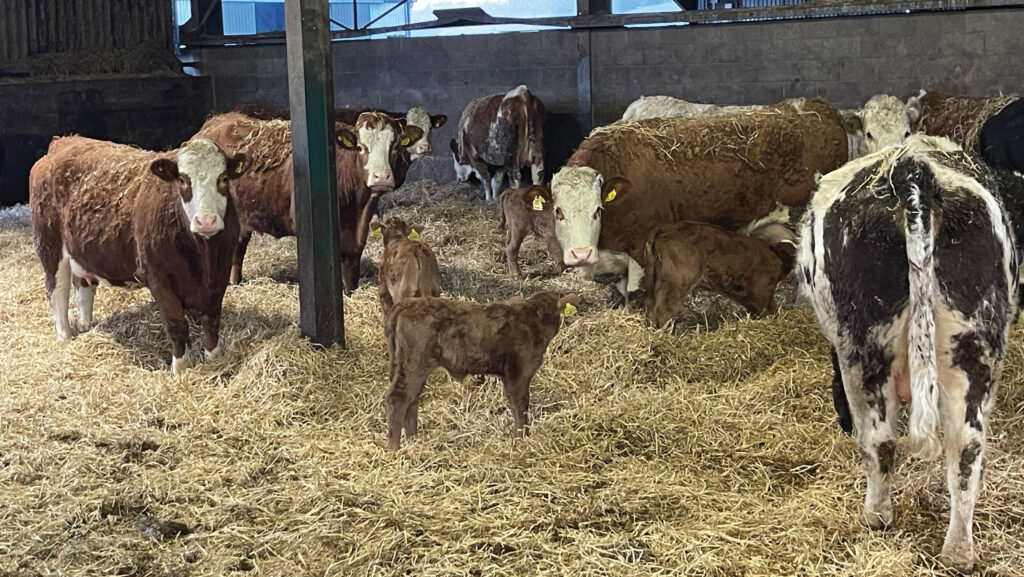
© Olivia Martyn
Vaccine cost
The vaccine cost £6.75 a dose, which brought the primary course to £13.50 a heifer. Raymond believes using it is a “no-brainer” – and for their 2026 sales, he says will be noting in the market catalogue, and asking the auctioneers to announce, that the family would encourage customers to continue the vaccination programme in the heifers they buy from him.
“We like to see cattle we sell doing well for people,” says Raymond. His heifers, with calves at foot, averaged £4,100 last year, so ensuring calves are healthy and strong for sale at market, often to repeat customers, is key.
Raymond also experienced at first hand how dangerous crypto can be for humans, when his granddaughter was hospitalised after becoming infected with the parasite.
Mitigation measures
While he would not want to discourage other farmers from trying to prevent and minimise infection through management measures, he says nothing stopped it on their own farm.
Limited geographically to calving inside, and calving early for their system, it was impossible to stop the disease returning each year.
However, Roddy says he would recommend that all efforts to minimise risk are in place before introducing vaccination for the “farm-specific disease”.
“It’s another tool in our arsenal,” he says, but would also recommend considering:
- Block calving in as tight a window as possible
- Keeping calving areas and calf pens clean with dry, fresh straw
- Minimising mixing of cows and calves once calved
- Focusing on colostrum quality and feeding
- Clipping tails
- Investigating shed disinfection between calving periods and considering getting professionals in to do it because of the chemicals involved.
Cryptosporidiosis – essential facts
- Parasitic disease caused by Cryptosporidium parvum usually seen in calves under six weeks old.
- Cause of more than 50% of neonatal and preweaning calf scours in the UK between 2015 and 2023.
- Symptoms often begin with profuse yellow scour, loss of appetite, lethargy and ear droop followed by abdominal pain, dehydration and fever. Reduced weight gain might also be apparent.
- The oocyst (egg) is the infective stage, which can remain viable for long periods of time due to its tough outer shell – more than a year in soils and pasture and up to four years in freshwater.
- Possible sources of infection: calf-to-calf transmission through the faecal-oral route; dams; animal handlers; contaminated bedding; sheds and pasture, as well as contaminated buckets, teats and drinking water.
- Cryptosporidiosis is a zoonotic disease meaning humans can also contract it and should be cautious when handling scouring calves.
- Other animals such as lambs, deer and rabbits may shed C parvum oocysts, and insects such as flies can carry the parasite.
Source: The Moredun Foundation News Sheet Vol 8