

How switch to organic has improved forage for two farms
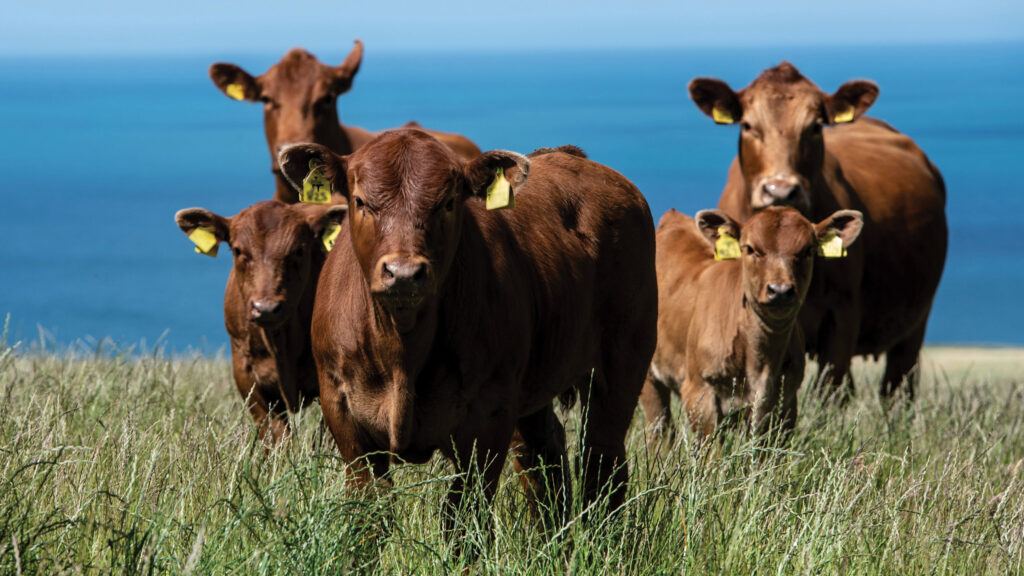 Stabiliser cattle at Scadghill Farm © The Priest family
 For Liz and Rob Priest, switching to organic has sharpened their focus on forage – improving quality, productivity and utilisation.
The result is lower costs, strengthened business resilience and peace of mind.
Today, they produce 9t of dry matter (DM)/ha from permanent pasture and diverse leys, with 80% utilisation.
See also: How dairy-beef outwintering setup saves on winter housing costs
On forage alone, lambs achieve up to 600g in daily liveweight gain (DLWG), while cattle reach 600kg liveweight by 18 months and a finished weight of 650kg by 22-24 months.
The Priests have two organic farms 14 miles apart: Kingsford Farm, near Holsworthy, Devon, and Scadghill Farm in Bude, Cornwall – totalling 208ha (514 acres) including rented land.
Farm facts
Kingsford and Scadghill Farms

Liz and Rob Priest © Natalie Noble
- Kingsford 61ha, Scadghill 89ha, plus three blocks of rented land
- 80 Stabiliser suckler cows and 82 youngstock/finished cattle
- 300 Aberfield ewes, 300 Highlander ewes
- Mid Tier Countryside Stewardship and Sustainable Farming Incentive agreements
- AHDB Monitor Farm since 2022
- Diversified income from farm buildings leased out at Scadghill
They produce finished cattle and breeding stock from a herd of 80 Stabiliser suckler cows, certified free of Johne’s and bovine viral diarrhoea.
They also breed and finish lambs from a split flock of 300 Highlander ewes and 300 Aberfield ewes.
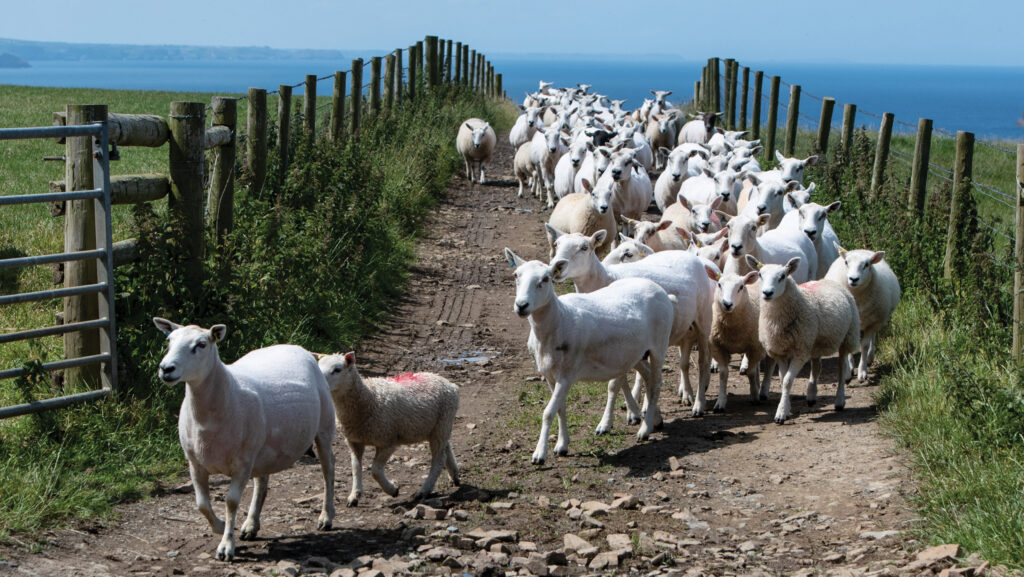
Sheep at Scadghill Farm © The Priest family
Kingsford’s loam-clay soils saturate quickly and favour silage production with some summer grazing.
It has cattle housing and a shed equipped for some indoor lambing.
Scadghill is more free-draining and provides the main grazing platform, plus further silage ground.
Both farms grow diverse leys and crops, including Sustainable Farming Incentive (SFI) options such as herbal leys and legume fallow.
Forage and crops grown at Kingsford and Scadghill |
|
|
Pea and barley wholecrop |
6.5ha |
|
Chicory, plantain, red and white clover mix |
5.7ha |
|
Fast-growing rye grass and berseem (annual) clover |
2.8ha |
|
Legume fallow |
8ha |
|
Herbal ley |
59ha |
|
Permanent pasture |
92.3ha |
|
Red clover |
7.7ha |
Conversion to organic
In 2005, the Priests secured a £125,000 grant, spread over five years, to convert two farms: Kingsford, run by Rob’s family since 1939, and a 65ha (161-acre) unit at Sutcombe bought in 1999 to grow the business.
The grant funded a tractor, seed drill, organic purchases – including seed and livestock – and helped cover a significant dip in forage, cattle numbers and livestock output.
“It was a painful first couple of years,” says Rob. “After three years, we’d recovered livestock numbers.
“It took us about five years to get properly into the cycle.”
In 2021, they sold the Sutcombe farm and bought Scadghill Farm to grow livestock numbers, while reducing input costs by outwintering cattle.
This farm was converted to organic in 2022 without grant funding.
Fresh approach
“One of the biggest lessons going organic teaches you is how much of what you did previously in a conventional system just masked the problem,” says Liz.
She added that not every change they made was required for certification but came from needing to find new ways to manage land and livestock.
“You don’t have the conventional toolkit to just sort the problem out – a bit of fertiliser to get that extra month of grass,” says Rob.
“So you need to be more organised and understand what’s happening at the root cause – like your soils.”
In a conventional system, we would have used a broad-spectrum wormer multiple times, spent money, and risked resistance – without fixing the issue
Removing fertiliser quickly exposed tired leys.
And after a failed overseeding of clover, they realised full reseeds were needed to bring forage production back up without artificial nitrogen.
Sourcing good-quality, organic grass seed presented a further challenge.
“Know what you need and have it ordered at least two months in advance,” he advises.
Without the security of artificial inputs, and having to buy more costly seed, they paid closer attention to their farms’ soils through regular analysis.
However, that was not before Rob had rushed to reseed a poor-performing ley for red clover silage at Scadghill – which failed.
A pH test revealed the issue – soils averaged pH 5.5 but were as low as pH 4.9.
Then they got caught out by organic compliance regulations: applying a fast-acting lime to correct pH, they inadvertently applied a product that was certified organic by the Soil Association but not by their certification body, Organic Farmers & Growers.
Use of anthelmintics has been drastically reduced through regular faecal worm egg counts, with resistance checks showing up to 93% kill in older groups of wormers.
Scouring lambs proved the value of testing when lambs tested positive for coccidia.
“In a conventional system, we would have used a broad-spectrum wormer multiple times, spent money, and risked resistance – without fixing the issue,” Liz reckons.
Grazing management
Over the past 14 years, herbal leys have boosted soil health, forage output, stock nutrition, and biodiversity.
They have also strengthened drought and disease resilience through deeper, varied rooting and multispecies diversity.
In 2017, joining an AHDB Beef from Grass project taught the Priests how to manage water supply and move from set stocking to rotational grazing.
“We [now] have peace of mind that when forage is challenged, we have three weeks of forage in front of the stock, and have time to make decisions,” says Rob.

Sheep grazing the chicory, plantain and clover ley © Natalie Noble
Cattle and sheep graze on a 24-day rotation at peak forage growth, moving every three days to fresh grazing.
Turnout has moved from whole-herd turnout in May to a gradual turnout beginning as early as February.
Scadghill is gradually being reseeded, with almost all permanent pasture targeted with diverse leys to reduce compaction and improve soil health and forage production.
Performance off forage
In 2022, the Priests introduced bale grazing to outwinter cattle and mitigate the logistical challenge and cost of housing.
About 110 cattle run on six fields totalling 21ha (51 acres), with bales set out across the grazing and fed at one bale/day.
Fields used for bale grazing are permanent pasture or three-year leys earmarked for reseeding the following spring/autumn.
Cattle under 220kg (R1s) are housed; in January, those weighing more than 260kg are turned out onto bale grazing, allowing them to ease into the spring flush of grass.
This year, outwintered cattle achieved DLWG of 0.6kg/day, compared with 0.3kg/day for housed stock, with compensatory growth from the spring flush at 1.4kg/day, and some achieving 2kg/day.
Ewes grazing herbal leys finished early-March-born Aberfield/Primera lambs at 41kg (20.7kg deadweight), with the first 60 lambs selected at 85 days of age.
Later-born lambs weaned and grazed on leys of chicory, plantain, and red and white clover have achieved DLWG of up to 600g/day.

Chicory, plantain and clover ley © Natalie Noble
“There’s a lot of nutritious, bioactive plants and they’ve grown very well on it,” says Rob.
In the past two years, the Priests have trialled an organic-certified foliar fertiliser with soil specialist Tom Tolputt, using fish-waste hydrolysate and biofertiliser to produce a higher protein forage.
Early results show higher plant-available phosphate, increased soil bioactivity, and signs of increased protein levels.
They have since invested in a machine to continue applications post-trial.
Reflecting on their organic journey, Liz emphasises the importance of continuous evaluation of the business.
“What we really have learned is that you’ve got to keep asking questions – of advisers, other organic producers, and of yourself,” she says.