

Why dairy-beef enterprise fits well alongside suckler herd
 © Country Girl Media
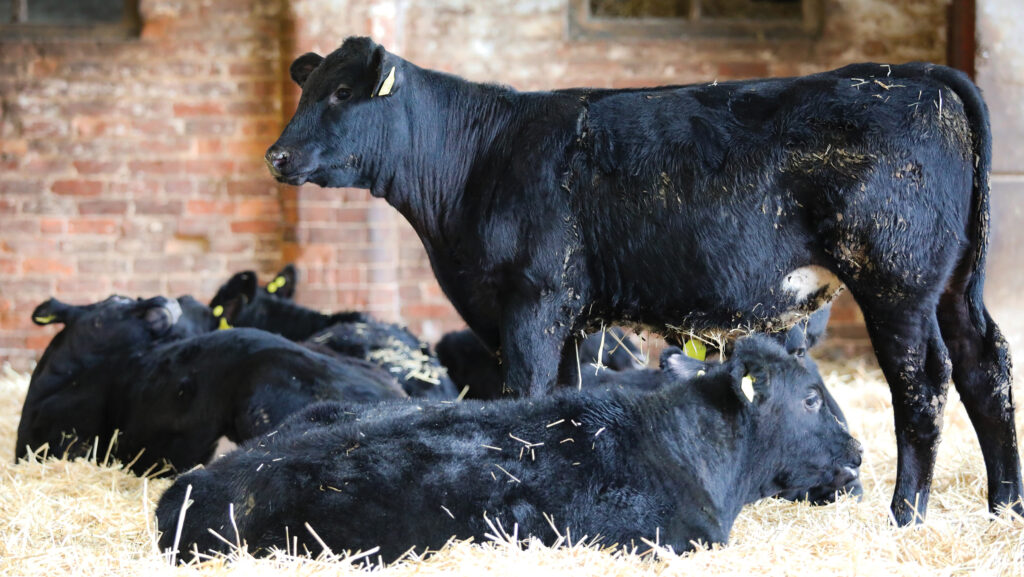
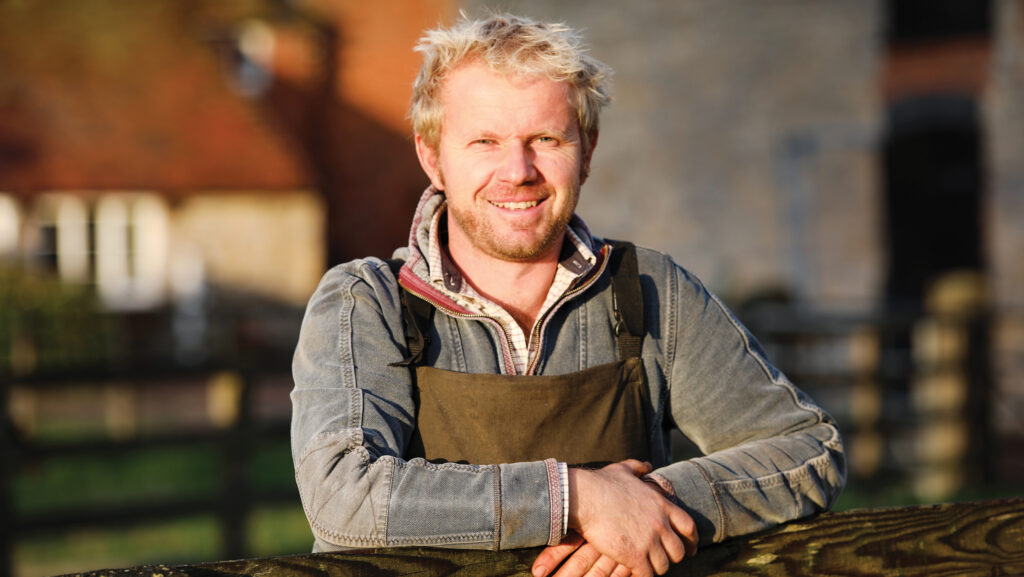
 Harry Gilder reckons he has the best of both worlds. The 120-strong suckler herd at Moat Farm, Lower Strensham, Worcestershire, produces premium-grade carcasses off a forage-based system, while dairy-beef cattle, bought through an integrated supplier, provide a reliable, low-risk source of additional income.
See also: How dairy-beef outwintering setup saves on winter housing costs
Harry farms across two sites in partnership with his parents, Gerald and Mary. One site provides grazing throughout the summer – though not last year, when hay had to be fed in drought-stricken fields – and floods in winter; the other is free-draining and is used for outwintering cattle.
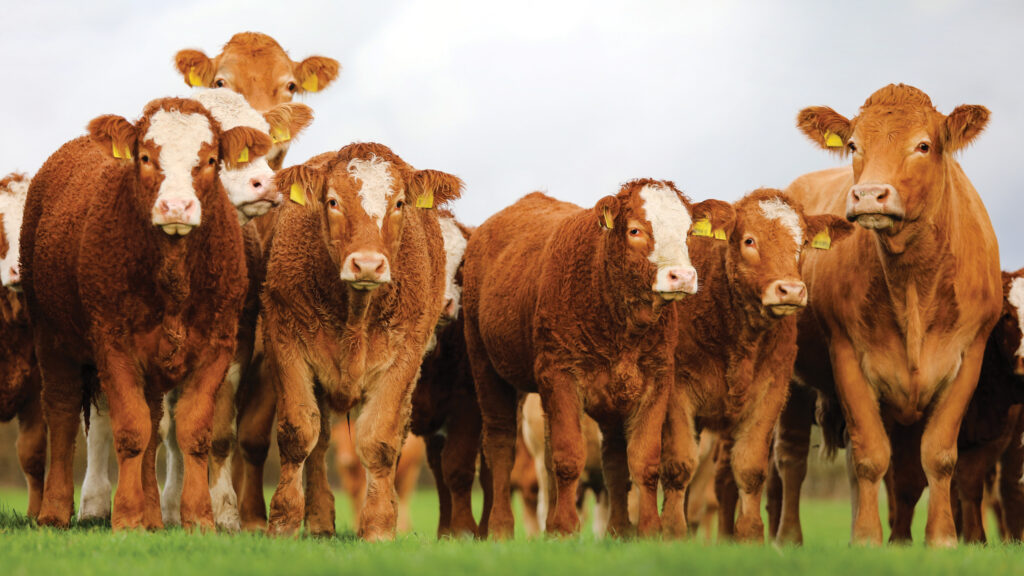
The family used to breed pure Limousins, but Simmental genetics were introduced to produce more milky, docile cows.
The resulting crossbreds also outwinter better, says Harry. This winter, 80 cows bale-grazed for 70 days from weaning at the beginning of November.
Bales are set out in late summer and, once grazing starts, it takes one person an hour a day to see to 80 cows.
“The biggest expense with single suckler cows is housing them,” says Harry. “We’ve been outwintering for five or six years now. There’s no straw, no tractor, so it saves a lot.”
Cows are brought indoors to calve from early March. They are turned out again from mid-April in groups of 30 cows and calves plus one bull.
Farm facts
Harry Gilder © Country Girl Media
Moat Farm, Lower Strensham, Worcestershire
- 283ha across two sites
- Land includes 61ha arable cropping of wheat, barley, maize and fodder beet
- Permanent pasture plus grass leys
- 120 Simmental cross Limousin suckler cows and heifers, calving at 24 months
- Eight-week calving block
- Progeny plus 40 dairy-beef steers taken to finishing weight
- All finished cattle sold to Dunbia
- Flock of 700 Suffolk cross Mules put to Texel tup, lambing indoors in January and March
Growth rates in suckler system
Weaned cattle move on to a total mixed ration (TMR) of grass and maize silage, fodder beet, home-grown wheat and barley, and bought-in soya bean, rapeseed meal and minerals.
Calves are weighed at weaning – last autumn averaging 321kg – and at one year old and when worming and TB testing. Once they approach finishing weight, they are weighed every fortnight.
Steers achieve a carcass weight of 400kg from 18-19 months, while heifers finish at about 22 months; they reach mostly U3 and U4 grades.
“I’m very impressed with their growth rates – daily liveweight gain averages 1.5kg and they finish very easily off a forage-based system,” says Harry.
Weight data is also used to help select potential herd replacements. “We’re looking for the biggest heifers,” says Harry.
“We don’t want short, fat animals, we want frame, plus good temperament, feet, teat placement and locomotion. And when we select breeding bulls, we go for easy calving – this season, out of 35 cows calved so far, I’ve pulled two out.”
© Country Girl Media
Move away from market-bought stores
Alongside the suckler herd, the farm rears dairy-beef cattle to finishing weight. Harry recalls: “Previously, Granddad would buy store cattle each autumn from Cirencester and Worcester markets to finish.
It was his thing, and he had a good relationship with the auctioneers. But some weeks, he’d come back with nothing, and it was often hard to buy an evenly sized group of animals.
“When he passed away four or five years ago, we decided there was too much risk in terms of price and disease coming on farm.
He would buy single-suckled calves, but they are getting few and far between around here, so there’s not much choice now. And the time taken to go to market – it could be a whole day – was too valuable.”
With spare capacity, increasing the size of the suckler herd might have been an option, but it would lead to a shortage of summer forage, says Harry.
So, instead of bidding in the livestock ring, the family opted to buy dairy cross Aberdeen Angus calves through Dunbia.
The Gilders own the cattle, supply housing and feed, and meet veterinary costs, while Dunbia offers nutrition advice and assesses the cattle as they approach slaughter weight.
Easy transition
© Country Girl Media
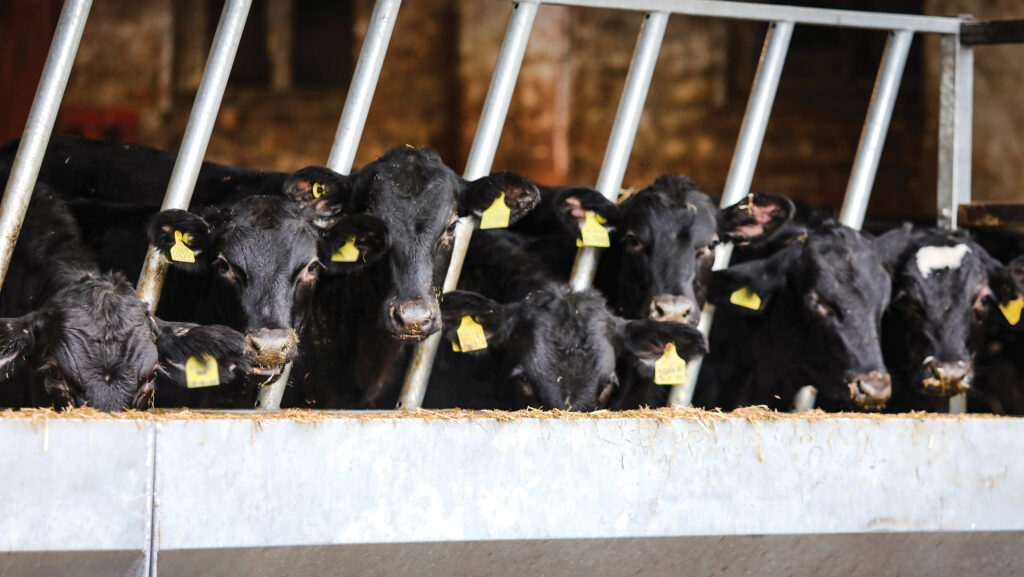
“We buy in 40 steers a year, in one or two lots in the autumn. They arrive fully vaccinated at three to four months old, weighing 150kg on average – they’re all within 10-15kg of each other,” says Harry.
“And it’s easier to manage inputs now: we know the feeding system they’ve come from – ad-lib straw and concentrates – and can manage a gradual transition to a TMR.”
In addition, rather than arriving at the farm newly weaned from a suckler system, the dairy-beef cattle, having been handled from birth, are less stressed.
“Previously, they would be bawling for their mums. We all know weaning is the most stressful time, and growth rates would stand still. It’s less of a shock to the system for the dairy-beef calves when they arrive. They’re very easy to handle compared with single-suckled calves, which can be quite skittish.”
The dairy-beef cattle go out as strong stores in summer, moving between two fields. “I’d prefer to be mob grazing, but we’re not there yet. It takes time to set up the system,” Harry admits.
Grazing is supplemented with 1.5kg/head a day of an 18% protein home-mixed cereal blend. “Our own cattle just keep going, but the dairy ones need a bit extra all the way through,” he adds.
Cattle return indoors in the autumn and reach finishing weight from January onwards. Average daily liveweight gain is 1.2kg, while average carcass weight for the 25 cattle out of 40 sold so far this year is 377kg, at £6.50/kg including a 10p/kg Angus bonus.
Reliable income
“The margins aren’t as good as for our own cattle, but we can’t keep more cows,” says Harry. “I’m glad we’ve got the herd: it’s a big asset. Every year we get 115 calves, and to buy them in would be a hell of a big cheque. You could be talking £200,000.”
However, the dairy-beef enterprise provides a valuable and reliable additional source of income. “There’s profit in the job, and it takes the risk out of buying animals at market,” he says,.
The purchase price is set in advance – the most recent batch cost £740 a head – and an unwritten contract price is agreed when the calves arrive on farm.
“At time of slaughter, if the market is above this price, we get the full difference; if it’s below, we get the unwritten price,” he explains. “So, if the market crashes during the time the animals are on the farm, we have some reassurance.”