

Blowfly strike warning as weather sets to warm up
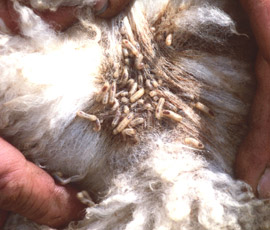
Farmers are being warned to take preventative action to avoid blowfly strike as temperatures begin to rise.
As soon as the temperature gets above 9C, blowfly larvae that have overwintered in the soil start to develop and eventually pupate, so the start of the strike season will not be far behind, explains Richard Wall of Bristol University.
“Farmers must start to plan their preventative measures, because once the adult flies are on the wing, blowfly strike happens extremely quickly,” he says.
Prof Wall says the larvae can develop in as little as two to three days after the eggs are deposited in the fleece of sheep. “If an infestation is missed, the reality is a sheep can die from repeated strikes within one to two weeks,” he warns.
Vet Fiona Anderson of Novartis says blowfly strike can easily be prevented through the use of products that contain insect growth regulators (IGRs).
“Prevention is always better because adult flies can lay so many eggs on a flock and farmers do not time to check their sheep. IGRs prevent the development of the damaging second- and third-stage maggots that are responsible for causing fly strike and stock damage,” she adds.
Blowfly strike facts
Blowfly affects the entire fleeced area of a sheep:
- Body Strike- flies are attracted to the odours of excessive ‘sweating’ and decaying matter in the fleece
- Breech strike- flies are attracted to fleece contaminated with urine and/or faeces
- Wound strike- flies can be attracted to open wounds
When left untreated, blowfly can affect the welfare of the animal, or even cause death
Productivity can be affected by blowfly strike by reducing reproductive potential and lamb crops, increasing time to market for lambs, downgrading of the wool clip and reducing leather quality.