

Creep feed calves to sustain cow fertility
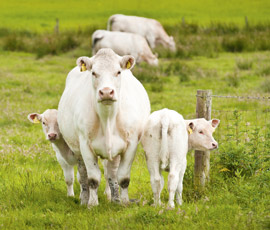
Beef producers should pay close attention to cow condition and seriously consider creep feeding calves this season to ensure cow fertility and weaning weights are not compromised.
Independent beef and sheep consultant David Hendy says many spring calving suckler cows are at least one body condition score below where they ought to be at this time of year, following the harsh, long winter. As a result milk production will be under heightened pressure, he says.
“If ever there’s an opportunity to focus on creep feeding calves, this is the season,” he says.
Many cows have been calving-in at condition score two or less, compared with a target of two-and-a-half, which could potentially lead to poor milk production and infertility.
Mary Vickers, beef and sheep scientist for EBELX, says it’s crucial not to forget the cow. Failure to address body condition could have long-term implications on conception rates, calving period length and costs.
EBLEX calculations show calving periods that extend beyond 12 weeks cost about £3.35 a day in feed costs for the empty cow and lost income from calf growth. This could equate to £187 a cow for a 20-week calving period.
“You want a cow at an optimum condition score of 2.5 at calving through to service,” says Dr Vickers. “She also needs to be on a rising plane of nutrition to maximise conception rates when the bull goes out in May-June.”
She says where possible good quality silage, or cereals with a forage component, should be directed towards the thinnest cows with a condition score of under 2.5.
“Think about replacement heifers too,” she says. “You want to maximise their conception rates. If you have a spread calving period in heifers, this will be bought into the main herd,” she explains. It may also be worth prioritising good grazing for this group to ensure they maintain growth rates and get in calf.
Gavin Hill from SAC Consulting has real concerns over the level of under conditioned cows he’s seeing in Scottish suckler herds.
“Some cows are at or below a condition score of two and will consequently need a lot of work to ensure they will be ready to stand for the bull,” he says.
These animals will need two months to regain condition on ad-lib spring grass before they will start cycling and be ready to be served.
“If grass growth is still slow, then supplementing with 2kg of cereals a day containing 50g of a high magnesium mineral will be worthwhile,” he says.
Mr Hill believes in some cases it may be worth considering delaying service by 2-3 weeks to ensure cows are ready to be served. This will also give more time for grass growth to be sufficient enough to support cow stocking rates needed when bulls go out.
Failure to address condition in these thin cows and first and second calvers could result in high barren and cull rates later in the year, he says.
To ensure calf growth rates are not compromised because of reduced milk production, Mr Hendy also says it’s crucial to keep a close eye on calf condition and don’t hesitate to feed creep.
He suggests creep feeding a simple 50:50 mix of whole oats and malt residual pellets or a 16-18% protein compound pellet.
The good feed conversion efficiency of the calf and good growth rates will more than justify the cost.
EBLEX has produced a Better Returns from Body Condition Scoring Cows and Heifers leaflet. Find out more at www.eblex.org.uk