

10 ways to help shield dairy herds from sharp price shocks
 © Tim Scrivener
 Rising fuel, fertiliser and feed prices caused by the Middle East conflict could add an extra 2.1p/litre to costs, bringing the breakeven cost of milk production to 40-41p/litre.
This has been caused by immediate increases in prices, calculates Edward Lott of EJL Business Consulting.
Feed cost rises are largely as a result of transport surcharges from spiralling fuel costs.
See also: Advice for producers on navigating falling milk prices
Red diesel price increases of 60% will bite hard, with many dairy producers preparing to start silaging and planting maize, says Edward.
However, a major concern is the potential for broader inflationary rises, although these could take up to a year to fully manifest.
“The longer the war goes on, the more baked-in inflation will become – as we saw with the Ukraine crisis,” he cautions.
Lost income
The war could hardly have come at a worse time, following the recent crash in milk prices.
Kingshay Dairy Costings for January showed the typical UK dairy farm returned an average milk price of 37.4p/litre, a drop of 8.9p/litre from the year before.
This drop amounts to more than £11,000 in lost income each month for the average farm, with further declines since.
With feed cost accounting for 11.4p/litre on average, for those on 34p/litre, this leaves a narrow margin of 22.5p/litre over purchased feed to cover all other costs, calculates dairy consultant James Hague of Dairy Club.
“The milk price itself isn’t covering the cost of production for most.
“The thing that is bringing many farmers’ heads back above water is [strong] calf and cull cow prices,” he says.
While these are expected to continue, James says cost increases threaten already slim margins.
“Every pound spent needs to be challenged – is it a cost or an investment?”
James and Edward give practical advice on gearing the business to build greater resilience.
1. Avoid knee-jerk cost cutting
Reducing concentrate inputs might offer an immediate cost reduction, but this needs to be carefully weighed up to avoid ramifications for milk yield, fertility and body condition score later, when milk prices begin to rise.
With the milk-to-feed price ratio still over 1:1, James says feed can still pay.
“The real engine room you’ve got is your milk output, and your feed is the driver of that engine.”
Ed says exposed businesses that have not secured fertiliser or fuel may be tempted to delay buying.
However, he warns against this. “If you fail to put fertiliser on this year’s crops, or delay silaging, this will affect production going into 2027, and that will have greater implications for your business long term.”
2. Communicate with lenders
Ed suggests that once budgets have been calculated, farmers may need to increase the overdraft to obtain additional working capital for inputs.
“Any bank will be nervous about extending the overdraft without a clear path to seeing them come down again,” he advises.
Restructuring the overall debt portfolio and extending loan maturities can also provide some relief to cash flow, he adds.
“If a business underperformed even in good times, a fundamental review is crucial, and exiting dairying may need to be considered.”
3. Lock in variable prices
Fixing feed in advance can help make monthly budgeting more accurate.
“If you haven’t already forward-bought feed, watch the markets very carefully.
“You generally don’t know what milk prices will be each month.
“But securing feed at a price that works for you will reduce some of your exposure to potentially higher costs,” suggests James.
4. Benchmark to unlock potential
The average UK farm is producing almost 9,000 litres from 3.3t of purchased feed, according to Kingshay’s Dairy Costings.
James says there is untapped potential to improve milk yield without increasing feed inputs, by identifying bottlenecks.
Using the Dairy Club’s What-if Tool based on Kingshay’s Milk Map, James demonstrates the difference between herds achieving 9,000 litres and 10,500 litres from the same feed equates to £130,000 in margin over purchased feed, on average.
He suggests producers explore why, by unpicking areas such as youngstock management, forage quality and soil health.
5. Optimise heifer performance
One of the biggest bottlenecks limiting milk production is heifer performance, with data from the latest National Milk Records 500 Herd KPI Report revealing huge gaps between the best and worst herds.
Heifers in the top-performing herds average more than 85% of the mature cows’ production, while the bottom quartile fails to hit 75%.
Using an example herd, James demonstrates that when heifers average 76% of their mature herd weight, at a milk price of 34p/litre, the best heifers return £3,679, compared with £2,100 for the bottom ones.
Yet none of these heifers achieves breakeven against total farm costs.
A common issue is heifers entering the herd undergrown.
After calving, energy is then diverted from milk to growth, explains James.
In the first 150 days in milk (DIM), heifers can grow by 80kg. This would require 15MJ of energy daily, equivalent to 2.8 litres of milk.
“We must make sure we are feeding that extra milk-equivalent energy, otherwise heifers will take it off the litres they produce,” he notes.
He advises:
- Calve heifers at the correct size and condition before they enter the herd
- Consider separate heifer milking groups
- Cull poor performers/those that have suffered from disease early.
“The first loss is the best loss in some cases. It’s much better to bring in fewer, better heifers than being a beef feedlot.”
6. Review rations regularly
In fast-moving markets, dairy costings should be reviewed at least monthly, or even weekly, with attention given to rations.
James advises comparing what is fed with what is eaten so that feed strategies can be adjusted.
“A week is a long time in this game, and milk could drop significantly.
“Keep a constant eye on forage quality because silage quality changes through the clamp,” he says.
Red diesel © Tim Scrivener
7. Maximise forage quality and reduce waste
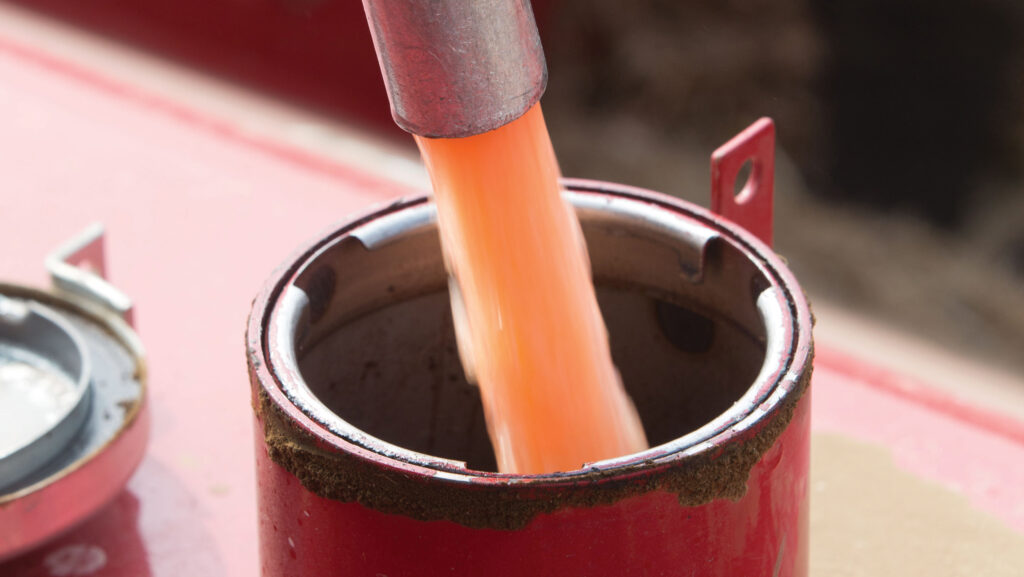
Sharp increases in diesel prices from 70p/litre to about 135p/litre will inevitably push up the cost of contracting this season, warns James.
Forage remains a cheaper feed option, but only if it is high quality.
Hillsborough research shows the importance of forage quality: at lower feed inputs, the difference between high- and medium-quality silage resulted in a 3 litre/day yield difference.
High-quality silage also resulted in the same yield for 2.5kg less cake fed.
“At higher levels of concentrate, marginal gains are much lower, but the level of substitution for the lower cost ingredients is higher,” he explains.
He encourages producers to challenge rations from the bottom up to review where incremental gains can be made.
He adds that scrimping on silage additives may be a false economy if it lowers the quality and quantity of silage.
“Silage losses can be significant. You can easily lose 10-20% of dry matter harvested.
“Filling that feed gap could be costly. Good clamp management, as tedious as the message may be, pays hands down.”
8. Calibrate feeders
A study of 16 farms in Northern Ireland found that some farms were significantly overfeeding or underfeeding cows.
With purchased feed on these farms costing £250,000 annually, James believes it is worthwhile spending time calibrating parlour feeders and mixer wagons, especially as feed bulk density changes.
9. Improve fertiliser efficiency
AHDB calculates that ammonia nitrate fertiliser prices have increased by 25-29% since February.
James suggests looking more closely at poorer-performing fields and conducting full soil analyses.
“One-third of soil samples record a pH well below the point where nitrogen and phosphate are efficiently used.
“This provides an opportunity for extra yield and quality. Lime is one of the cheapest inputs,” he says.
10. Review your cull strategy
James suggests reassessing culling policy to ensure cows are “putting margin in the tank”.
Consider removing cows that:
- Do not fit the system
- Have low yield persistence and long calving intervals
- Exhibit high somatic cell counts and clinical mastitis
- Are positive for Johne’s
- Are barren with high DIM – assess milk income versus feed costs.
Long-term planning
Ed encourages producers to plan for the medium to long term.
“The current position won’t last forever; no position does, so it’s important to think about putting the business on the right footing to grow in the long term.”
James Hague was speaking on a recent AHDB webinar.