

Advice on dairy biosecurity to minimise endemic disease risk
 © Tim Scrivener
 Assessing risk, asking the right questions and designing an ongoing, farm-specific management strategy are the foundations of good biosecurity when buying in stock.
According to vets, buying in animals remains the biggest risk of introducing infectious diseases.
Figures from the British Cattle Movement Service show that 4,431 live dairy cattle aged 24 months or older were imported to Great Britain from non-UK countries in 2024.
See also: Advice on vaccination protocols for dairy herds
All those – as well as purchases made within Great Britain – represent potential disease risk and highlight the need for appropriate preventative strategies.
Keith Cutler, a vet at Synergy Farm Health, says introducing an exotic new disease into a fully susceptible herd can have disastrous economic and welfare consequences.
That could include the likes of epizootic haemorrhagic disease and lumpy skin disease – which are spread by infected midges in a similar way to bluetongue and are present on the Continent – and even foot-and-mouth disease.
Most of these diseases are not yet on British shores and, while appropriate biosecurity for them is worth thinking about, Keith says it is important not to forget endemic diseases in the process.
Risk management
He urges all farmers to engage with the management of endemic infectious diseases, particularly bovine TB, bovine viral diarrhoea (BVD), Johne’s disease, infectious bovine rhinotracheitis (IBR), leptospirosis and neospora.
Although it is impossible to eliminate risk, he believes the aim should be to reduce risk as much as possible, because all of these diseases have debilitating animal health, welfare and production implications.
BVD, for example, could lead to suboptimal fertility and immunosuppression.
With many milk processors requiring enrolment in BVD control programmes, many farms are using tissue sampling tags (tag and test) on calves as a way of identifying infected animals to be culled.
However, in the absence of vaccination, Keith says this creates herds that are susceptible to disease, should BVD enter through a purchased animal.
Pregnant animals remain the most at risk of BVD: the dam may test negative for the disease, yet be pregnant with a persistently infected (PI) calf, which will shed the virus after birth.
Keith says this highlights that testing does not necessarily mean taking a blood test; rather, it could mean a pregnancy diagnosis to confirm that a bought-in animal is not in-calf.
Any animals that are pregnant at purchase must be quarantined away from other cows when they calve, and the calf tested to establish if it is a PI.
Quarantine
Ideally, all bought-in animals should be quarantined. The duration will vary depending on the farm’s disease management aims and the health status of the home herd.
Length, testing and surveillance strategy should be determined in conversation with the farm’s vet.
Buying in milking cows is a particular risk because of the difficulties in quarantining them.
“If you buy in a lactating dairy cow, it has to be milked, and can you properly manage biosecurity if it has to go through the parlour with other cows?” Keith asks.
In flying herds where the business model is entirely based on buying in freshly calved cows, disease management plans are likely to focus more on prevention and vaccination.
Quarantining is particularly valuable for diseases that develop rapidly, such as IBR.
However, with diseases such as TB and Johne’s, which are slow to develop and where test sensitivity is poor, length of quarantine will not make a difference, and ongoing surveillance will be necessary.
Vet Sarah Tomlinson, technical director of the TB Advisory Service and lead veterinary science expert at the AHDB, says because TB is a slow, progressive disease, isolation and quarantine may not make a lot of difference when looking for clinical signs of infection in cattle.
However, supplementary tests can be carried out to prevent test-positive animals entering the herd.
While post-movement testing between 60 and 120 days is mandatory in some parts of the UK, farmers outside these areas can carry out voluntary post-movement tests to manage their own risk of introducing TB into the herd, she adds.
High-risk animals
Sarah says the 2025 update to the Godfray Review of the TB strategy in England emphasises that “the overwhelming primary driver of TB in cattle herds is cattle-to-cattle transmission, particularly through the movement and trading of high-risk animals”.
She acknowledges that being shut down and subject to repeat testing is a barrier to voluntary testing, but she urges farmers to adopt a different outlook and treat TB like any infectious disease.
“The last thing you want is to introduce TB into your herd,” she says.
Assessing the risk bought-in cattle pose to a herd prior to purchase is time well spent, she says, pointing farmers to the ibTB interactive mapping tool, which identifies TB breakdowns across England and Wales.
This is useful in determining the possible risk of buying animals from a particular geographical area.
The map details how many breakdowns an individual herd has had and how many years they have tested clear.
Ideally, a herd would be regularly testing clear for three to five years (including no resolved inconclusive reactors) to allow confidence in the cattle being bought.
Sarah adds that the map can be used to assess the local risk surrounding a farm, such as nearby infected herds, or woodland which could harbour infected wildlife.
Biosecurity tips and resources
© Tim Scrivener
1. Use the AHDB’s cattle purchasing checklist
This provides a useful list of questions to ask sellers regarding control of key infectious diseases.
2. Use the ibTB map to assess risk
Use the map at ibtb.co.uk to identify TB breakdowns across England and Wales to help determine the possible risk of buying animals from a particular geographical area.
3. Buy cattle from a Cattle Health Certification Standard-accredited herd
This provides reassurance that certain infectious diseases have been managed, including bovine viral diarrhoea, Johne’s, infectious bovine rhinotracheitis, leptospirosis, neospora and TB.
This assigns a disease risk score for certain diseases.
4. Quarantine incoming animals
The quarantine period can be used to enrol animals into the herd’s vaccination programme, monitor for disease, and sheath-wash bulls, for example. Act on any test results.

© MAG/Judith Tooth
5. Plan ahead
If bulls are needed at a particular time of year, plan ahead and take the time to source them from an appropriate herd, then quarantine and monitor them before introduction.
6. Meet testing requirements
If the farm’s herd health programme stipulates quarterly bulk milk testing for certain diseases, ensure those requirements are met.
7. Take a team approach
Achieving effective biosecurity relies on engagement from all parties. Involve the whole farm team with a vet review to discuss and explain the importance of biosecurity and how to achieve it.
8. Avoid unnecessary visitors
Discourage unnecessary visitors from coming into contact with cattle on the farm. Ensure those who are needed have clean vehicles and disinfected footwear.
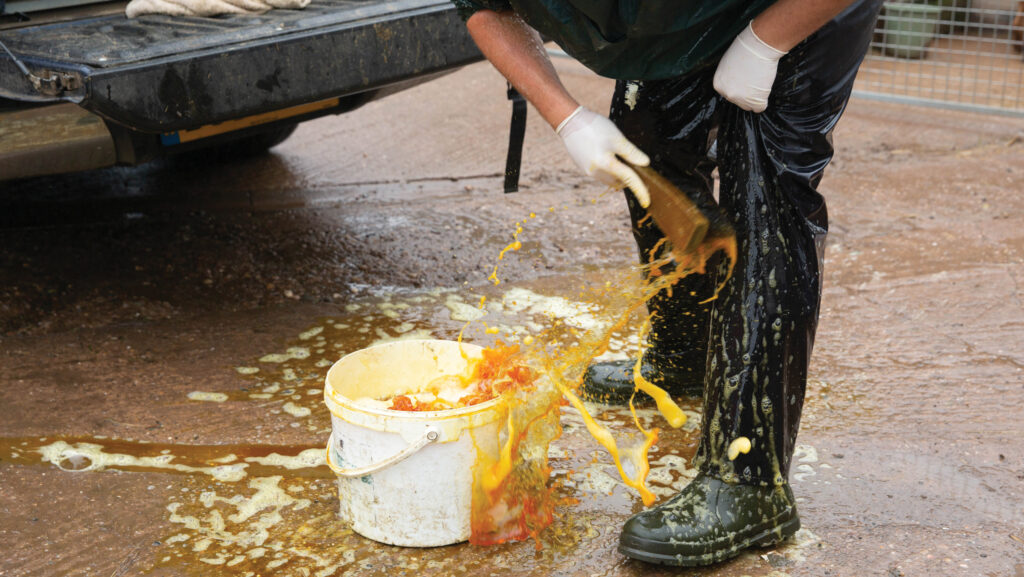
9. Use a Defra-approved disinfectant
Select a disinfectant that has been proven to be effective against infectious agents such as foot-and-mouth disease and in accordance with TB rules.
Find out more about approved disinfectant at defra.gov.uk.