

How integrated data systems could transform livestock farms
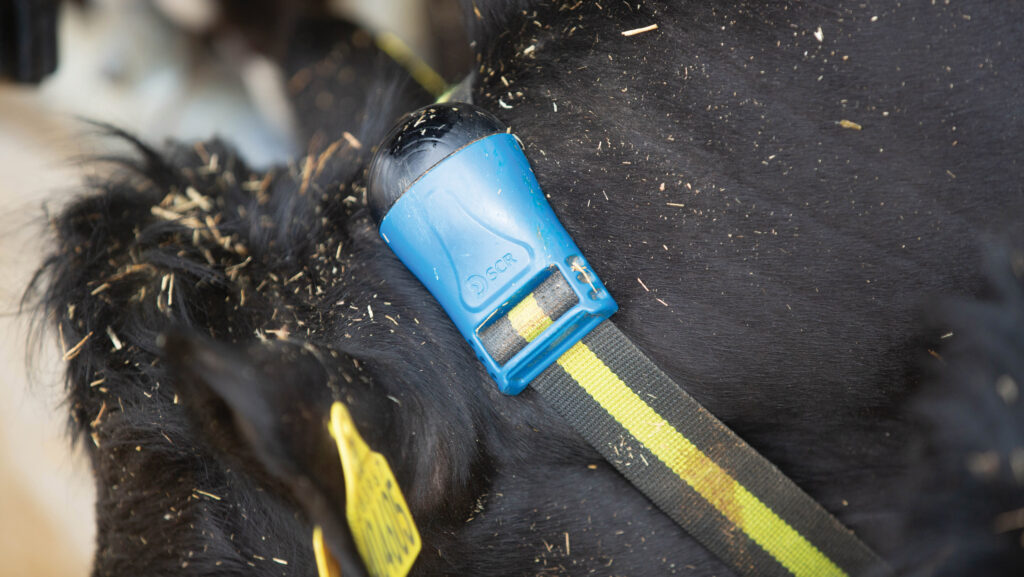 Cow transmitting collar © Tim Scrivener
 Technology using artificial intelligence has the potential to transform management of livestock farms, but further development to integrate disparate data sources is needed to truly unlock farm-changing insights.
Such integrated systems will move livestock farms from using artificial intelligence (AI) to solve specific tasks to using it as a unified intelligence tool that transforms overall farm strategies.
See also: How beef units could improve efficiency with camera tech
This is according to US farmer Paul Windemuller, who has recently completed a Nuffield Scholarship investigating the technology’s potential.
His interest in data-collecting technology began while growing his dairy farm in Michigan from a 30-cow, low-cost operation using primitive technology in 2014, to a 250-cow unit in a fully automated dairy barn, in just four years.
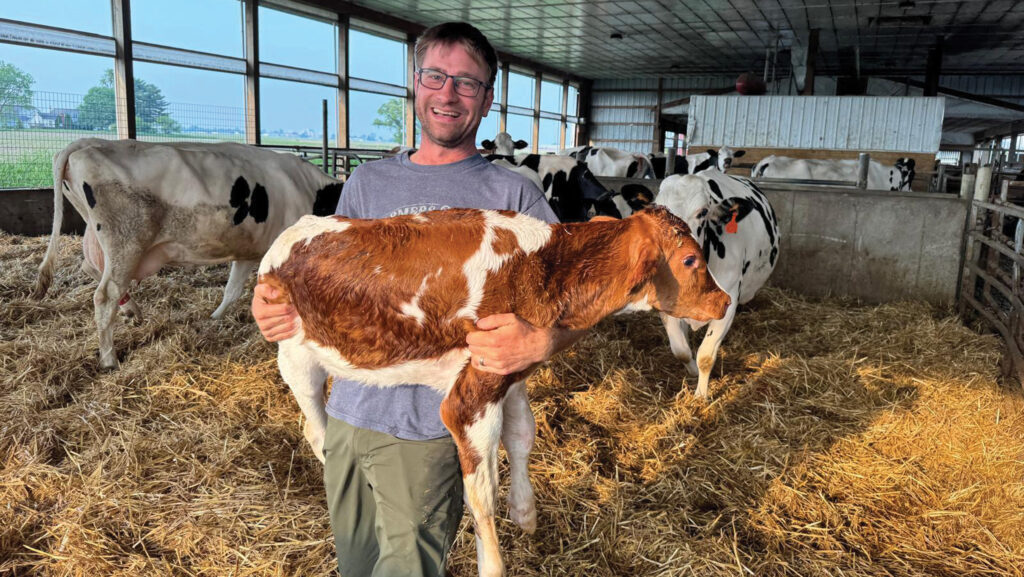
© Paul Windemuller
Precision management
“As a first-generation farmer, I wasn’t someone who could instinctively know which cow was off her feed or in heat. Those core skills were my weakest areas,” Paul says.
“Around two years in, we installed milking robots and started using wearable sensors.
The system analysed real-time behavioural data and physiological data, and was often more accurate than the most experienced herdsmen I worked alongside.
That was when I became captivated by artificial intelligence – it elevated my ability to manage with precision,” he explains.
“It closes the gap between intuition and evidence, and empowers less experienced workers to make good decisions, raising the floor of decision quality across the entire team.”
Isolated systems
But he also saw that his systems were not integrated, which meant he had to manually process data in different platforms.
Technology designed for particular single-use cases – such as feed or herd management or reproductive performance – was a consistent theme he found in the 15 countries he visited during his Nuffield Scholarship.
“Each is a major component critical on dairy farms and delivers value in isolation. But without integrating them into one coherent system, we’re missing a lot of insights and correlations that we can’t even see or detect yet.
“For example, you could be making a feed change that’s affecting your reproduction performance,” he explains.
Data to drive decision-making
Paul says that farms using data to make decisions, rather than just collecting it, will be the most successful in the next decade.
Using advanced AI to model entire livestock systems will help these farms improve their performance, closing what Paul describes as the AI yield gap between what is theoretically possible and what is actually achieved.
But it will require co-ordinated innovation, he stresses.
“Farmers don’t want five dashboards – they want one system that works, and the market will reward companies or organisations that consolidate data streams and simplify user experience.”
Already, platform companies are absorbing niche innovators for those reasons, he says.
For example, GEA – by acquiring CattleEye – was able to plug the latter’s AI-powered lameness monitoring into GEA’s broader platform, combining vision data with milk production, cow conditions and behavioural trends.
He predicts that trend will accelerate, with compound insights from multiple data streams pushing the technology from just adding value to genuinely transforming farm strategy.
Tipping point
Once a farm crosses that tipping point – something Paul calls the holistic insight threshold – AI will move from providing individual alerts to evaluating trade-offs across the entire operation.
That means it can help answer practical questions, such as what happens to milk production if grazing is extended by two weeks, or how adjusting calving intervals will affect cashflow in 10 months’ time, he explains.
The danger is that whichever company provides such an integrated platform first could leverage it to dominate the market, forcing producers into closed ecosystems and removing choice, Paul acknowledges.
Farmer-owned platforms
That is why Paul is advocating for farmer- owned and governed data platforms.
These would allow farmers to pool standardised, high-quality “cleaned” data into a shared system that works with any technology.
The data co-operative could then license this out to tech firms to train and use with their models in return for fees or equity.
“This would guarantee data ownership stays with farmers, ensuring they control access and permissions,” Paul says.
“[But] there’s a narrow window of 24-36 months before the market consolidates into a few dominant players, leading to a loss of negotiating ability, similar to what has already occurred in the integrated poultry and pig sectors.”
Cheshire dairy farm manager frustrated by lack of integration
David Craven, dairy manager for 2,600-cow Grosvenor Farms, values the use of artificial intelligence (AI) technology within the dairy sector for improving consistency of decision-making.
That became more critical when the farm – part of the Eaton Estate in Cheshire – combined four herds into one at Lea Manor Farm.
Farm facts: Grosvenor Farms, Aldford, Cheshire
- 2,400ha dairy and arable farm
- 2,600 Holsteins, housed year round
- 13,000 litres rolling average yield at 4.23% butterfat and 3.71% protein
- 1,900 youngstock calving at 23 months
- Milk sold to Muller Tesco
- 850ha grass and 350ha maize, plus arable crops and stewardship/biodiversity land
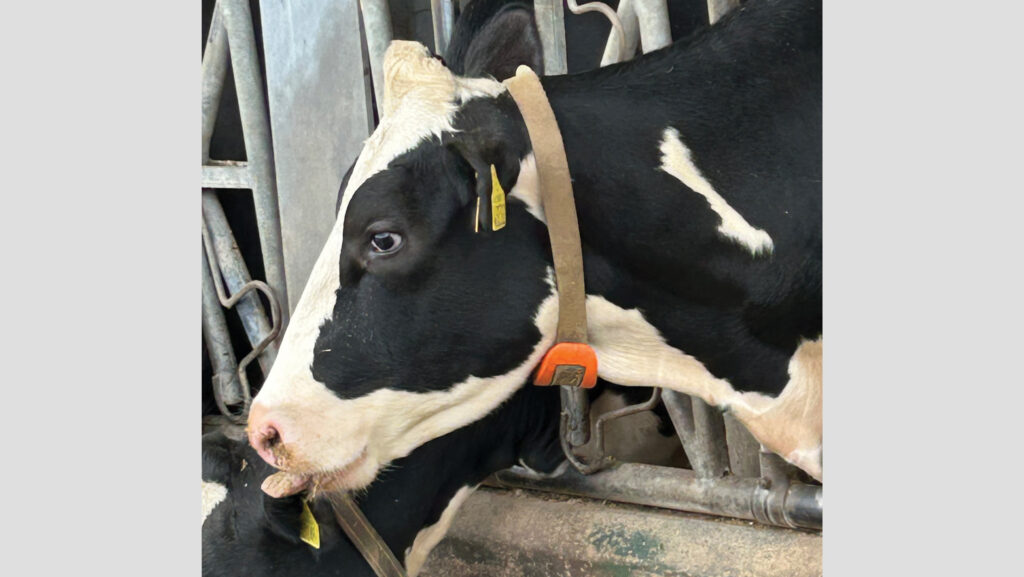
© Grosvenor Farms
“Technology, such as collars, wasn’t perhaps quite as important for smaller herds led by experienced stockpeople.
“But now, when we’re running the farm 24 hours a day with 48 staff members who have different skill sets, you need consistency,” he says.
Using tools such as sensors attached to cow collars, David can set protocols that alert the team when they need to act.
“It means it doesn’t matter who is in the team that day, everyone is working with the same information.”
Benefits to cow health and performance
Experience has shown that the technology can detect events such as silent heats that even the most skilled stockperson can miss.
As well as fertility information, the collars also provide real-time information on activity, feeding and rumination, while other technology used on the farm improves automation, increasing efficiency and enhancing animal health.
Antibiotics use has been cut by 60% over five years using various autonomous monitoring systems.
For example, video monitoring, combined with AI-powered algorithms to analyse each cow’s gait as it leaves the parlour, helps detect and treat lameness earlier.
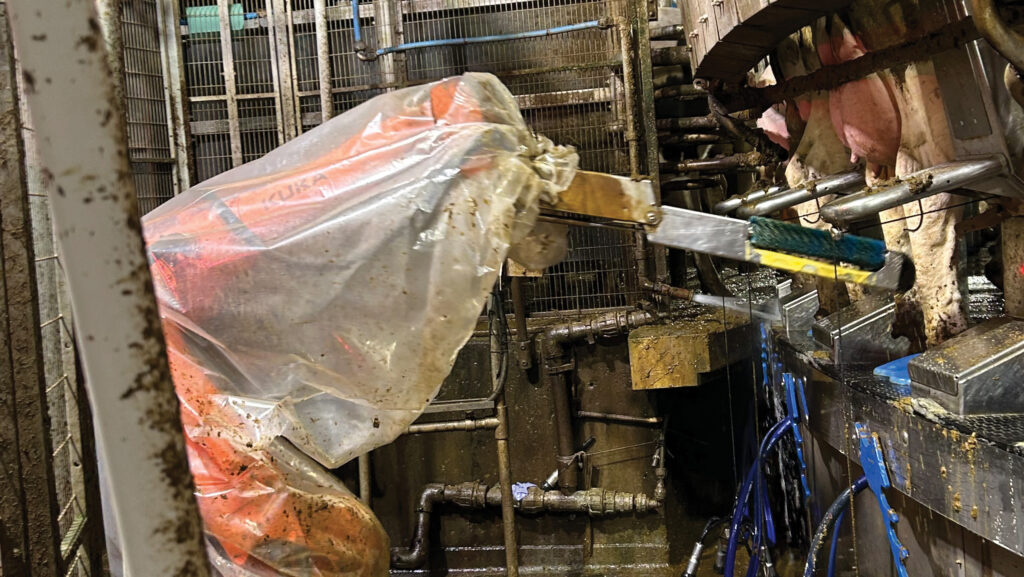
A pre-brush robotic arm is used to prepare cows for milking © Grosvenor Farms
Barriers to further progress
However, lack of integration of the various systems is problematic.
“Everybody is trying to protect their own intellectual property, perhaps understandably. But it’s a frustration having to looking at multiple platforms rather than bringing it all ttogether,” says David.
For example, the data from collars cannot easily be added to the same platform as milk yields or bring performance and other data together to form culling lists.
“I’d love a system that could automatically work in the background for you,” he adds. “People are working on it, but it’s very slow.”
Another key barrier the farm addressed was the need for decent wi-fi infrastructure.
“Notoriously, farms have poor broadband speeds, but a lot of this technology is cloud-based and needs to be updated regularly – particularly where location is being tracked.
“We had to spend about £45,000 across three sites to link the farm to a private fibre optic network to get consistent connectivity,” he says.
Without that connectivity, information flow can be inconsistent, hamstringing decision making and reducing the value of using such technology, he adds.