

How smart ear tags are improving calf health and saving time
 © CowManager
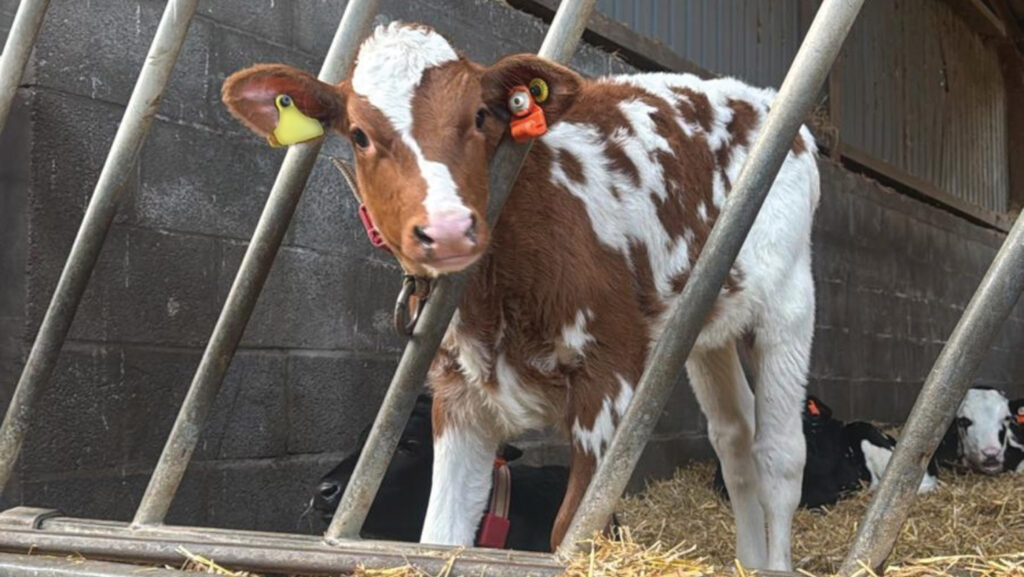
 Smart ear tags are saving a Kelso dairy about two hours a day manually checking every calf.
The technology is allowing the team at KSH Farms to focus on the individuals that need it and pick up problems promptly.
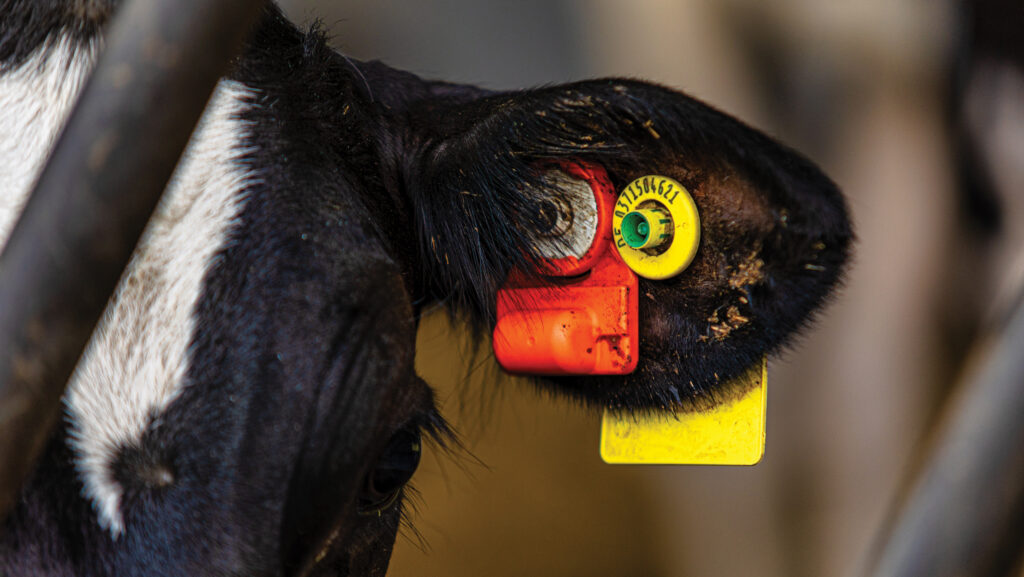
The tags monitor calf activity and eating behaviour based on ear movement and ear temperature (see ‘Smart ear tags for calves – how they work’).
Any decrease in these parameters can be a sign of early disease, resulting in an automatic alert being sent to a smartphone app to promote early intervention by the farm team.
See also: 7 ways small changes in calf rearing can bring big gains
Farm Facts
KSH Farms, Kelso, Scotland
- 890ha farmed including grass, wholecrop, wheat for grain and straw, and oats
- 1,450 cows milked three times daily
- Average yield 13,500 litres at 4.2% fat and 3.52% protein
- Supplying Muller Tesco
- Rear all own replacements
- Sexed dairy semen plus Aberdeen Angus and Wagyu for Warrendale Wagyu
That has translated into a 30% drop in antibiotics use for pneumonia in four months, while preventing cases from developing into severe disease and resulting in more efficient use of staff time.
This means big savings on a 1,450-cow dairy with about 130 cows calving a month, says herd manager Bryn Moore.
“We’re relying solely on the CalfManager tag – we’re not doing [in-depth, individual] visual checks on calves anymore,” he explains.
He adds that this has freed up time for the team to focus their attention elsewhere.
The change has also saved three to four hours of his own time every month, as the team can do tasks that he would have previously undertaken, such as genomic testing.
Disease prevention
Having invested heavily in high-quality genetics, the aim is to keep 100% of calves healthy.
Pre-weaned calves are managed by a dedicated youngstock team of three at the home farm and housed in a purpose-built shed.
The team stick to a “rigid cleaning protocol” with scour prevention in mind, cleaning and disinfecting pens and resting them for between five and seven days.
This means calf scour is rarely a problem.
Like many farms, Bryn rates pneumonia as their main challenge.
Although management was in place to prevent disease, including positive pressure tube ventilation and intranasal vaccination, he thought pneumonia was one of the main areas the tags could help with.
Bryn Moore © Aly Balsom
He had already seen the benefits of using the tags in milking cows on two dairies, including KSH Farms.
In the Kelso herd, individual cow health alerts have helped pick up early signs of disease such as mastitis and lameness, leading to a 50% reduction in total antibiotics use and “healthier cows”.
Consequently, he was keen to be a UK validation farm for the youngstock smart tag.
“What are the most vulnerable animals on the farm? It’s the calves at a young age, as they haven’t built resilience,” he explains.
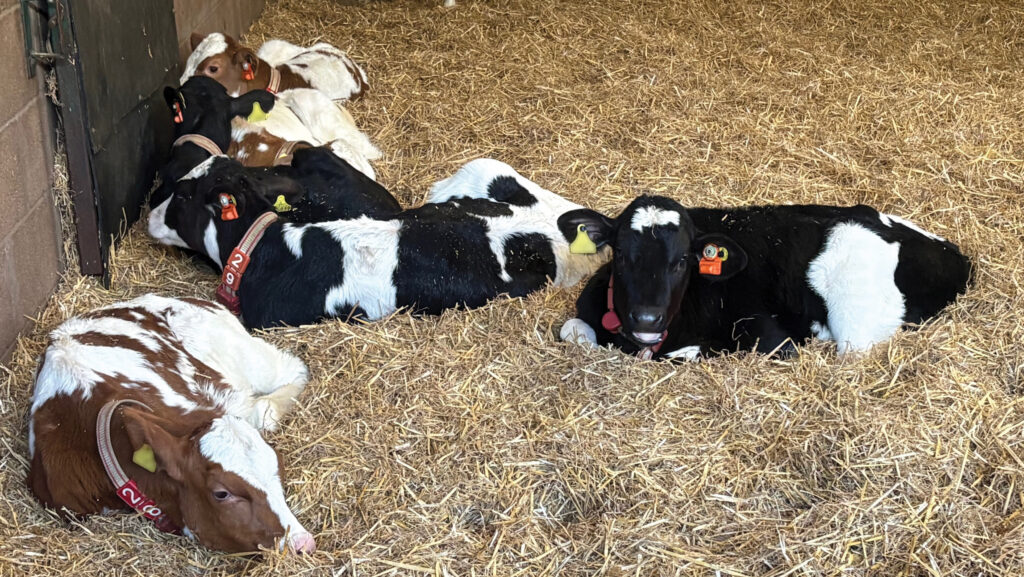
Calves are kept in pens of two and bucket fed for the first seven days.
Heifers then move into groups of 15 and are managed on automatic feeders where they receive up to eight litres a day and are weaned at 10 weeks of age.
They stay at the home farm for a further four weeks before moving to two separate rearing units.
Integration of ear tags in daily routines
The business currently has 50 smart ear tags.
Bryn has opted to put them in calves at the same time as a management tag, at two days old, as he views the first seven to 10 days as the most crucial for disease prevention.
The recommendation is to put the tags in from 14 days old, with farmers urged to be conscious of the size of the ear and weight of the unit.
However, Bryn says he positions the tags towards the head to factor in growth and stop the ear from drooping.
© Bryn Moore
The tag can be kept in an animal’s ear throughout its life, but the team at KSH Farms are currently removing them at 14 weeks and reusing them.
This is because the heifer rearing units do not yet have the CowManager system.
The plan is to install this in the future, which will allow the tags to be kept in throughout the animal’s life. (Beef calves leave the farm at three weeks of age and do not receive a smart tag.)
All staff members have access to the smart tag app, which will automatically send a health alert should a calf be identified as having abnormal behaviour.
A drop in activity is the first indication that something is wrong. The calf team will then visually check the calf and take its temperature and continue to monitor it closely.
Early treatment increases the rate of success and reduces the need for antibiotics. It also halts the development of disease, so calves are not getting severe pneumonia, Bryn says.
The tags have also proved useful immediately after weaning, when calves are off the milk machines and it is not as easy to track feed intakes.
Bryn says a calf can often appear healthy, yet the system will send a health alert, prompting closer inspection by the team.
Bryn says, considering the value of a calf at about £300-400 or the potential long-term impact of pneumonia on a heifer’s growth and production, the tag cost is “minimal”.
“[Calves] are your future. If you get them wrong, you can’t turn things around,” he stresses.
Saving time checking each calf every day manually – about 15 minutes a pen – also adds up, he says.
“To me, the tag is such a small cost when labour is so costly and scarce,” he explains.
“There’s such huge benefits and huge savings, it’s the way forward for sure.”
Smart ear tags for calves – how they work
© CowManager
- CowManager smart tags have been available for use in cows for several years, providing health, fertility, transition and nutrition alerts. A youngstock algorithm (based on artificial intelligence) has since been developed and launched in 2025, enabling the tags to be used in calves.
- The tag automatically monitors calf activity and eating behaviour (consumption), determined by ear movement. Ear temperature is also tracked.
- A calf’s behavioural patterns are automatically monitored 24/7 and compared to other calves on the farm. If an individual deviates (in combination with possible behavioural changes) an alert is automatically sent to an app.
- A drop in levels of activity, eating/ruminating and ear temperature can give an early indication of illness.
- Eating (and ruminating) should gradually increase over time and can be tracked by a “calf development graph”.
- Changes in feeding and/or movements into/out of groups can lead to small behavioural changes. These can be tracked in the calf development graph, which includes activity, inactivity, eating and ruminating behaviour. This makes it clear to see if an individual’s intakes have dropped, which could be a sign of illness.
- At six months of age, the system automatically swaps algorithm to reflect the change to an adult cow.
- The tags do not replace good stockmanship.