

Meet the 2025 NMR RABDF Gold Cup finalists
 ©Tim Scrivener
 Five forward-thinking and environmentally focused dairy enterprises are competing for the 2025 Gold Cup award.
The award is sponsored by the Royal Association of British Dairy Farmers (RABDF) and National Milk Records (NMR).
Judges include RABDF chairman Robert Craig and vice-chairman Tim Downes, NMR lead veterinary officer Karen Bond, and 2023 Gold Cup winner, George Brown, Bisterne Estate.
See also: How milk recording revival is identifying most efficient cows
The winner will be announced at Dairy-Tech, Stoneleigh, Warwickshire on 4 February.
PJ & PE Ashley & Son
Farm facts
Meadow Bank Farm, Condover, Shropshire
- 162 ha
- 130 cows, 110 youngstock, 77 beef cattle
- Milk yield 16,410kg at 3.91% fat and 3.29% protein
- Milk from forage 4,100 litres
- Conception rate 35%
- Somatic cell count 106,000 cells/ml
- Mastitis rate 2.5 cases in 100 cows a year
- Milk sold to Muller (Co-op contract)
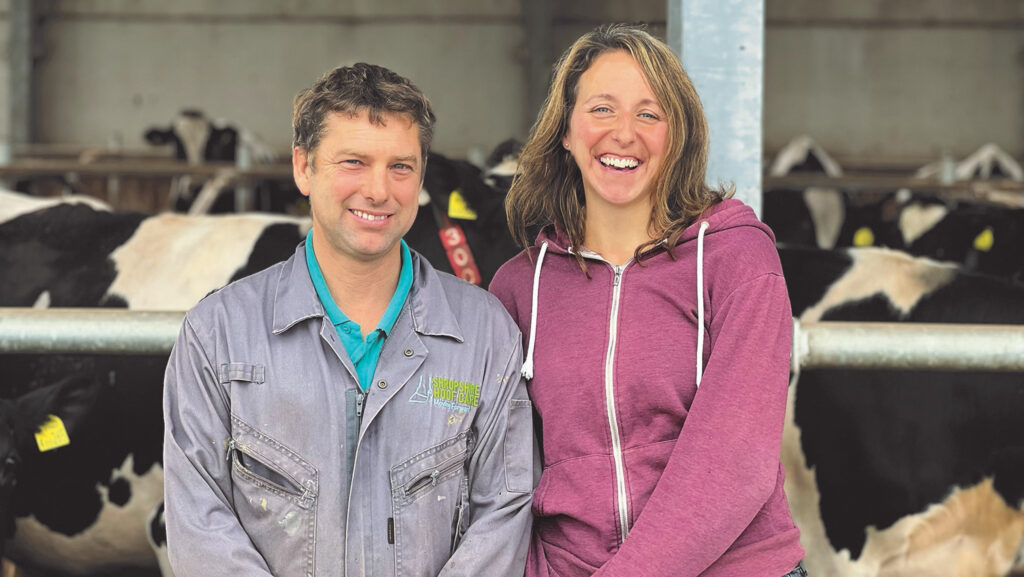
Steve and Ruth Ashley © Steve and Ruth Ashley
Ruth and Stephen Ashley – finalists for the second year running – have built a strong team to optimise cow care and performance.
All protocols are meticulously documented to maintain consistency, including following a detailed herd health plan.
Cows are housed year-round and milked by a robotic system that has been operating for 12 years, producing extensive information for data-based decision-making.
Genomic testing has recently been adopted to improve traits such as milking speed, yield, fertility, health and teat confirmation, as well as mastitis resistance and mobility.
Thermal imaging is used to detect early cases of lameness and 99% of cows have a mobility score of 0-1%.
Maintaining these traits is essential for them to keep advancing the herd, which will also help reduce their carbon footprint.
They have recently been accepted onto the Dairy Carbon Network project and are eager to adopt technology that can help improve their efficiency across the business.
TN Morrow & Partners
Farm facts
Treveale Farm, Ladock, Cornwall
- 280 ha
- 471 cows, 461 followers
- Milk yield 12,362kg at 4.26% fat and 3.44% protein
- Milk from forage 4,082 litres
- Conception rate 30%
- Somatic cell count 112,000 cells/ml
- Mastitis rate 21 cases in 100 cows a year
- Milk sold to Arla
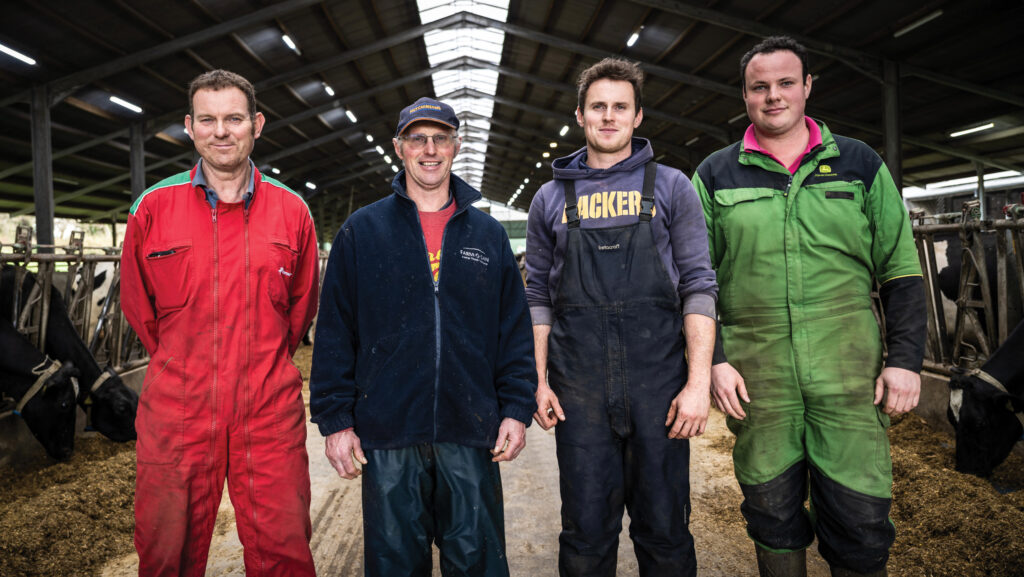
Left to right: Irwin Morrow, Paul Broad, David Broad, Philip Broad © TN Morrow Partners
This hands-on family business has made considerable investments in the past decade, adding a new dairy unit in 2018 and a new youngstock unit in 2023.
Paul Broad, his wife, Wendy, their sons, David and Philip, and Wendy’s brother, Irwin Morrow, share responsibility for the closed herd of pedigree Holsteins.
Their focus is to breed for longevity, and herd health is a high priority.
The herd is bovine viral diarrhoea (BVD) free, and routine testing for Johne’s shows a decline in infection level, achieved by implementing strict biosecurity measures and scrupulous colostrum management.
Youngstock rearing is also a key focus to ensure fit, healthy heifers join the herd. Low mortality levels have been achieved consistently since David began recording them as part of his milk contract six years ago.
Rates in heifers from birth to 28 days sit at 0.4%, and from one to six months at 0.73%.
Next, they plan to enhance soil health, reduce fertiliser use, and improve forage quality and milk production from forage, while minimising antibiotics use.
JH Foote Farming
Farm facts
Church Lane Farm, Brown Candover, Hampshire
- 133 ha
- 322 cows, 188 followers
- Milk yield 12,968kg at 3.67% fat and 3.33% protein
- Milk from forage 6,480 litres
- 100-day in-calf rate 45%
- Somatic cell count 126,000 cells/ml
- Mastitis rate seven cases in 100 cows a year
- Milk sold to Arla
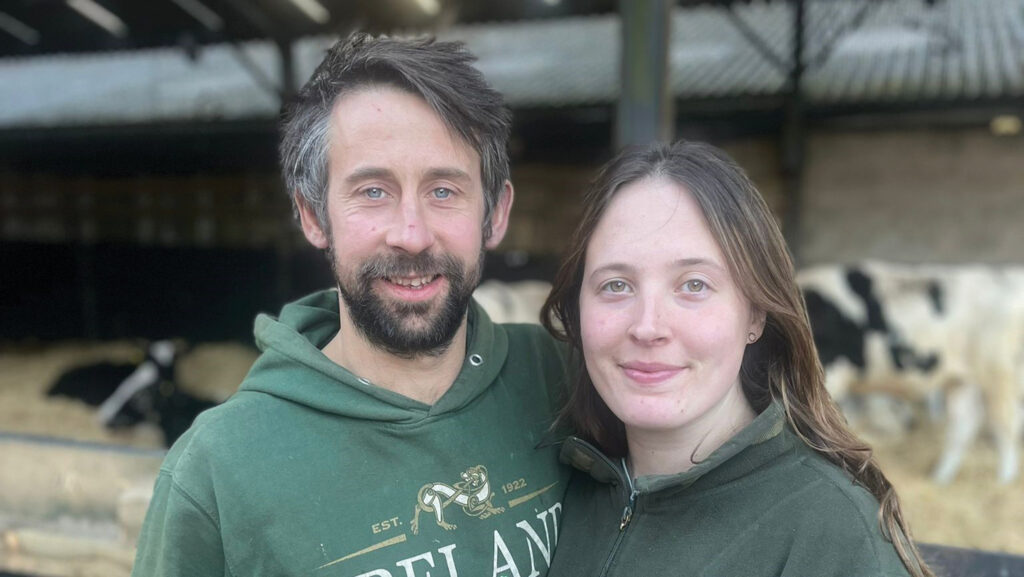
Ben and Molly Foote © James Houghton
Enhanced cow care, nutrition and genetics have contributed to a near doubling of milk yield in the past decade for Ben Foote, wife Molly and parents Jonathan and Celia.
Milk from forage from the year-round, housed herd has also increased, to 50% of yield. Silage is routinely analysed, while the total mixed ration is carefully balanced, prioritising consistency.
The priority is to create a uniform herd, with six to eight sires selected and a computerised mating service used.
The current benchmarks are sires with at least 90% reliability, more than 40kg combined fat and protein, and positive fertility traits.
Recently, they have concentrated on female family selections and limited the use of sexed semen to six Holstein straws a week, with the remaining cows bred to beef.
Improved breeding, longevity and feed efficiency have resulted in a carbon footprint of 1.02kg carbon dioxide equivalent/kg of fat- and protein-corrected milk.
The family have also installed solar panels and a heat recovery system.
M Madders Farming
Farm facts
Church Farm, Coppenhall, Staffordshire
- 422ha (202ha dairy platform)
- 340 cows, 220 youngstock
- Milk yield 10,488 kg at 4.57% fat and 3.55% protein
- Milk from forage 3,713kg
- 100-day in-calf rate 60%
- Somatic cell count 152,000 cells/ml
- Mastitis rate 13.2 cases in 100 cows a year
- Milk sold to Arla (Arla CARE)
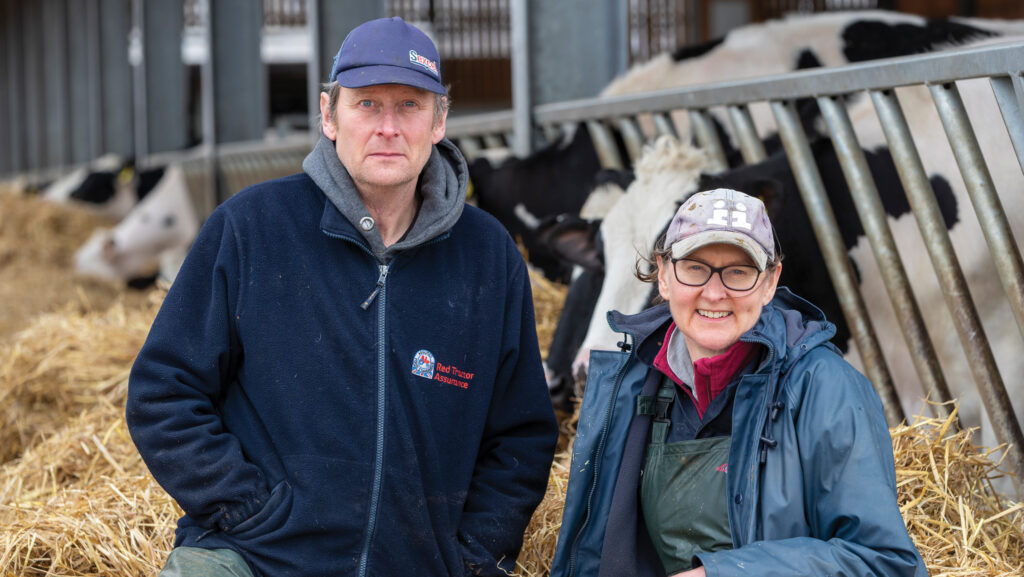
Mike Madders and Rosie Chandler © Steve Watts
Brother-and-sister team Michael Madders and Rosie Chandler focus on maximising home-grown forage for their year-round, closed herd of pedigree Holsteins.
Cows graze in a paddock system for six months of the year and are fed to yield in the parlour.
The main milking group grazes only during the day and is buffer-fed a partial mixed ration overnight, based on home-grown maize and grass silage. About 40 low-yielding cows will graze both day and night.
All milking groups are housed in cubicles within two sheds, equipped with mattresses and spread with absorbent dried paper crumb twice daily.
They are also trialling 40 water beds in one shed to assess whether they further enhance cow comfort.
The herd’s vaccine programme covers BVD, leptospirosis, blackleg, huskvac and, now, bluetongue.
Silage clamp capacity is being increased and improvements made to reduce waste.
Spring 2026 will see a new slurry lagoon built, and there are also plans for an additional 40kW solar array to complement the existing 50kW roof-mounted system.
Yeo Valley Farms
Farm facts
Yeo Valley, Blagdon, North Somerset
- Farming 800ha
- 320 cows split block calving; 130 followers
- Milk yield 7,725kg at 4% fat and 3.3% protein
- Milk from forage 2,400 litres
- Conception rate 30%
- Somatic cell count 155,000 cells/ml
- Mastitis rate 17 cases in 100 cows a year
- Milk sold to Yeo Valley South West Organic Milk Pool

Will Mayor and Richard Greaves © Yeo Valley Farms
A strong focus on biodiversity is central to the two dairies and youngstock unit that form part of this mixed farming business.
The Yoxter dairy and Holt Farm pedigree British Friesians are integrated with the sheep, arable and dairy beef enterprises as part of a regenerative system.
All herd replacements are home-bred, and the herd health plan focuses on high welfare and preventative strategies. A 1% mortality rate from birth to calving reflects high standards of youngstock rearing.
The grazing strategy is designed to achieve optimal recovery of diverse herbal leys before the next grazing, and build grazing resilience to help mitigate the impact of more extreme seasons.
Following farm trials, blue lupins and spring wheat are being grown as a bicrop and crimped to provide bypass protein in the diet.
The farm has a five-year ambition to move to 100% home-grown feeds within five years, though this could be a challenge, admits William Mayor, Yeo Valley business development lead.