

Probiotics could hold key to lifetime dairy performance
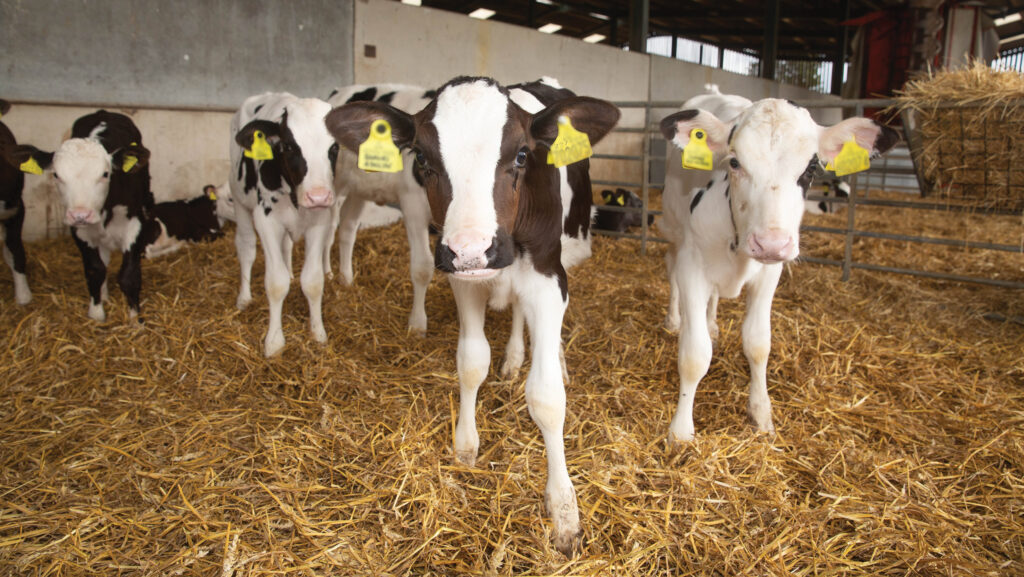 © Tim Scrivener
 Targeted use of probiotics in early life can support health, growth and, potentially, future milk yields, according to new research.
Dr Colin Byrne, ruminant technical and deployment manager at Lallemand Animal Nutrition, said establishing a resilient gut with a stable microbiota in young calves was key to unlocking lifetime potential.
See also: What farmers can gain from a vet discussion group
One focus of his work has been a live yeast selected by Lallemand from the boulardii variety of Saccharomyces cerevisiae.
ProTernative was registered in Great Britain in late 2025 as a gut flora stabiliser and physiological condition enhancer for calves and young ruminants.
The boulardii strain has a thicker cell wall than conventional yeasts, improving resistance to low pH and bile salts.
In-vivo trials show more than 90% of cells surviving at pH2, compared with far lower survival rates in standard Saccharomyces cerevisiae.
“It can tolerate acidic conditions and higher temperatures and consumes oxygen more quickly, which helps create a favourable gut environment,” said Colin.
Studies show that viable yeast cells remain present through the small intestine, large intestine, colon and faeces, demonstrating survivability – a critical factor in meeting the World Health Organisation definition of an effective probiotic.
Trial results
Research shows that boulardii supports three main functions: microbiota balance, gut integrity and natural defences.
A 2017 Canadian study found calves receiving the yeast had increased mucin production and reduced crypt depth, compared with control.
This improved protection of the gut lining and reduced the risk of negative bacterial adhesion.
Faecal microbial analysis showed higher levels of beneficial bacteria and lower levels of potential pathogenic bacteria in supplemented calves.
In a 2022 Polish trial, calves receiving the probiotic were 3kg heavier at weaning (85.1kg), and achieved 686g/day average daily gain – an increase of 64g/day over the control group.
Meta-analysis published in 2012 indicates that every additional 100g/day of pre-weaning growth equates to about 150kg more milk in first lactation, with more recent reviews suggesting this could be closer to 300kg.
Colin said this delivered a potential return on investment from supplementing ProTernative of 6.9:1.
“Good early health leads to good early growth, which supports rumen development, earlier puberty and fewer services to conception. That feeds into better milk production and higher lifetime output,” he said.
Early-life foundations
Some probiotics that act in the lower gut increased the production of short-chain fatty acids, favoured beneficial bacteria through competition, and strengthened the intestinal barrier, said Dr Colin Byrne.
They may also help regulate intestinal immunity and electrolyte balance, supporting nutrient and water absorption which consequently can reduce the risk of scour.
Research published in 2023 shows these combined effects are linked to lower levels of diarrhoea and improved resilience during the pre-weaning period.
“By supporting the gut early on, you are helping calves develop stronger natural defences,” he said.
Research roots
Discovered on the skin of lychee fruit in the early 20th century, Saccharomyces cerevisiae boulardii is now one of the most researched probiotic organisms, with more than 650 scientific publications across all species.
It is the only probiotic yeast strain in human nutrition with recognised benefits in cases of antibiotic-associated and traveller’s diarrhoea.
In animal nutrition, it was the first probiotic to be authorised as a feed additive for use in all pigs in the EU.