

Spring calving index pivots towards grazing-based systems
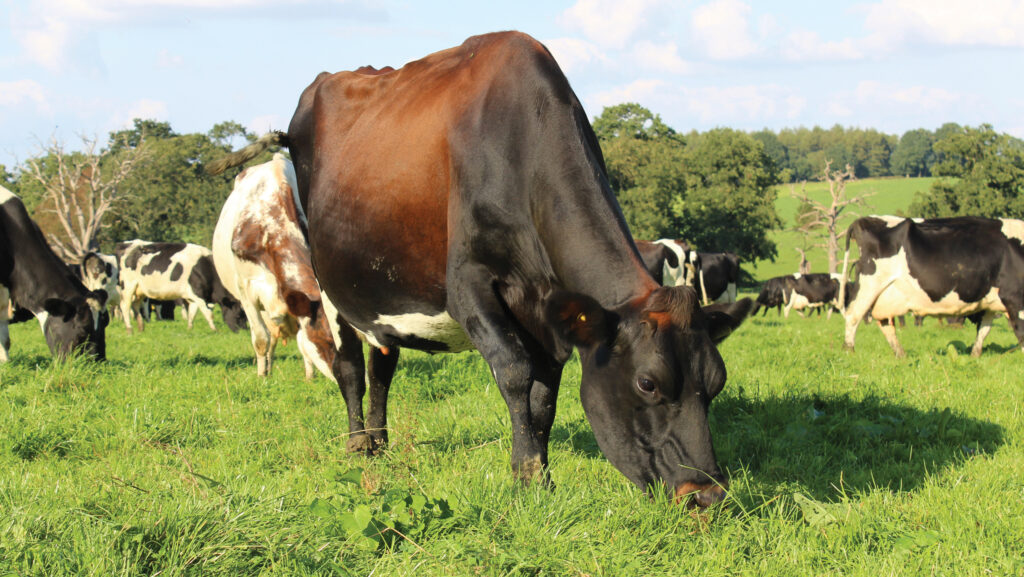 © Ann Hardy
 Planned revisions to the spring calving index are expected to change the type of animal dominating the male and female rankings.
From April, producers running grazing-based, spring-calving dairy herds will find their genetic index is more heavily weighted against tall, high-production animals in favour of those more suited to grass-based systems.
See also: How milk solids increased from fine-tuning genetic selection
Although the formula for the spring calving index (SCI) will not change substantively – continuing to reward high-quality milk, fertility, health, functional type and efficiency – a penalty will now be introduced for high-production animals with a high energy demand.
This is expected to displace some high-production Holsteins from the leading places in future bull rankings. In their place are likely to be more Friesian (including Irish and New Zealand) and Jersey genetics.
Milk from grazed grass
“Like all indexes that recognise profitability, the SCI is calculated using an economic model,” explains Marco Winters, head of animal genetics for the AHDB.
“This type of linear model rewards every extra kilogram of output where it has been calculated to be worth more than the feed required to produce it.”
When feed inputs are not limiting, this model works well, he says.
As long as animals score well for the other traits in the index such as health and fertility, it can bring high production and high-energy-demand cattle to the top of the rankings.
“These animals may be more profitable if they receive extra feed, but that’s not the policy of spring-calving producers who are aiming to make milk from grazed grass and limited use of concentrates,” he points out.
He adds that farmers are concerned that animals bred from prioritising production traits in their systems will fall into negative energy balance.
“So, the penalty we have introduced will continue to push production, but within boundaries which are typical for spring block-calving herds,” he says.
The result is that animals that have a total dry matter intake requirement of more than about 5t in a lactation will be penalised.
“We don’t think typical spring-calving animals can sustain that high energy demand over the long term.”
Lower energy demand
The change to SCI has been led by the AHDB, with support from an industry working group including spring-calving producers and artificial insemination companies.
“Producers have told us they would like to see the SCI ranking feature more bulls that breed smaller daughters with lower maintenance costs and lower energy demands,” says Marco.
“The revised index places less emphasis on big output and more on the right cow for the system.”
The group is confident that with the changes, producers will become more focused on genetic improvement as the uptake of SCI grows.
“It is far better to use a UK index than one that has been developed for milk payment structures or climatic conditions in another country, which we know has been a temptation of some spring block-calving producers,” he explains.
Genetic tools
The changes come at a time of increasing sexed semen use, even in extensive systems, and the availability of crossbred genomic testing.
“These producers may gain added benefit from their better suite of genetic tools, as genomic testing of heifer calves is as useful for parentage checking in block-calving herds as it is for genetic improvement,” he says.
Spring calving index – new focus
The revised spring calving index rewards:
- Moderate cow size
- Efficient grazing
- Fertility
- Survival and low empty rates
- Milk solids from grass
And penalises:
- Large, high-maintenance cows
- Cows needing excessive concentrates.