

Advice on planning forage stocks for spring-calving herds
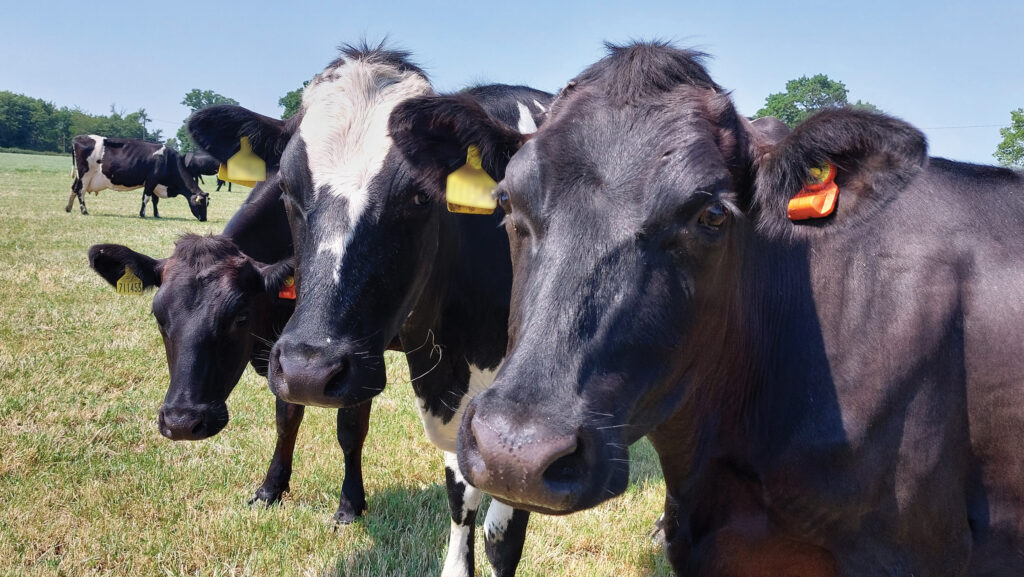 © MAG/Shirley Macmillan
 Turnout dates for spring-calving herds should not be dictated by a silage shortage.
Businesses must plan to have enough forage of milking-cow quality on hand to supplement poor grazing conditions (or slow regrowth) in early spring, as well as any mid-season feed deficits.
Grazing consultant Andre van Barneveld, of Graise Consultancy in Ireland, thinks there is a tendency for farms that focus on strict cost control to carry minimal silage stocks.
See also: How to plan grazing to avoid soil compaction in wet weather
While good at maximising production from grazed grass, these farms often lack suitable alternatives to fill a grass shortfall.
Andre points out that this results in an urgency to get out and graze, regardless of ground conditions in early spring, because there is a high risk of running out of silage.

Andre van Barneveld © MAG/Shirley Macmillan
“Fully housed herds set themselves up to have top quality in the clamp year-round.
“But even in grazing systems, you still need to have a proportion of [milking-quality] silage on hand.
“So the urgency to get out and graze is not so high, because you have no alternatives,” he says.
“Spring 2025 saw good conditions in March, which meant grazing conditions were excellent.
“Utilisation and ultimately cow production were also good. But by the time half the platform had been grazed, regrowth was poor.
False economy
“If we get a terrible spring this year – as in 2024 – how can you replicate that of 2025 and ensure consistent feed intakes if cows are not on grass?
“You need to have good-quality forage on hand,” he stresses.
Yet relying on a surplus baled off the grazing platform to fill feed deficits throughout the year is not enough, he points out.
The quality may not be optimal for milk production and quantity is usually low.
“It might generate the equivalent of one bale a cow, where three to four bales may be needed,” he says.
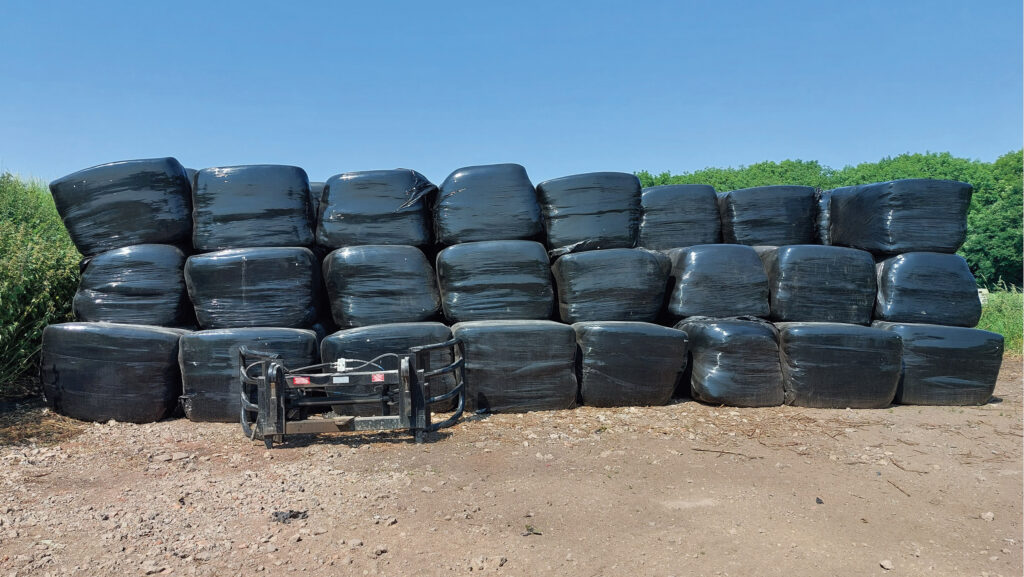
Square bales © MAG/Shirley Macmillan
Failing to have sufficient silage in stock ultimately costs more money because it impacts grass utilisation and farm efficiency for the whole season.
And this year, a low milk price will drive the choice of whether it is cost-effective to feed concentrates in a grass deficit to substitute the first 6kg a cow a day of dry matter (DM).
“Decisions made in spring 2026 are in a very different environment.
“Look at your own milk contract for specifics, this will influence your management decisions,” he says.
Forage substitutes
It is more likely that, this year, concentrates can only substitute the first 3kg, says Andre, and silage or another low-cost supplement (based on p/kg DM fed) should be offered.
Again, this requires a strategy to purchase the correct feed type, followed by the logistics of getting it to cows effectively.
“To maintain profitability, turn to combinations of straights, which can work well to balance well-grazed pasture.
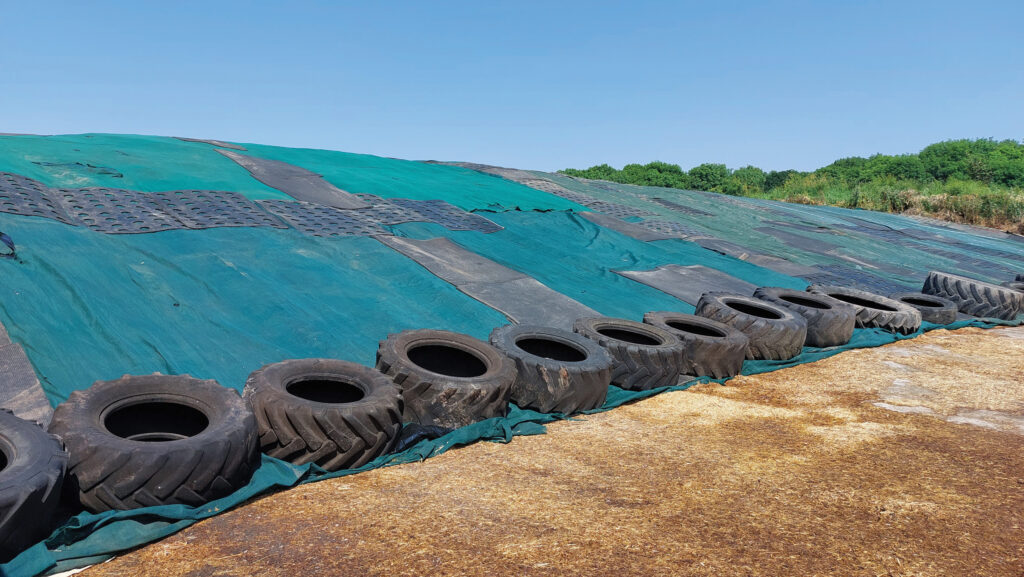
Silage clamp © MAG/Shirley Macmillan
“But can your parlour feeders handle straights? Are you set up practically to supplement 2kg DM a cow a day with silage?”
Andre says that while it may always be possible to buy dry cow feed, guaranteeing milking-cow quality on the open market is hard.
So, his message to grazing managers is clear: get in control of forage stocks now.
This means being realistic in expectations of what the farm can grow, then making a sensible plan for filling deficits this year – “you will have them” – and getting ahead for next year.
Management basics
“Stick to the basics: measure, budget, use the spring rotation planner, have a plan for weather conditions – and follow it.
“You need to plan for good-quality silage. This includes making enough silage this year ready to feed it in 2027 – and look for economic alternative feeds such as palm kernel.”
Reviewing last year’s performance and feed rates is a good start, to check actual efficiency and learn from mistakes.
“Look back at your records and see the trade-offs when conditions are poor, such as paddock damage, and how much milk production was reduced by not grazing efficiently.”
In planning to cover sub-standard grazing conditions, it is essential to first be clear what the farm’s on/off grazing triggers are.
Then options to keep grazing without causing structural damage, or lowering intakes, can be considered.
These range from being flexible in allocating grazing areas or covers, to reducing grazing time and identifying drier paddocks for early turnout. Then alternative feeds can be looked at.
Pasture utilisation
Feeding high rates of supplements not only impacts pasture utilisation, Andre says that it also affects cow behaviour and removes the cow’s appetite to graze efficiently.
Unfortunately, grazing software can only work out how much the platform grew, not pasture utilisation.
It is a back calculation based on concentrate and forage inputs, so not easy to establish.
“A good indicator of grass utilisation is how many times did you pre- or post-mow in 2025? I’ve heard of one farm using the mower four times; another was pre-mowing six times.
There should be only one realistic use of the mower in about May/June after the third rotation, around the time when grass is going into its reproductive phase – certainly no more than twice in a season,” he stresses.
Similarly, planning should also look at a farm’s specific risks for a dry spell and prolonged drought.
Weather stations are becoming highly useful tools in grassland management to predict potential issues caused by the farm’s ability to navigate its weather patterns.
Stocking rates
One approach to coping with a grass shortage for farms prone to drought is to consider lowering stocking rate to withstand long periods of feed deficit. Andre says this reduces feed demand.
“Don’t carry passengers: get rid of low-production cows.
“Analyse 2025’s milk recording results: any cow producing below 80% of the average lactation is giving a negative return and shouldn’t be there.
“Identify those cows in January and drop them out of the herd then,” he advises.