

How farm’s electronic weather station aids grazing decisions
 © Georgina Roberts
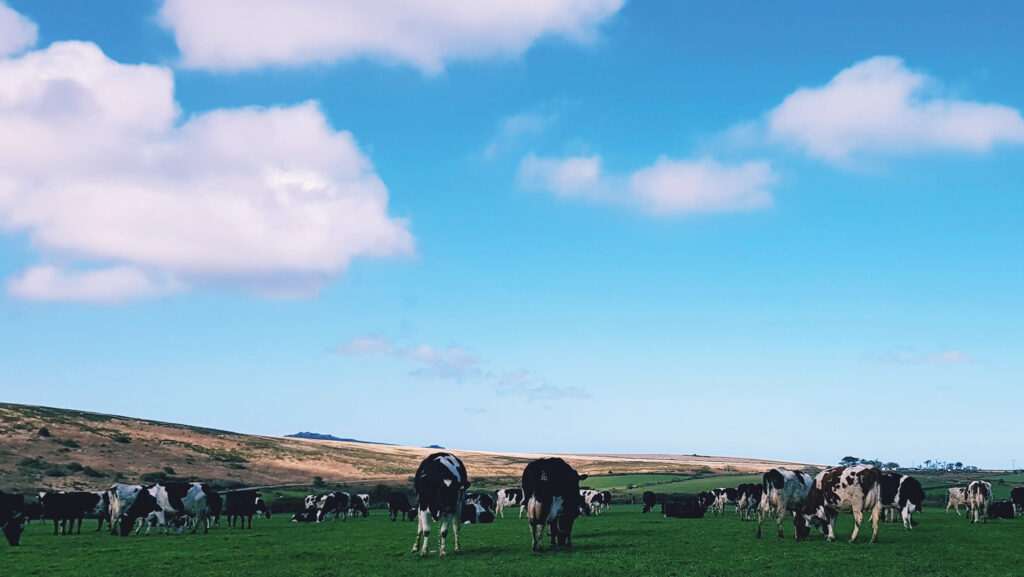
 Ditching multiple Met Office weather forecasts in favour of their own, precise, weather predictions has allowed Georgina and Adam Roberts to fine-tune grazing management – and reduce poaching at Trye Farm.
See also: How to improve output from cows grazing in poor conditions
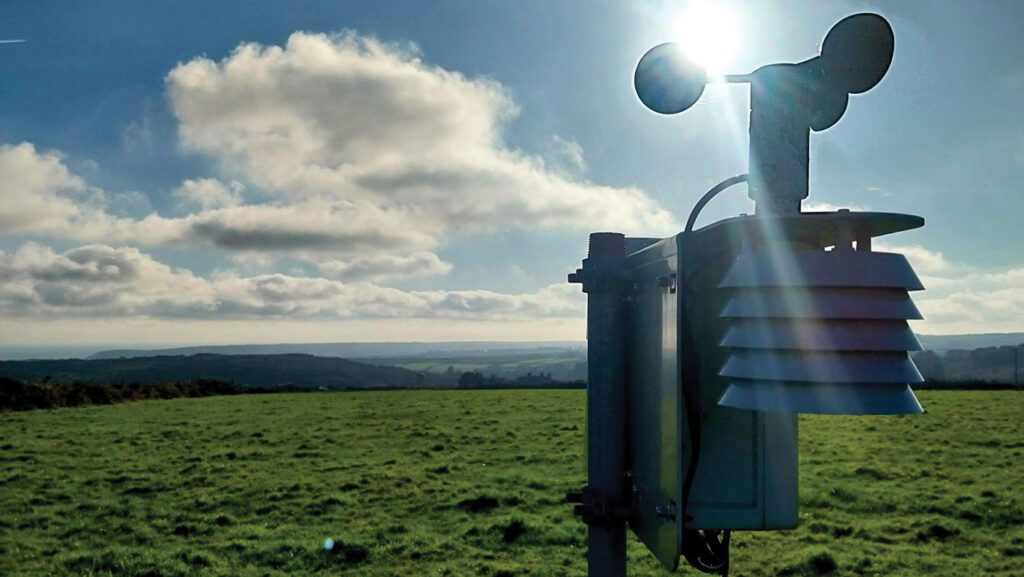
For the past three years, they have used data from Cordulus, a Danish electronic weather station, sited on the highest point of their farm near Penzance in Cornwall.
More accurate information improves timings with their grazing decisions.
Farm Facts
Trye Farm, Penzance, Cornwall
- 232ha, of which total dairy area is 138ha
- Farming 167-233m above sea level
- 200 cows, autumn block-calving
- Average yield 6,500 litres
- Grazing 48-50 weeks a year
- Annual grass yield 13t/ha dry matter
- Rainfall 1,296mm (2025)
“Our business thrives on getting cows out, even just for a couple of hours, as it’s less slurry to deal with. We rarely have frosts, so grass can grow 365 days – and we have a good network of tracks,” says Georgina.
Next-level grazing management
“We can now look at rainfall overnight, or the previous 24 hours, and target which fields to graze.
“If it has rained overnight, but is forecast dry in the afternoon, we can turn cows out to graze in the afternoon for a couple of hours, then bring them back in to silage.
“It has taken grazing management to another level: we can put cows in paddocks at the right time and adjust on a daily basis.”
© Amy Lee
Being able to protect grassland from poaching in the winter months has reduced the impact on soils, she adds.
“With less damage comes better and quicker regrowth, meaning more grass. Silage making is also much easier with better management of staff and resources.”
Georgina says they were getting fed up with poor weather information and inaccurate forecasts, which “made farming hard”.
Trye Farm lies two miles inland from each coast, and Penzance heliport is their nearest source of weather data – but at sea level, she points out.
Now they simply check their phone app several times a day.
Increasingly accurate predictions
“The weather can change in an instant on our farm. We can see rain one mile away, while we remain dry. We were trying to make predictions from five or six local forecasts.
“This [weather station] is based on our information and has become more accurate as time goes on,” she says.
Farm-specific past, present and future weather data have freed-up time and given them “head space”, says Georgina.
They keep an eye on the fire index in summer as a wildfire alert.
“We also use the forecast for slurry applications; soil temperatures to predict “magic day”, which changes each year; and see if warm weather, or rising soil temperatures, are a trend or a one-off.”
Smart weather station
Farm weather predictions cost just under £1/day for a subscription to a Cordulus weather station, says Mole Valley’s Lisa Hambly.
Support and spare parts are readily available from the parent company in Denmark.
As climate change affects weather patterns for more farms, Lisa says weather data produces more accurate forecasting, helping to reduce risks of crop disease, nutrient run-off or leaching.
They also benefit when planning maize drilling dates (avoiding cold soils) or mowing grass (so that swaths are picked up, not rained on).
“The longer [a farm has one], the more that historic data comes into play, so a farmer can correspond farm results with their own weather patterns,” she says.
“Accuracy is the value. Your nearest weather station could be 15 or 50 miles away and wind speed levels are usually measured at the level of an airport windsock, not at ground level where slurry, for instance, is applied.”