

Tips for first nitrogen grassland applications when prices still high
 © Dusan Kostic/Adobe Stock
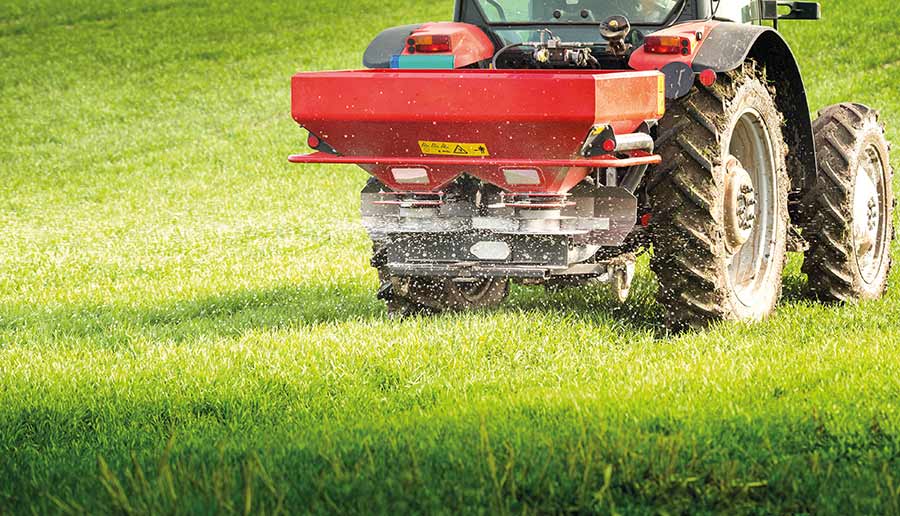
 At current prices, first applications of nitrogen this spring will cost less than they did in 2022, when prices soared following Russia’s invasion of Ukraine.
But they are still likely to cost at least double what they did in 2021.
The latest figures from AHDB show ammonium nitrate (AN) costs £682/t and granular urea is trading at £582/t.
See also: How to manage turnout of youngstock for optimum intakes
These are lower than a month ago, but even so, it could be a false economy for growers to cut back, warns grassland and forage specialist Charlie Morgan.
He says the question every grassland farmer must ask themselves is: What value am I getting from my nitrogen?
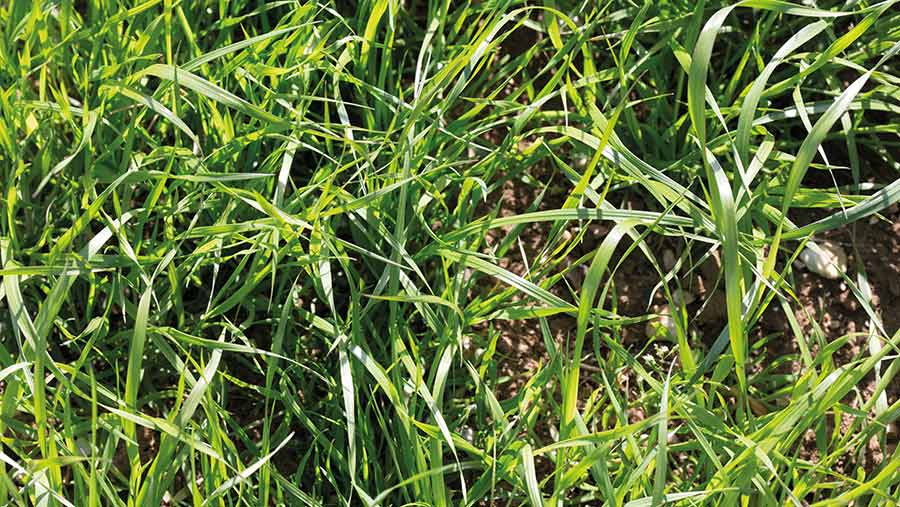
“Spring grass is the most valuable grass a farm will grow all year,” he says.
Fertiliser v concentrates
For dairy farmers, it comes down to the simple economics of working out how many litres of milk this investment will return at the current milk price.
At £682/t, it will cost a business £1.98/kg to apply AN to grow 15kg of dry matter (DM) of grass at the start of the grazing season – the equivalent of 13p/kg DM.
“That works out more expensive than it has ever been,” says Mr Morgan.
“But, if you look at the highest user, the dairy sector, if milk producers are not growing that grass to graze or cut as silage, the feed must come from somewhere, and that means buying in concentrates.”
Arguments against scrimping
At an average price of £400/t, concentrates cost 45p/kg DM. If grass is of high quality, its protein and energy value will be comparable with concentrates, he adds.
He calculates that if grass is at 12MJ/kg DM metabolisable energy (ME), 15kg will produce 180MJ. It takes 5.3MJ to produce a litre of milk, so 180MJ will produce an extra 34 litres of milk.
Although every farm and every system is different, Mr Morgan suggests that at these figures farmers cannot afford to cut back on early applications unless they destock.
© Tim Scrivener
“It is a false economy to reduce N inputs from an application that will give a better grass growth response than any applications made later in the year, unless the farm is planning to reduce its stocking rate,” he says.
Although there is an environmental argument for cutting back on N, he points out that the N needed for feeding stock must come from somewhere.
“If a farm isn’t getting feed from grass and has to buy in concentrates to replace it, that brings additional phosphate onto the farm.”
Applying N early will also help with the recovery of grass after grazing and make more grass available in the following grazing round.
Tips on getting the best from early applications of fertiliser
1. Target the most productive fields
Soil fertility and structure have a big influence on the efficiency of N applications and the resulting payback.
Without the correct soil fertility, N efficiency will fall off a cliff and the economics of applying N will work against you.
- Analyse soils and target early N application to fields most likely to respond.
- Fields should be at pH 6.2–6.4, index 2 for phosphorus (P) and potassium (K), and N should be applied to south-facing, warmer ground. It is never too late to set the wheels in motion and address shortfalls to get the soil where it needs to be for optimum efficiency.
- If analysis shows low P and K, apply slurry if weather conditions and nitrate vulnerable zone (NVZ) rules allow. Applying slurry in the spring by low-emission methods at a rate of 25cu m/ha will supply 25kg/ha of available N, so chemical N rates can be revised accordingly.
- Target slurry at high-demand areas such as silage fields and grazing land with low P and K levels.
- Assess tightness in the soil as this can affect rooting depth. If ground is compacted, lack of percolation into the soil will result in N applied being washed away.
2. Application rates and timing
- Aim for up to 30kg N/ha for the first application. However, if slurry has already been applied, rates will need to be adjusted.
- Apply early N only when the grass is actively growing – for maximum utilisation, soil temperatures must be 5C at a soil depth of 5cm for a week.
- Apply to fields with perennial ryegrass swards or recently reseeded fields. For the quickest response and fewer losses, apply to grass covers greater than 1,800kg DM/ha or at a height of 5cm or more, which have more leaf available to use the N applied.
3. Invest in lime
- The economics of liming always stack up – lime increases the availability of both stored soil P and freshly applied N.
- A dairy farm will lose 0.8t/ha of lime a year; a sheep farm loses half that amount.
- Apply lime in the early spring or autumn, because dry summer conditions will result in particles sitting on the grass leaf, while winter applications risk run-off.
4. Protect your legumes
- The use of forage legumes such as white and red clover can significantly reduce the need for the application of N, but on intensive systems they will have little effect until later in the season. This is because clover needs a soil temperature of 8C at 10cm depth to stimulate growth.
- It is important to protect legumes as they provide an opportunity to cut back on N later in the year.
5. Tailor applications to the system
- On most farms, energy demands are at their highest in the spring because stock are lactating. Restricting intakes at this point will have a significant impact on future potential growth rates in calves or lambs. Ensure good access to high-quality grass at this stage, regardless of whether supplementation is provided.
- Measuring grass levels and identifying potential bottlenecks will allow for a planned approach to N application. For example, applying N early on a beef system where cows are not turned out until mid-April is a false economy, as grass would be too far advanced and quality lost.
- For an intensive sheep system, earlier application is essential. Applying N in stages across the farm avoids sward height or yield in some fields being too high by the time they are grazed.
6. Consider applying sulphur
- Another tool to aid N efficiency, once pH and P and K indices are correct, is to apply sulphur (S).
- In theory, N inputs can be reduced slightly when they are used in conjunction with S.
- S deficiency is more likely on lighter soils, but responses are seen across all soils.
- For grazing, the standard recommendation is 20-30kg SO3/ha up to 100kg N/ha applied; if additional N is applied, the ratio continues to apply.
- Be aware that uptake of S in drought conditions is limited.
- S is also present in manure and slurry, so application rates need to be recalculated when using these.
Source: Charlie Morgan