

Calf toys: What’s on offer and are they effective?
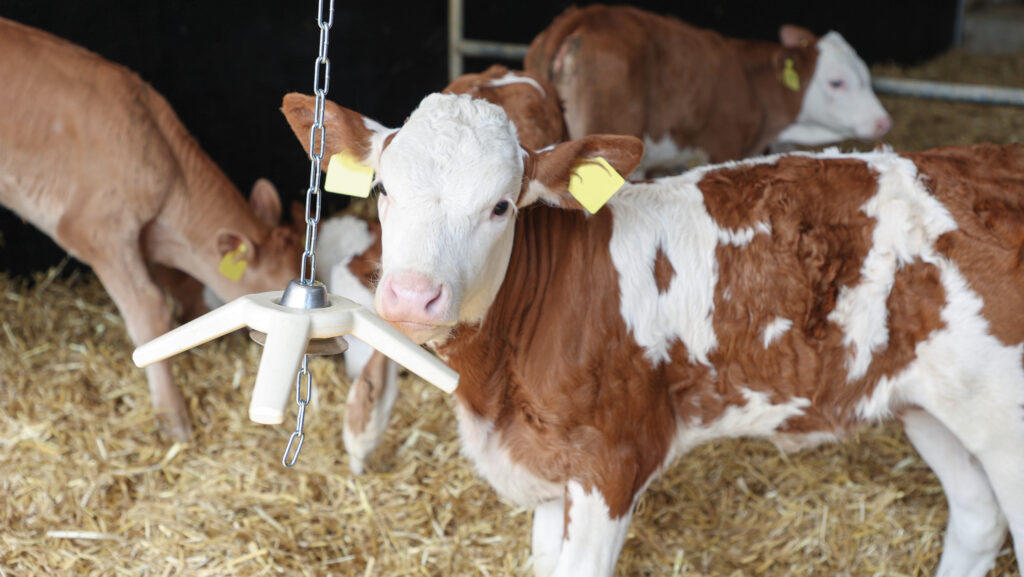 © Kerbl
 Introducing toys into the calf pen can enhance the development and wellbeing of youngstock, helping them thrive and become resilient animals in adulthood.
However, these should not be at the expense of providing good-quality, draught-free housing and raising calves in social groups.
See also: Benefits of giving dairy calves toys on farm
Toys, such as giant footballs and sailing buoys, often suspended from the roof, encourage playing and provide visual and physical stimulation, says Dr Ginny Sherwin, clinical associate professor in farm animal medicine at the University of Nottingham.
“Calves are like toddlers. They need that play behaviour and stimulation,” she says.
Such playful behaviour is often seen at bedding down.
“There is nothing better than looking at a pen after it has had fresh straw, and they’re all doing the ‘zoomies’,” she says.
“They’re displaying their natural desire to play, and they do that because they want to. But they must be given the space and the friends to do it with.”
Though calf enrichment is not a legal requirement for the dairy industry, it may be required by processors, and calf toys are relatively cheap to buy – a giant inflatable ball, for example, costs about £20.
However, while adding an extra activity in the calf pen can create more opportunities for play, too small a space will not be enriched by a big toy taking up more room, says Ginny.
Nor will it replace the benefits of having the companionship of other calves.
“Group-housed calves, when they become ill, will stay close to their ‘bestie’ – the calf that they were paired with from birth. They rely on those social structures to help them cope with stress, and it helps to build resilience,” she says.
Time to explore
Calves, by their very nature, are scared of new things, though introducing toys should not upset or frighten them.
The key to keeping them happy is consistency, says Ginny.
“If the shed is calm, they have a quiet routine and are not hungry, then introducing a toy should be fine. They should have that toddler desire to have a look and play.”
Research shows that giant footballs and a sailing buoy are popular, but Ginny suggests they are introduced one at a time to allow exploration.
“If one toy doesn’t seem overly popular, don’t think that rules out all of them, and don’t get disheartened if they don’t play with them all the time,” she advises, pointing out that calves spend 80% of their time lying down.
She adds that calves will interact with toys from one week of age. While there is no strong evidence for how long to leave them in for, once introduced, she believes a variety of toys will have a bigger impact as this allows for different behavioural needs to be explored.
Ginny cautions against installing toys when calves are feeding.
“Add them at a quieter time of day where nothing exciting is going to happen for a couple of hours afterwards, and avoid just after you’ve bedded up,” she says, pointing out that toys that can distract from feeding or make it difficult for the calf to reach their food should be avoided.
A systematic review has shown that calves with physical enrichment (brushes, ropes, chains/teat toys, balls and so on) have significantly increased daily liveweight gain.
However, if the toy is also the means by which the animal accesses their feed, then this could result in decreased daily liveweight gain, she cautions.
“Food and play should be separate in a calf’s life, because we are trying to develop the rumen.
“Most people aim to wean calves by eight weeks of age, and that will only work if they are eating a large amount of solid food – at least 1.5kg/day for three to four days before starting a step-down weaning process,” she advises.
Natural behaviour
Providing toys that calves can suck also helps them display natural behaviour, develops their oesophagus and can even help manage undesirable habits such as cross-sucking.
“We need to provide enrichment or objects to suck on to activate their oesophageal groove and develop the suckle reflex,” Ginny explains.
She adds that cross-sucking usually occurs after feeding, because although calves have been fed, they may not have had enough stimulation.
The desire to suck is, therefore, something to consider if brushes are provided for grooming and scratching.
“Calves, like toddlers, will put everything in their mouths. So, the brushes need to be of good quality, and you must make sure the bristles don’t come out,” she says.
Hygiene considerations
Speciality toys, such as star-shaped chews and rubber teats, are also a helpful addition, but maintaining high standards of hygiene is critical across all toys.
To keep calves interested and curious, toys can be rotated in the pens and between groups; however, they must be thoroughly and regularly cleaned.
“If they get caked in faeces, you are risking an outbreak of cryptosporidium. Clean them the same as you do your feeding equipment, with warm soapy water and the right disinfectant,” says Ginny.
DIY options
When it comes to using makeshift and DIY options for calf toys, she advises being mindful of quality.
“You get what you put in. So, if you put in poorly built toys, they might smash them to pieces or not use them.”
Options that have worked well, she adds, are corrugated plastic pipes pulled over a railing, which they can lick and rub on, or old lemonade bottles filled with stones that make a noise when struck.
Calf housing enrichment options
Inflatable calf interaction ball – £20
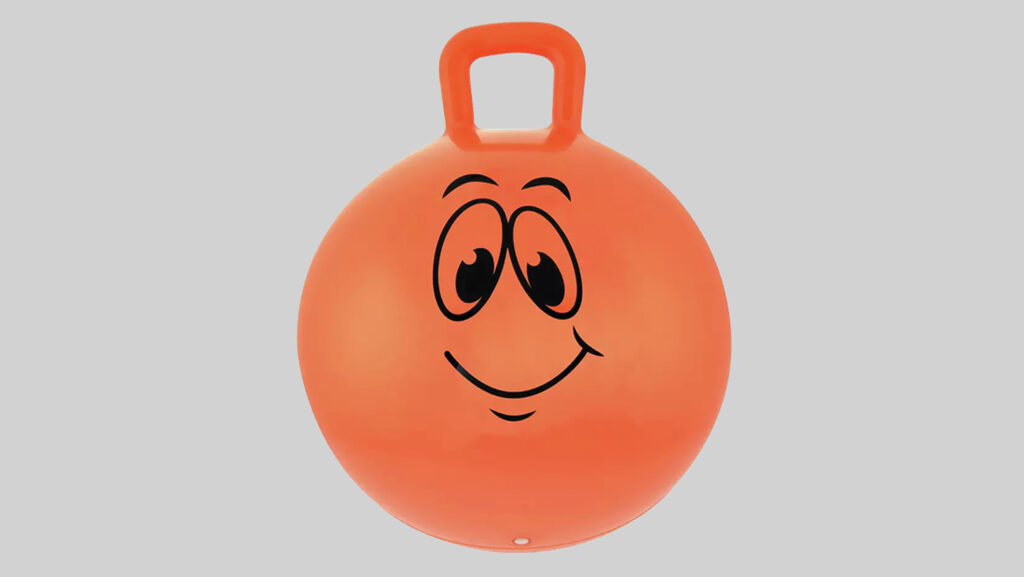
© The Calf Company
- Dimensions once inflated 40x47x40cm
- Low-density, non-toxic polyethylene
- Hang at calf height on a chain
- Lasts about five years
JFC calf playball – £29
- Diameter 22.5cm
- Impact-resistant polyethylene
- Hang at calf height on a chain
- Lasts about five years
Natural rubber BiteStar – £19.50
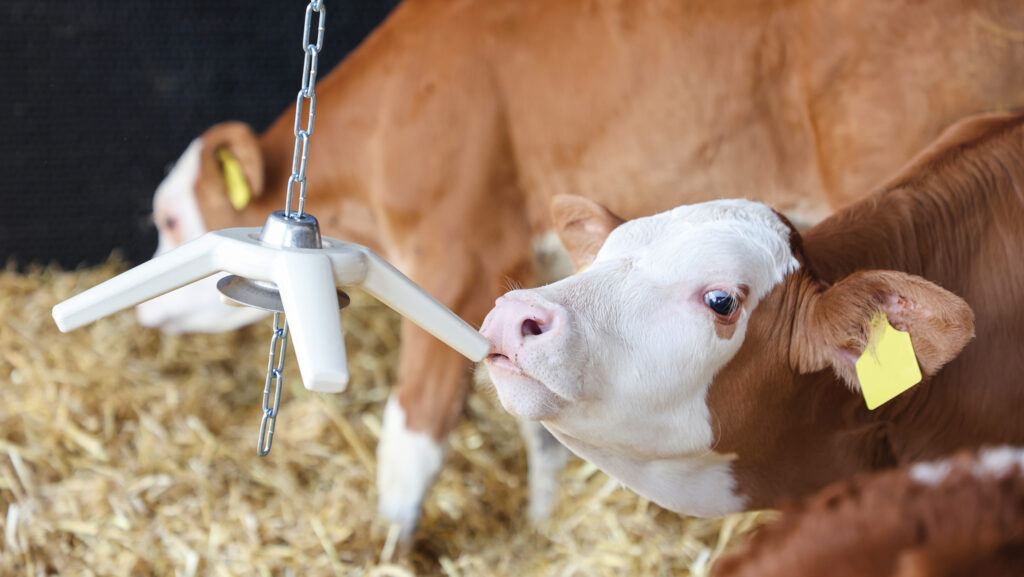
© Kerbl
- Approximately 33cm
- Natural rubber
- Hang at calf height on a chain
- Replace depending on wear and tear
Calf teat with mounting – £10.50 each
- Standard teat size (about 10cm)
- Various mounting options, including fix to wall
- Replace depending on wear and tear
Feed ball toy – from £45
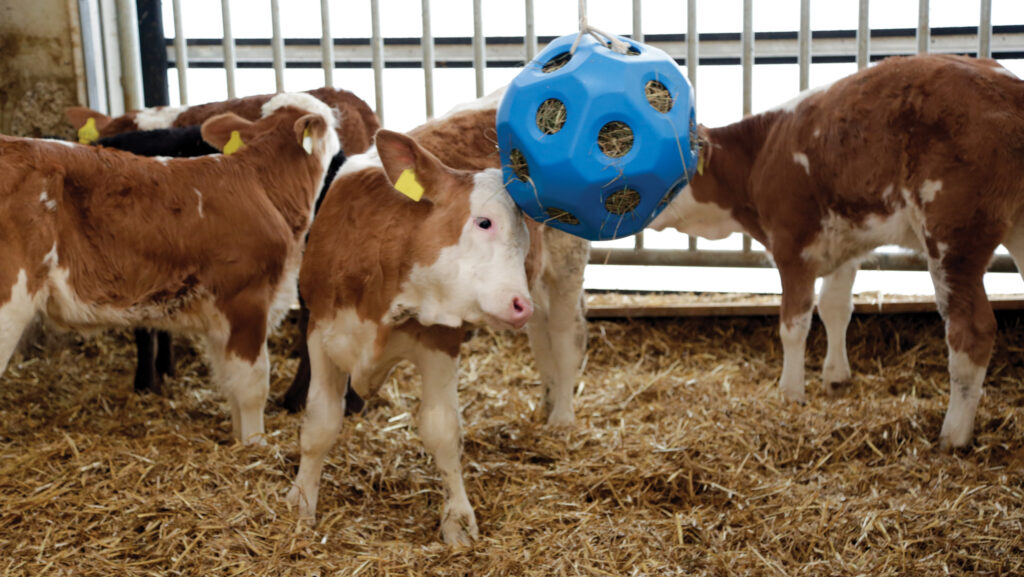
© Kerbl
- Diameter 40cm
- UV-resistant plastic
- Holds up to 3kg of hay
- 19 feed openings, each 40mm or 60mm
- Hang on a cable or chain
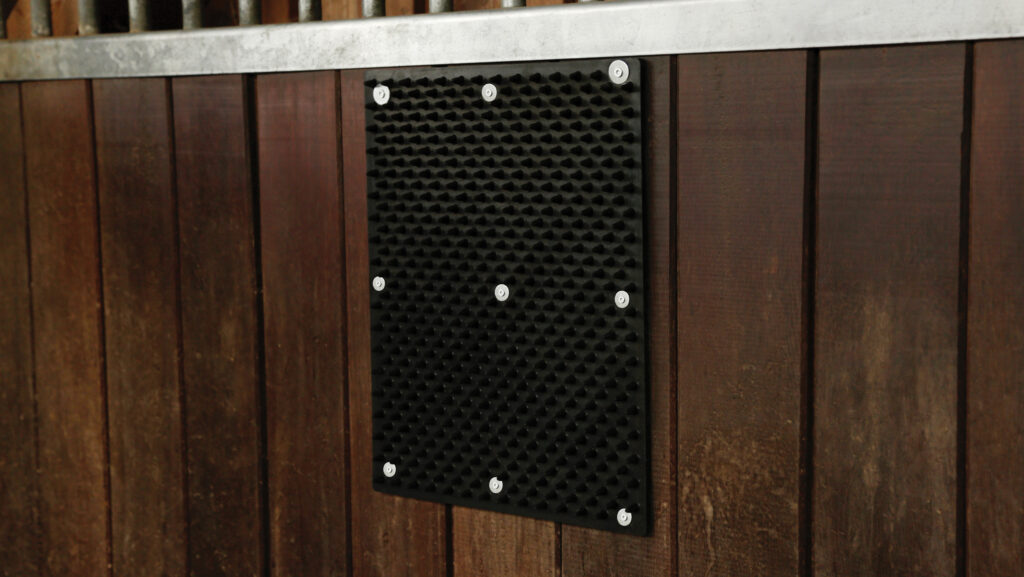
Scratch mat – from £20.50
© Kerbl
- Available in two sizes – 60x40cm and 40x30cm
- Natural rubber
- Multifunctional application such as flat on the wall or around pillars, posts or corners
- Not suitable for adult cattle
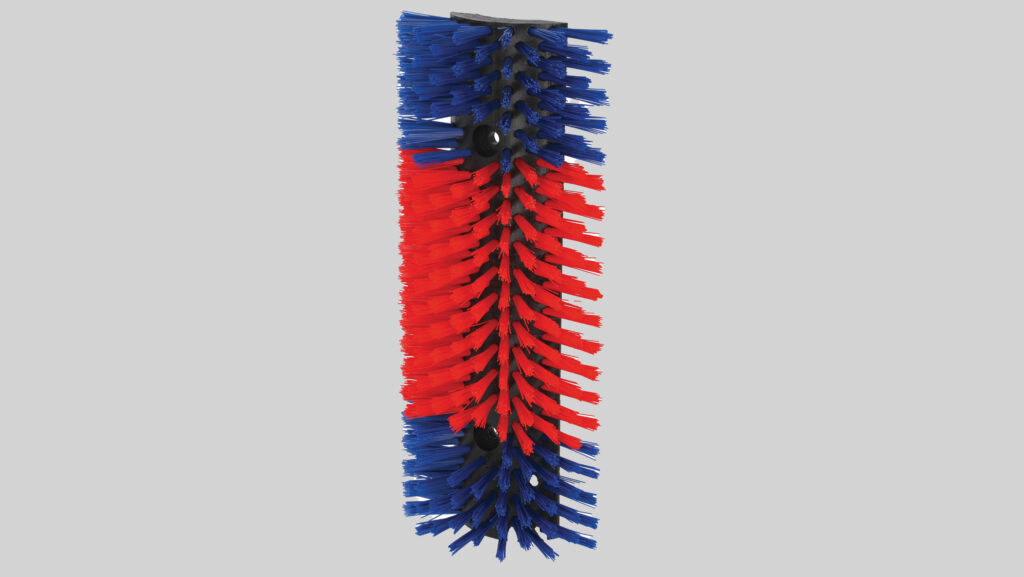
Scratch brush – from £40
© Kerbl
- Dimensions: 22x50x9cm
- Bristle material polyamide
- Bristle length 5cm
- Various mounting options (walls, corners and posts)
- Prices exclude VAT. Available from retailers including The Calf Company, Kerbl and Wynnstay. Products should be used following manufacturers’ instructions.