

Pros and cons of lameness data analysis for cattle mobility
 © Tim Scrivener
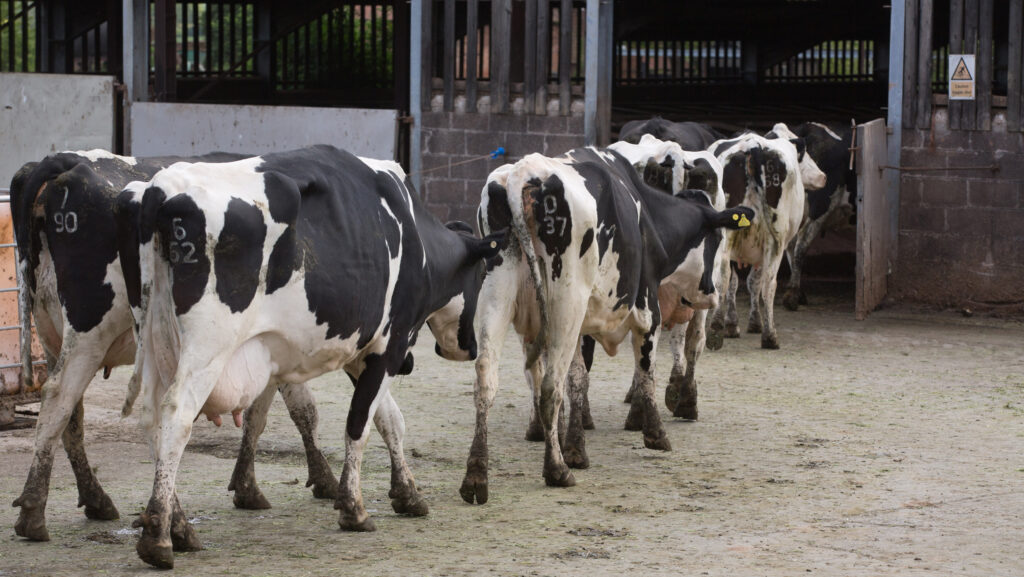
 Hoof health data from mobility scoring and trimming records can be a powerful tool for identifying lameness patterns and guiding management decisions on dairy farms.
But how can the practical challenges of accessing, analysing and interpreting data be overcome, so lameness data can be used effectively by vets and farmers?
See also: How a dairy farm solved planning permission and succession
About the author

Lameness data can, in theory, inform treatment of affected cows – but how easy is it to use? Paul Doran of Friars Moor Livestock Health offers expert advice.
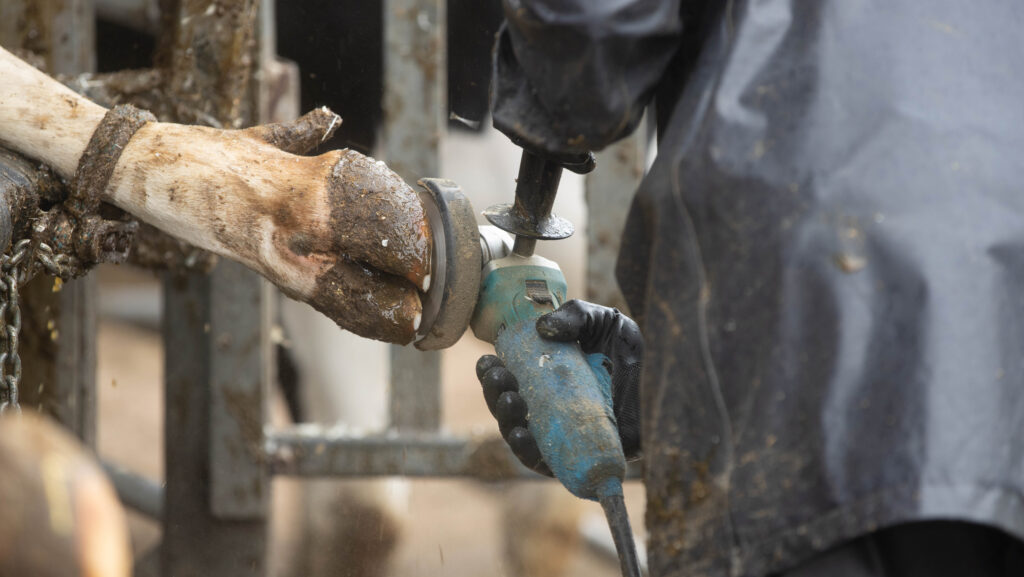
The past decade or so has seen considerable progress in the availability of recording software for professional hoof-trimmers, allowing detailed recording of hoof lesions, hoof zone information, treatments administered and advice to the client.
Challenges accessing and analysing data
However, so far, none of these commonly used software packages provide entirely satisfactory data analysis functions.
Getting the data out of the software in a format that can be easily manipulated in third-party software can be challenging. As a result, reviewing trimming data can be very time-consuming.
We are very lucky at Friars Moor to have Liz Alford on our admin team. Liz has worked with us to produce comprehensive hoof health reports by amalgamating mobility and trimming data.
However, we have recently switched the software we are using to record hoof-trimming.
This has simplified data entry, but complicated analysis because of differences in the data export functions.
Trying to streamline our analyses remains a work in progress for us, too.
Another challenge is getting access to data in the first place.
For us, this is easiest on farms where our own team provides the trimming – though getting access to the data on farms using a third-party trimmer usually just requires asking for it nicely from the farm, or directly from the trimmer.
(There is a much-discussed need in the industry for greater collaboration between vets and hoof-trimmers to work together in this way.)
Focused management decisions
Knowledge of the common lesions causing lameness on a farm allows management decisions to be focused on the areas most likely to provide a return on investment.
This is the basis of the AHDB Healthy Feet Programme’s “lameness map”, which can be used to prioritise focus on particular “success factors”.
In the example shown, the farm’s pattern of lesions would direct the farmer to focus on reducing infection pressure, improving cow comfort, and practising better early detection and treatment.
Observations about the time of the production cycle when hoof health events occur may help inform management decisions.
For example, if cows frequently become lame at around 80-90 days in milk (DIM) on a farm that carries out routine trims at 100 DIM, or a lot of sole bruising is detected at the 100-DIM trimming, there could be an argument for moving the timing of early lactation trims to, say, 60 DIM.
Timing of interventions
This kind of data-based decision-making can be invaluable because there remains limited evidence on which to base recommendations about the optimal timing of routine trimming.
Even if there were a clearer evidence base, there is probably no one-size-fits-all answer that would work on all farms, so using farm-specific data is often the best thing to do.
It can be useful to look at the pattern of lameness events by lactation number. In most cases, the risk of lameness tends to increase with advancing age.
© Tim Scrivener
This is thought to be associated with historic problems that occur in younger animals, leading to permanent changes within the hoof that predispose future issues.
If there are more lameness cases than expected in first- or second-lactation animals, this can suggest that targeting management interventions to reduce lameness in heifers may provide the best return on investment, by preserving their foot health into later life.
Mobility scoring data, especially when scoring is carried out frequently enough, can have huge value, as they can be used to identify seasonal trends in cattle mobility.
Seasonal factors
Issues throughout the summer may be associated with grazing, cow tracks or heat stress in a housed herd.
By contrast, a higher prevalence of lameness through the winter may suggest issues related to housing, such as cow comfort or cleanliness.
On farms conducting frequent mobility scores, the data can also be used to identify chronically or repeatedly lame cows and to assess cure rates following treatment of cows.
This can be useful to know when discussing treatment protocols and speed of treatment following detection, a concept referred to in the Healthy Feet Programme as early detection and prompt effective treatment.
The aim should be to treat all lame cows within 48 hours of detecting them, as longer delays lead to poor outcomes. Detecting lameness early enough, however, remains a challenge.
Scoring limitations
Interpreting mobility scoring data with confidence presents some challenges as it is quite subjective, and different scorers will not always agree.
Nor is scoring 100% repeatable, even when the same person is doing it.
Calibration exercises undertaken by practitioners accredited by the Register of Mobility Scorers (Roms) can help reduce this variability to some extent, but it is still best to try to ensure that scoring on a farm is as consistent as possible.
This means, for example, always using the same person where possible and carrying out the scoring in the same place each time.
With the arrival of automated lameness detection technologies on the market, there is some promise that in the future, we might have much more consistent, reliable means of lameness detection.
Although these technologies are an exciting development and have huge potential, work to date has demonstrated that they cannot yet outperform experienced human registered scorers.
So, technology does not yet offer a perfect solution.
As automated detection technologies develop, they may complement rather than replace experienced human assessment.
For now, the key is making the most of available data while working to improve accessibility and consistency of recording.