

Orf disease: Two ways sheep farmers are tackling the virus
 © Tim Scrivener
 Orf is the more common name for contagious pustular dermatitis, and is considered endemic in the UK, and prevalent on most sheep farms.
A recent study by the Royal Veterinary College and Nobacz Healthcare suggested that 73% of surveyed farmers had seen the disease on their farm in the past year.
Orf typically presents as crusty lesions around the mouth area, especially in young lambs, which earns it its other name of scabby mouth.
See also: Why iodine alternative brings four benefits to lambing shed
The virus can enter the body through an open wound, often caused by another factor such as rough forage or pasture, and then spreads rapidly throughout a flock.
It can be spread to the teats of ewes suckling infected lambs and is a zoonotic disease, which means humans can also contract the infection.
Virus particles can remain viable for months in the environment, often contaminated by fallen scabs, so strict disinfection protocols in housing are necessary to try and minimise risk of infection.
Treatment options
Once an outbreak occurs, maintaining high levels of hygiene and isolating infected animals will help reduce transmission.
But many farmers now choose to vaccinate for – and treat – the disease to limit the effect it can have on lamb performance and secondary infections in ewes, such as mastitis.
Vaccination should only be used once orf is present – otherwise, it will introduce the virus to the flock. An alternative to vaccinating is to use a gel sealant product, which can act as a barrier to the virus.
Farmers Weekly spoke to farmers using both methods.
Case study: Orf control using waterproof gel barrier
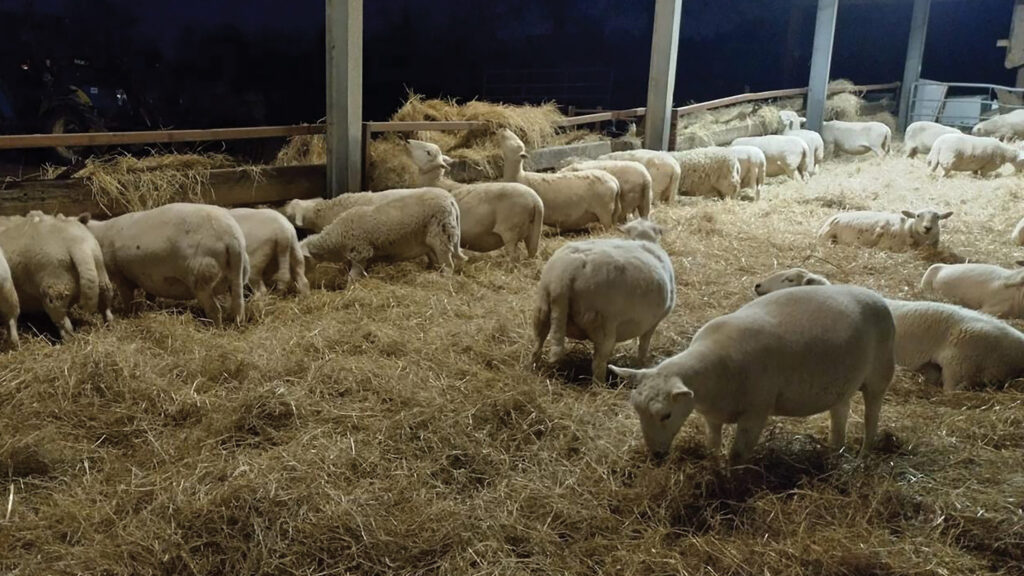
Treatment with a waterproof gel product has helped Charlie and Gill Ainge control orf in their low-input, indoor-lambed flock.
They first noticed clinical signs of orf in young lambs in 2023. The disease spread rapidly and the family used an antibacterial spray to try and prevent secondary infections.
While there was no mortality, growth rates were knocked 15% and several cases of mastitis caused.
Farm facts
Peppercorn Farm, Wedmore, Somerset
- Farming 81ha
- Sheep used as grass management tool for equine hay business
- Easycare flock of 200 ewes plus followers
- Sheep fed grass and forage only
- Rotationally grazing, with lambing indoors
- Finishing ram lambs, averaging 21kg at R4L
- Selling ewe lambs privately for breeding, aiming for 50kg-plus lambs
In addition, all lambs had to be checked twice a day and the spray dabbed onto the pustules with cotton wool.
“It didn’t impact their ability to feed mechanically, but I think the pain stopped them feeding, so under veterinary supervision we administered pain killer,” says Charlie.
At that point, the flock was only two years old and he questioned his decision to bring sheep back onto the 81ha (200-acre) grassland farm.
While assuming the orf had come in with purchased animals, he knew it was now in the sheds and possibly there to stay.
Towards the end of 2023 lambing, with no antimicrobial spray to hand, Charlie applied a waterproof sealant product, typically used for navels, on a handful of lambs with orf.
It appeared to give instant relief, so they used it again during 2024 lambing, knowing that the antibiotic spray previously used would not have been treating the viral disease.
With lambs turned out on about day four, growth rates were back where they were before orf was seen. And all orf cleared up as soon as the lambs had some sunshine on them.
© Charlie Ainge
Targeted treatment
In 2025, the Ainges tried applying a new waterproof gel barrier – designed specifically for orf – on any animals showing clinical signs, or weaker lambs they thought may be susceptible.
With their most successful crop of lambs to date, and growth rates up 10% on 2024, they plan to continue to use the gel, called Ambugreen, in future.
“It dries quickly and they don’t seem to mind it. We treat them once and then observe them,” Charlie says. No pain killer has been needed since using the gel.
After looking at the costs, Charlie decided use the gel product reactively, rather than vaccinate.
He costs it into the system at 65p a ewe, allowing for a generous application, which equates to about 40p a lamb – a cost he thinks is worth paying to prevent a 15% knock on growth rates.
There is also a labour element, but when the family team picks up a lamb to check for orf, they also check navel health, correct ringing and castration.
Charlie also believes that the health status of ewes makes a massive difference to their resistance, so he aims for a body condition score of 4 pre-lambing.
He is also keeping some ewes longer to monitor the long-term effect of orf exposure, their resistance to the virus and the effect on their lambs.
Case study: Orf control using vaccination
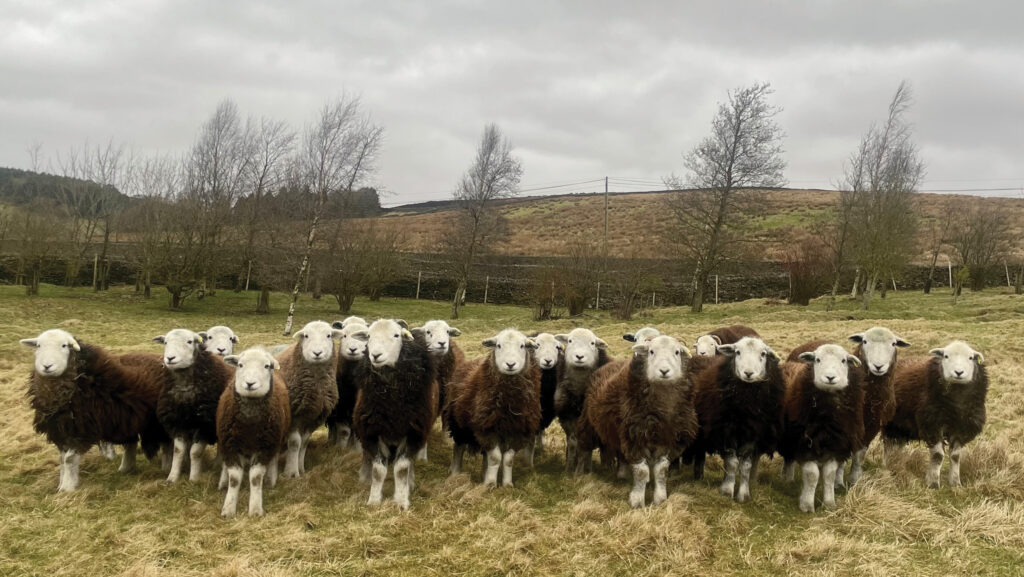
Alice Farrar runs Eshton Herdwicks in the Yorkshire Dales, supplying high-end restaurants and local customers with slowly grown lamb.
With the 100-head flock running alongside Alice’s full-time job outside agriculture, maintaining high standards of welfare is paramount to a sustainable business.
Disease prevention is key to this, which is why she selected to vaccinate once she saw signs of orf in the second crop of home-bred lambs.
Farm facts
Eshton Herdwicks, Skipton, North Yorkshire
- Farming 20ha spread across the Yorkshire Dales
- 100 Herdwick ewes, lambing outdoors
- Producing lamb boxes and supplying restaurants with finished lambs
- Some sales of breeding stock
Alice saw mouth lesions in the late summer of 2022. She is still unsure where it could have come from but suspects a second-hand feeder could have been contaminated when it was purchased.
With parcels of grazing land scattered around, transmission was limited, but did spread to about one-third of the lambs in the affected field and caused some lesions on the bags of ewes.
© Alice Farrar
Impact of orf on lamb performance
Alice says it is hard to quantify the impact on performance because finishing Herdwicks is slower and more varied than in commercial breeds.
However, the lambs in the affected field were the last to finish that year. It also led to the culling of some ewes, which were unfit for future breeding.
“The implications of any delays to lambs finishing have a massive impact on our farm business,” says Alice, adding that this is why they opted to make vaccination a part of the lambing routine.
“They all cleared up and healed, and the following year we made the decision, with the followers coming through, to vaccinate from lambing.
“We spoke to our vets about the best course of action for us, and they said, for us, they felt that Scabigard [a live virus vaccine] was a no-brainer.”
The only challenge Alice found initially was knowing how much to scratch the skin for effective immunisation, but she says she soon got the hang of it.
Since choosing to vaccinate all lambs born from 2023 onwards, she has not seen any cases of orf – and deems this benefit worth any additional cost to the business.