

Pig and poultry systems targeted in animal welfare strategy
 © British Egg Industry Council
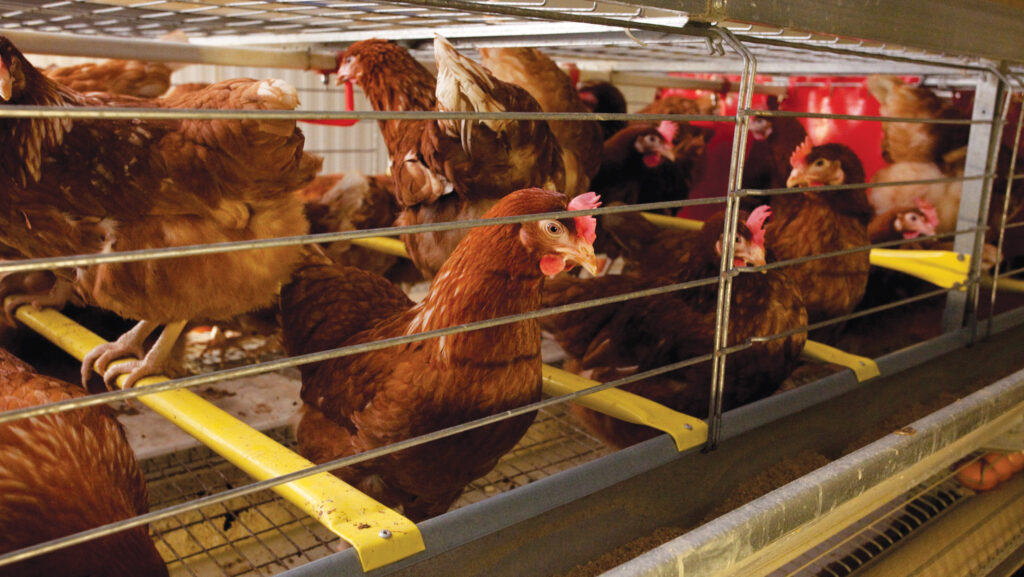
 An end to farrowing crates and gas stunning in the pig sector, and to caged hens in the egg sector, are set for implementation in England and Wales under the government’s newly published Animal Welfare Strategy.
Launched on Monday (22 December), Defra secretary Emma Reynolds said: “We’re a nation of animal lovers. This government is delivering the most ambitious animal welfare strategy in a generation.”
For farmed animals, the strategy includes:
- Moving away from colony cages for laying hens and the use of pig farrowing crates
- Addressing the welfare issues that arise from the use of carbon dioxide to stun pigs
- Promoting the use of slow growing meat chicken breeds.
See also: Animal Welfare Committee seeks end to CO2 stunning of pigs
Response
The RSPCA said it welcomed the moves “as an important first step” for farmed animal welfare.
RSPCA head of public affairs David Bowles said: “Lower welfare farming is the single biggest animal welfare issue we face in the UK and around the world.
“The government’s new strategy sets us on an important path to address some of the cruel practices which cause pain and suffering to millions of animals every year.”
It points out that about 20% of the UK’s hens (7m) are kept in enclosed colony cages, and 200,000 sows a year are put in farrowing crates until about four weeks after their piglets are born.
However, producer organisations have expressed significant concerns that it could expose UK farmers to unfair competition from overseas.
NFU president Tom Bradshaw said: “If the government proposes raising domestic animal welfare standards further, it must also take steps to ensure British farmers are not asked to compete with imports produced at lower standards which would be illegal for them to work to.”
Eggs sector
The laying hen sector feels particularly vulnerable.
A spokesman for the British Egg Industry Council said: “Eggs laid by hens kept in battery cages have been banned from being produced in the UK since 2012, yet the government’s trade strategy continues to allow their import, resulting in millions of battery eggs entering the UK market every year.
“For any UK ban to be effective, the government would also need to prohibit imports of eggs from caged systems, including in prepared foods, which cannot be enforced.”
Expanding the sector fast enough to replace 7m hens with free-range birds would also present a significant challenge, given the struggles the sector encounters in securing planning permission.
British Free Range Egg Producers Association head of strategy Gary Ford said: “Without a more supportive and practical planning framework, producers will face real barriers to delivering the additional free-range capacity required.
“If the government is committed to delivering a coherent and effective Animal Welfare Strategy, it is important that imports, planning policy and domestic production are addressed together.”
Pig sector
The pig sector is equally concerned.
The National Pig Association says it is willing to work with the government on a transition towards flexible farrowing.
But while it also supports any moves towards more humane slaughter “there is as yet no commercially tested alternative which could replace CO2”, it said.
“We welcome the government’s overarching strategy on animal welfare, but continue to urge an evidence-based approach, taken in conjunction with industry expertise,” said a spokesman.
Currently 90% of British pigs are stunned using CO2, though the Animal Welfare Committee recently advocated its replacement with other systems.
Broilers
As for any move to slower growing poultry, the broiler sector has already voluntarily reduced maximum live bird stocking rates in sheds from 38kg/sq m to 30kg/sq m.
The British Poultry Council says if the government is serious about promoting slow-growing breeds, then it needs to fast-track planning approvals for new poultry farms “as we would need around 50% more farm space to increase the national flock from 120m to 180m”.
“Without these commitments – and a 10-15-year plan of support for the British poultrymeat sector – all this does is risk compromising UK food security at a time when we can ill afford it,” said a spokesman.