

How farming brothers are preparing for business succession
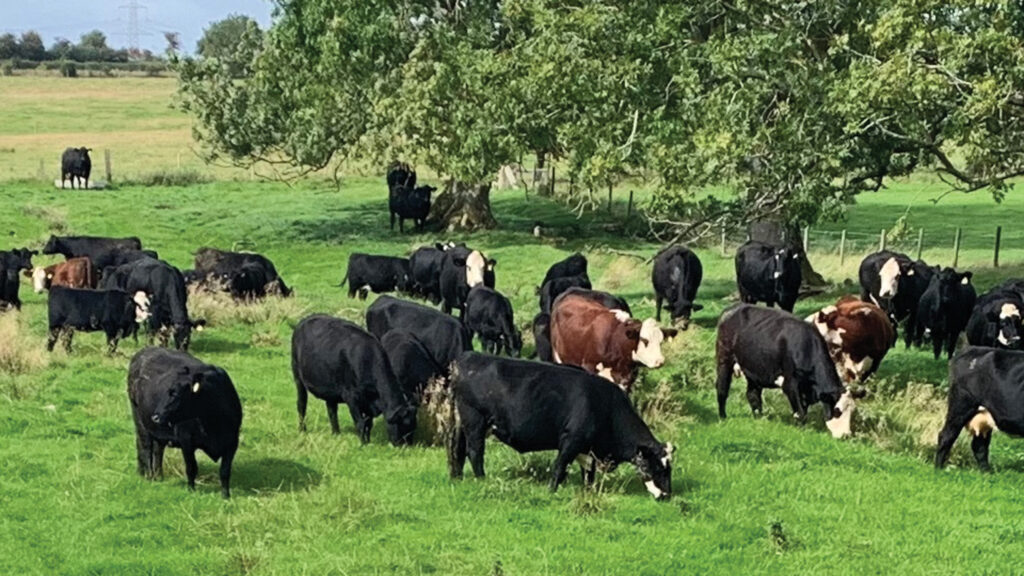 © Angus Nelless
 Clearly defined goals, and a roadmap for achieving them, are essential ingredients for a farming business to transition successfully to the next generation.
Northumberland farming brothers Duncan and Angus Nelless learned this lesson early in their careers, as they took on more responsibility for their family beef and sheep farm.
Now in their mid-50s, they are looking towards their own retirement and planning succession with their children.
See also: Young couple transform livestock farm with focus on costs
Farm facts: Thistleyhaugh Farm, Morpeth, Northumberland
- Farming 809ha, all grass
- Land 90-300m above sea level – 75% permanent pasture
- Registered organic since 2005
- Countryside Stewardship and Sustainable Farming Incentive, plus tree and hedge planting with the Great Northumberland Forest
- Forage-based system
- Closed herd of 280 Angus-Hereford criss-cross suckler cows, with progeny sold as stores or finished
- Closed, performance-recorded flock of 2,000 mainly Lleyn ewes
- Rams sold for breeding
- 1,200 free-range Bronze turkeys for Christmas
- Holiday lets
“We’re a five-member family partnership: my mother, Enid; my brother Duncan and his wife, Zoe; my wife, Janice, and me,” explains Angus.
He and Duncan joined the partnership in the mid-2000s; following the death of their father in 2020, their wives joined in 2021.
The family were tenants at Thistleyhaugh for 85 years before buying the farm in 1995, and now farm about 809ha (2,000 acres), half of it owned.
The brothers share overall responsibility for the farm, but Duncan manages the sheep and the farm’s environmental schemes, while Angus focuses on grazing and cattle.
Learning through adversity
The brothers’ approach to succession is shaped by the harsh trading conditions they faced when they started.
“Within a week of buying the farm, BSE [bovine spongiform encephalopathy] hit big,” says Angus. “From then, for a long time, it was a real struggle servicing the mortgage.
“Then foot-and-mouth came along – we didn’t get taken out, but livestock values were really quite depressed.
“We were sat in meetings with the bank manager asking us how we were going to get out of this hole. I think that was a turning point for us.”
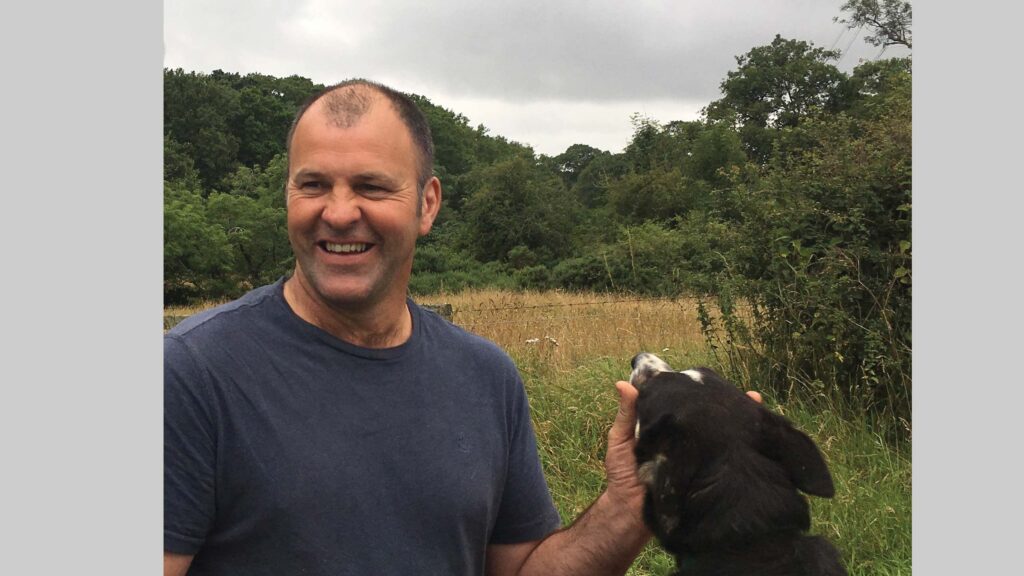
Angus Nelless © Angus Nelless
Zoe and Janice (neither from a farming background) saw their husbands working “every hour that God sent”.
“We weren’t even taking a wage from the business,” Angus says. “We’d say: ‘It will all be worth it in the end!’ But where’s the security in that?
“We realised it was a ridiculous situation, and we needed a plan, because it’s a lot to ask for people to hang around and wait [for ‘the end’].”
Angus and Duncan determined to seek out farms that were doing well to help inform their own future direction.
They used a lot of peer-to-peer learning and AHDB benchmarking groups and opened up about their financial situation.
“We started to do cost of production in the early 2000s, and we’ve done that ever since.
To make sure mortgages are paid and everyone’s got enough to have a decent standard of living, you have to have a good handle on cost of production,” says Angus.
“Over time, you start to see what’s making the successful businesses successful.
“We nailed down what we were good at, what we weren’t good at, what the farm suited, and – equally important – how we wanted to farm.”
Navigating change
Machinery was sold and the farm moved from a high-input system breeding muscly continental cattle to a forage-based one with native breeds.
“We showed Dad the financial implications of staying with that system or changing, and he didn’t need much persuading when we put it like that.
“But I have regrets about how I approached some subjects with him – I could have been more sensitive.”
A clear sense of where they were heading paved the way for a smooth transition when he and Duncan joined the family partnership.
That process also helped prepare them for how they might go about bringing in the next generation.
“We have a younger brother who was never interested in farming. We’re still very close to him – he lives and works in London, but he comes back a lot, and this is still his home.
“We wanted to replicate that for any of our children who didn’t want to farm,” says Angus.
New blood
The brothers have five children between them, aged 14-23 years. Angus’s eldest, Joe, came back to the farm two years ago after working away; his daughter, Lily, a pharmacy technician, is travelling.
Duncan’s eldest, Duncan Jnr, returned last June. Imogen has her sights set on being a vet, while his youngest, Phoebe, is not yet sure of her plans. “And there’s no need for her to decide yet,” Angus stresses.
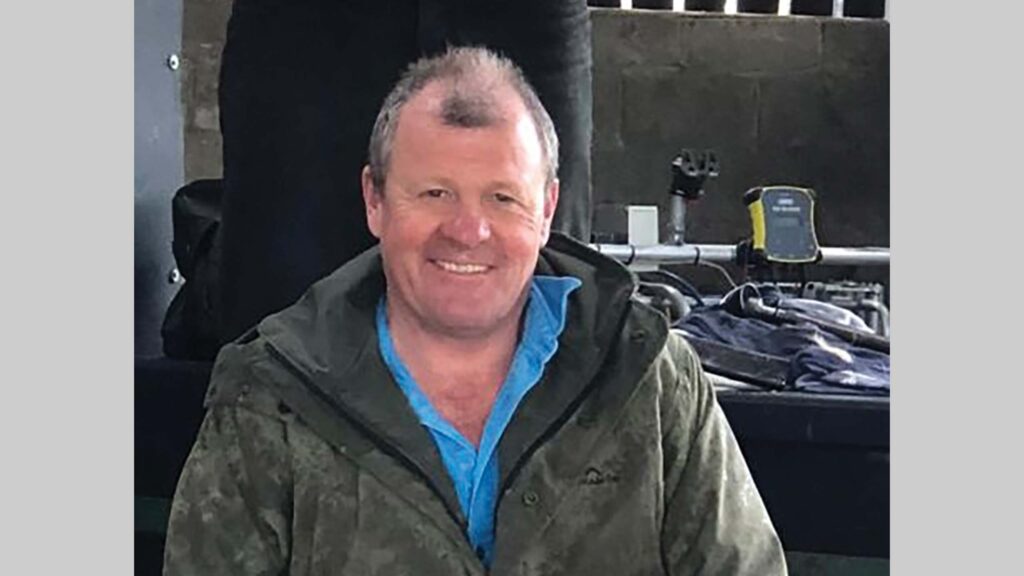
Duncan Nelless © Angus Nelless
“I think it’s as important for those who aren’t coming into the business as those who are, to get it right.
“We thought the earlier we started to think about it and have conversations with the children, the better – even though they were young at the time. As much as anything, it’s to make sure family unity continues.”
The family worked with succession specialist Heather Wildman “to set out the endgame”. This included a questionnaire for the young ones and a family meeting on the farm.
“Everything was on the table,” says Angus. “Mum was involved but said, ‘Crack on, I’m happy to go with whatever you think.’ It was really good, and we’ll use Heather again to help us clarify things.”
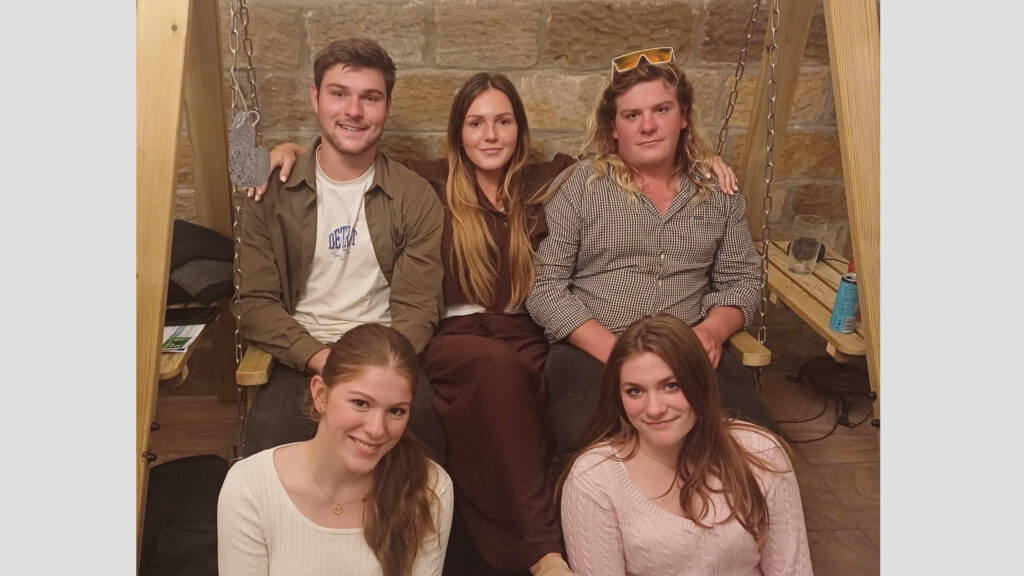
The next generation: back row, from left: Joe, Lily and Duncan; front row, from left: Imogen and Phoebe © Angus Nelless
Common ground
They also enrolled on Dallas Mount’s Ranching for Profit course, delivered via the AHDB’s Roots to Resilience programme.
First, Joe went with Duncan; the following year, Angus went, and last November, Joe went again, this time with Duncan Jnr.
“It advanced [the younger generation] quite a few years having these conversations, so for us it was hugely important that they went.
Now we can sit down for our weekly/monthly meetings and we’re all singing from the same hymn sheet.
“If there’s an end goal and you know what you’re doing it for, that’s what succession is about.
“It’s knowing we have security for our retirement, and for them, they’ve got skin in the game, working for their future.
“We’re also now in a position where everyone gets paid [for work done on the farm] – that’s important.”
Joe and Duncan Jnr are being encouraged to develop their ideas for the future of the business.
“Visions and mission statements sound cheesy, but they create conversations.
“If you don’t know your vision, you can’t get there,” says Angus, adding that any proposals for major changes in business direction would have to be “addressed with facts and figures, as we did with Dad”.
“Once we’ve done our 30 years [working on the farm], we’ll still have a role in the business, but by the time we’re 60, the handover of responsibility will have happened. It will be a slow transition, though.
Joe and Duncan Jnr both work hard and do a great job, but we don’t want to take away their youth and lumber them with loads of responsibility and just walk away.”
The AHDB offers further resources for succession planning.