

How off-farm pursuits are benefiting two livestock farms
A change is as good as a rest, the saying goes, and getting away from the farm to do something completely different is a great way to recharge the batteries.
For many livestock farmers, the daily workload of milking, feeding, mucking out or managing staff can make the prospect of time off seem almost laughable.
But the rewards for making the effort are clear, in smarter business decisions and better physical and mental health.
Farmers Weekly spoke to a trail-running pig farmer and a dairy-farming couple passionate about amateur dramatics to find out what they gain from their activities off farm.
See also: How spring block calver uses nurse cows to rear replacements
James Ross, Elms Farm and Dyke Farm, Lincolnshire
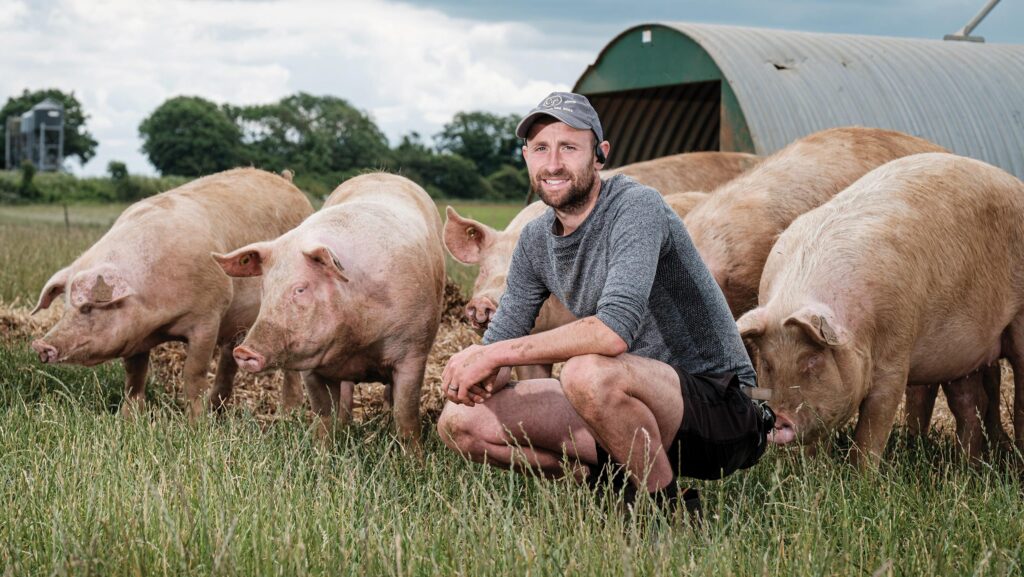
James Ross © Jim Varney
Fitness, and the endorphin rush that comes in pursuit of that, are the main drivers for James Ross’s dedication to running.
Regular exercise off farm – ideally over rough, hilly terrain – also gives Farmers Weekly’s 2024 Pig Farmer of the Year valuable time to regain his energy and return to work with a clear head.
James manages 1,750 sows across two outdoor units in Lincolnshire, producing weaned pigs for BQP with a team of eight staff.
“My working day is quite high-octane, and I can feel quite stressed. Running is escapism and makes such a difference.
“I might be like a coiled spring, and it releases that stress and the endorphins kick in,” he says.
James’s dad, whose main hobby was running, was his inspiration. “I’d tag along, from about the age of 10,” he says.
“I was never very good at it, but it didn’t put me off. It wasn’t about competing.”
His enthusiasm dimmed during his college years and early farming career, until he met Jess, now his wife. “We both had spaniels and enjoyed walking,” he says.
“We started mountaineering in the Lake District and Scotland, and that triggered [a return to running]. “Our first race together was the Scafell Pike marathon.”
Teamwork and timing
The couple have since progressed to ultramarathons, and James rates the Snowdon24 as among his greatest achievements.
Starting and finishing at the foot of Yr Wyddfa, the challenge is to run up and down the Welsh peak as many times as possible in 24 hours.

James and Jess Ross with son Eddie after winning Snowdon24 in 2024 © James Ross
He and Jess ran in relay, each completing five runs up and down the mountain, and won the race.
Long hours are nothing new to James, who lives in the Peak District, an hour-and-a-half’s drive from his pig units.
Their location suits Jess’s part-time work as a GP and provides endless trail-running opportunities on the doorstep.
“I don’t like running on the flat,” James concedes.
His work pattern is 12 days on, two days off, giving him every other weekend free.
His usual routine is to leave home at 3.30am and work a 12- to 13-hour day, getting back for their three-year-old son’s bathtime.
However, once a week, James starts half-an-hour earlier and finishes at 10.30am, so he can pick Eddie up from nursery.
Despite this demanding schedule, he fits in two or three evening runs of 30-45 minutes each week.
“Going out running gives me time to think, and as soon as I’m out of that ‘work bubble’, things seem a bit clearer.
“I can plan, and find I can solve problems sooner, and better,” he says.
Free weekends are spent on “adventures” travelling to races or to train, with Eddie in tow.
James’s favourite race this year – and another win – was the Hardmoors 110, a 110-mile race run with Jess along the Cleveland Way.
“We did four legs each of 11-19 miles in 18 hours, leapfrogging with our campervan and Eddie.”
Ways into running
For those keen to find a way into running, James points to the free NHS Couch to 5K programme for novices.
“You only need 20 or 30 minutes. And most towns have a running club for every ability from walking upwards.
“I’d say really try to make the time, even if it’s just walking – you’ll notice a difference in headspace very soon, and a change of mindset,” he says.
He adds that doing something unrelated to farming is also very beneficial. “Often, all you talk about is farming, and that can be overwhelming.”
Tim and Suzy Wall, Rackleigh Farm and Hayne Farm, Devon
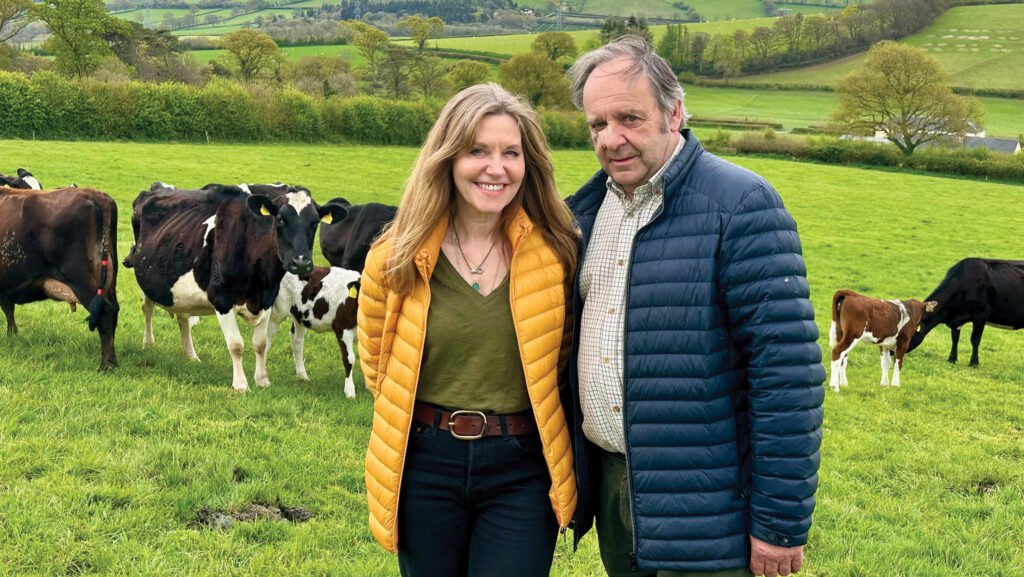
Suzy and Tim Wall © MAG/Judith Tooth
Dairy farmers Tim and Suzy Wall met treading the boards at Dulverton Town Hall in a performance of Oscar Wilde’s The Importance of Being Earnest, marrying a few years later.
They are now long-standing members of the Dulverton Players and passionate about amateur dramatics.
“It’s really refreshing doing something so totally different to farming,” says Suzy.
“People only know us as actors; they don’t know us as farmers. And because you’re in a group, you become really friendly with everyone.
“So, if you’re feeling lonely or isolated, it really gets you out there and with people.”
She and Tim run a spring block-calving herd of 270 Jersey-cross cows with their son, Bertie.
Each Christmas, once the cows are dried off, they relocate 18 miles to a rented farm where the cows outwinter and calve.
Planning for performances
They admit fitting rehearsals and productions into the dairy farming calendar – and family life – can be a challenge.
“I’ve never had to drop out of a production I’ve committed to, but I have turned down taking part or had to skip rehearsals,” says Tim.
“Having an interest that doesn’t run every week of the year helps.”
The rehearsal schedule for a production usually involves two evenings a week.
And there are extra practices in the week leading up to a production, which runs for four consecutive nights.
To learn their lines, they record their parts, Suzy running through hers while out walking, Tim listening to his in the farm truck.
“If we’re doing a play in October or November, it’s not like you’re going to hit harvest and it’s the only fine week.
“With a block-calving system, it wouldn’t be easy during calving.
“But the run-up to calving is pretty quiet. Late summer’s not too bad either,” says Tim.
Effort and reward
He and Suzy admit the hard graft preparing for a production often makes them question why they signed up to take part.
“Rehearsing is pretty awful, really – it’s hard to get to, you’ve got to learn your lines.
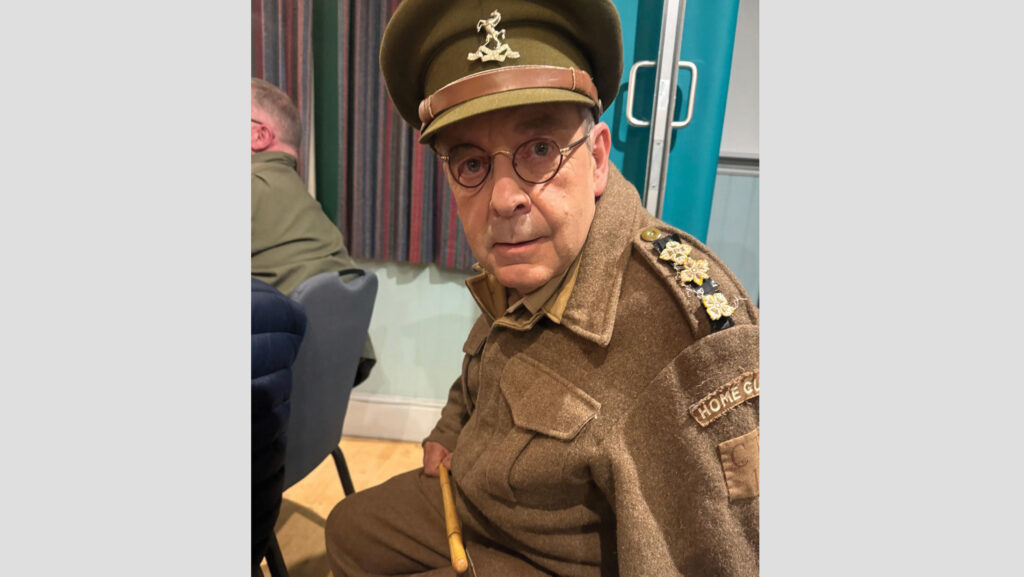
Tim Wall as Dad’s Army’s Captain Mainwairing © supplied by Tim and Suzie Wall
“But then when you’re actually performing on stage, and you make people laugh, it’s so rewarding to entertain.
“You forget how awful the rehearsals were and you do it again,” he explains.
They count among their most memorable plays Abigail’s Party by Mike Leigh, an adaption of the TV show ‘Allo ‘Allo!, and Noel Coward’s Blithe Spirit.
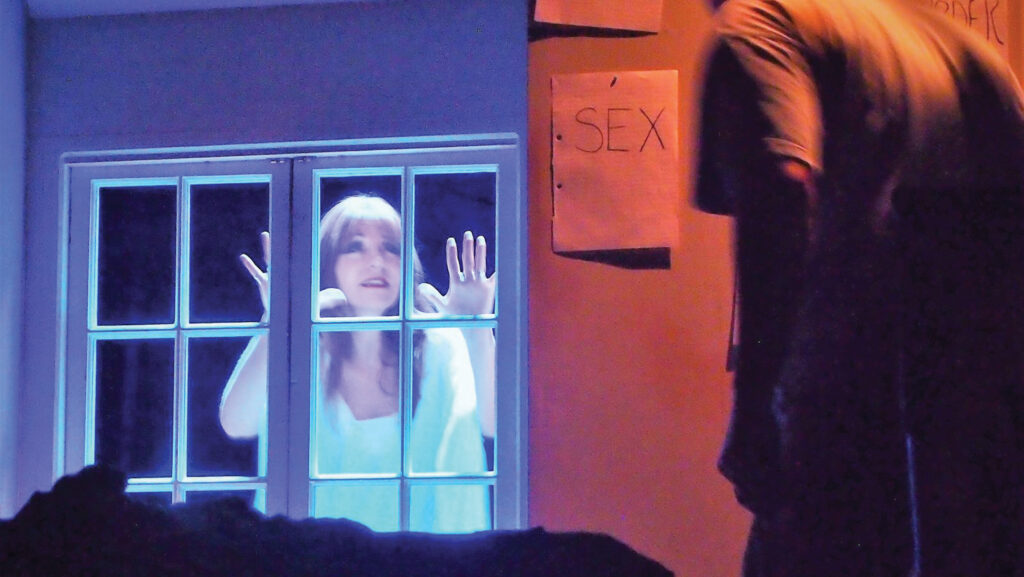
Suzie Wall in Blithe Spirit © supplied by Tim and Suzie Wall
They also reproduced an episode of Dad’s Army as part of the VJ Day commemorations, and earlier this year took part in a three-act murder mystery dinner.
To any farmer looking for something to take them off farm to recharge their batteries, the couple say the enjoyment of doing a performance and entertaining people makes all the effort worthwhile.
“If you’ve got a full house and the audience is roaring with laughter at something you’re doing, it’s such a fantastic feeling,” adds Suzy.