

Advertiser content
How vaccination helps farming couple beat crypto outbreak
A young farming couple who lost nearly a quarter of their suckled calf crop to cryptosporidiosis in 2023 have taken a belt-and-braces approach to help ensure such devastating losses never happen again.
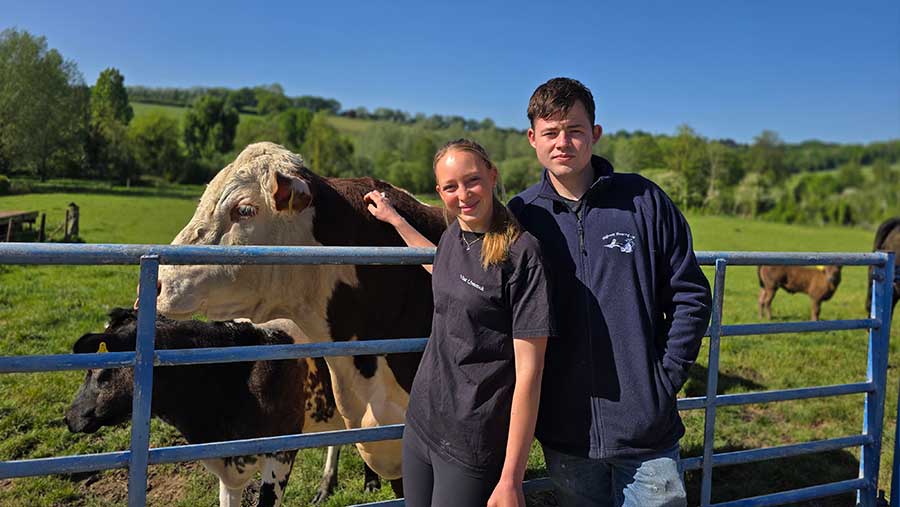
Ollie East and his partner Lucy Clark of East Livestock, Buckinghamshire © MSD Animal Health
Ollie East and his partner Lucy Clark of East Livestock, Buckinghamshire, entered a share partnership in 2021, taking on 50% ownership of a well-established 30-head Hereford suckler herd.
They also bought around 20 Continental-cross cattle from Ollie’s uncle, who was stepping back from farming.
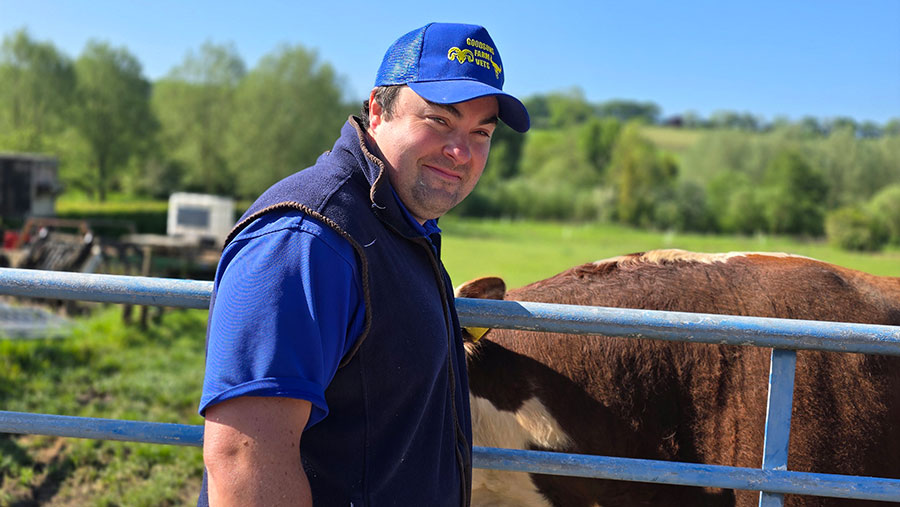
Jon Goodson © MSD Animal Health
Losses from cryptosporidiosis
The cattle are grazed across 283ha (700 acres) of tenanted grassland — but in February 2023, the couple faced a costly and devastating issue when a severe outbreak of cryptosporidiosis occurred at calving.
Caused by the protozoan parasite Cryptosporidium parvum, cryptosporidiosis primarily affects calves within their first 14 days of life1.
It damages the gut lining, causing extreme diarrhoea, dehydration and — in severe cases — death. The disease is also zoonotic, posing a risk to humans — something Lucy discovered the hard way.
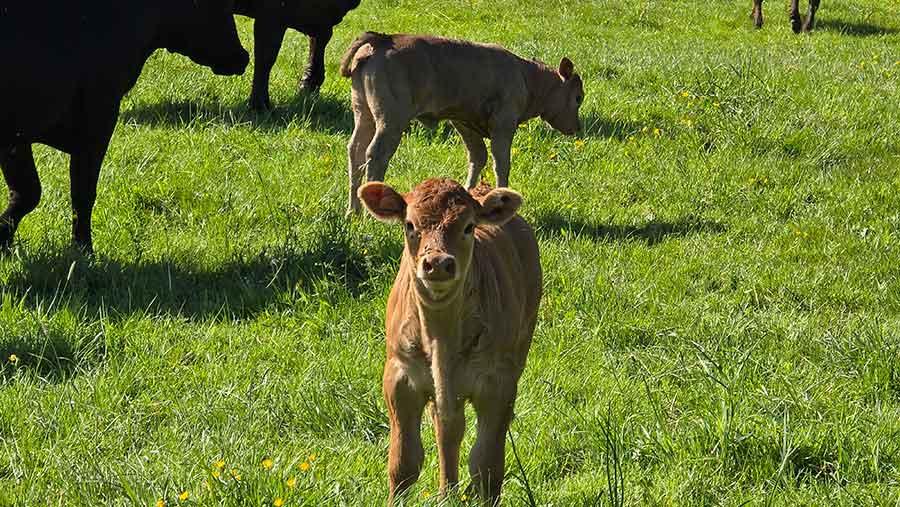
In February 2023, 35 cows calved indoors, with the rest calving outside in May. Eight Hereford calves (23%) were lost during the indoor calving period, with many others severely affected.
© MSD Animal Health
“The calves would go from fine to dead within 24 hours,” says Ollie.
“We only lost Hereford calves — we think because they’d had poorer colostrum quality and quantity, so had less resilience than the continentals.”
Lucy also contracted the parasite. “I was knocked out for ten days. I had no energy and couldn’t keep anything in.
“I wouldn’t wish it on anyone. I now take no risks when it comes to hand washing,” she says.
Their vet, Jon Goodson of Goodsons Farm Vets, used a calf-side faecal testing kit from MSD Animal Health to confirm the presence of cryptosporidiosis, as well as coronavirus in the first case.
Subsequent cases all tested positive for cryptosporidiosis alone.
Environmental swabs later revealed the parasite was present throughout the calving shed — including in the water trough.
Further tests also revealed it was on the pasture next to a sewage treatment works, which is known to flood onto the land during heavy rain.
“The building where we calved the cows and housed them over winter was old,” explains Ollie. “When we looked through historic records, we saw the Hereford herd had consistently run at 20% calf mortality.
“It’s clear cryptosporidiosis had likely been here long before us. It’s almost embarrassing to admit the scale of the problem.”
“Our initial reaction was that we’d never calve in that shed again. But with shed space so limited, and local barns being turned into commercial units, we didn’t have another option,” she adds.
Tackling cryptosporidiosis head-on
Determined not to repeat the experience, Ollie and Lucy worked closely with Jon to take control of the situation.
“We were very strict on culling,” says Ollie. “Anything that lost a calf and shown to have poor or limited colostrum was culled.
We culled over half the Herefords and have been slowly rebuilding with stronger replacements.”
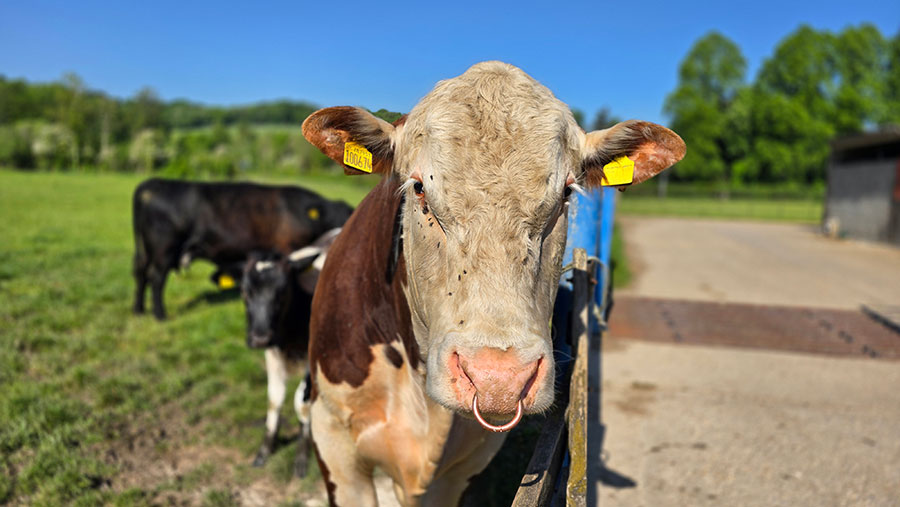
They also bought a new Hereford bull, chosen for his maternal traits and milkiness to improve colostrum quantity and quality.
© MSD Animal Health
Cleaning protocols were overhauled. Sheds are now mucked out three times over winter, disinfected each time with a crypto-effective product, and lime is added under the bedding. Bedding is also topped up more regularly.
Get practical advice on managing cryptosporidiosis with MSD’s Cryptosporidiosis Planner.
Vaccination
But the game-changer, they say, has been vaccination with Bovilis Cryptium® — the first vaccine in the UK to protect cattle against Cryptosporidium parvum.
It is administered to pregnant heifers and cows to boost antibody levels in their colostrum, to reduce clinical signs (i.e., diarrhoea) caused by C. parvum.
“We realised that unless we changed to outdoor spring calving entirely — which still had its issues — vaccination was our only real option,” says Lucy.
Now, cows are vaccinated with two doses four weeks apart in November, completed at least three weeks before calving. In subsequent pregnancies, cows only need a single annual booster.
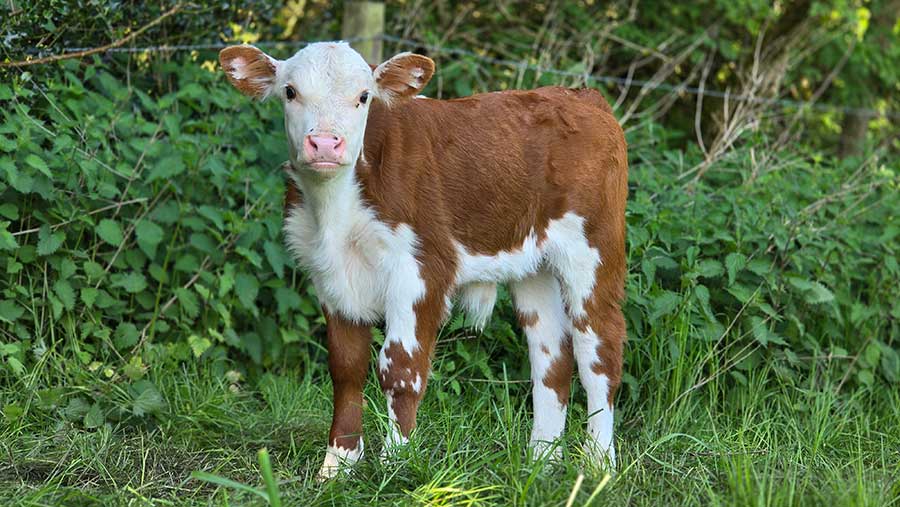
“Since we started vaccinating in late 2024, we haven’t had a single case of scours — not even milk scours — and we’ve had zero calf losses post-calving. It’s made a huge difference,” says Ollie.
© MSD Animal Health
Cryptosporidiosis in suckler herds
Although cryptosporidiosis is often associated with dairy units, Jon says it is not uncommon in beef herds.
“The movement of calves from dairy farms to suckler systems — to foster or replace dead calves — can be a route in, or lapses in biosecurity.”
He stresses that once cryptosporidiosis is present on a unit, it’s almost impossible to eradicate it for good. But effective control is possible through vaccination, hygiene, and colostrum management.
“With beef calves worth £500, spending money on a vaccine is an easy decision,” says Jon.
Ollie knows that they’ll likely never be able to eradicate C. parvum from the farm but says, “We feel that with vaccination and husbandry changes we’ve now cracked cryptosporidiosis.
“It’s helping protect our calves — and it’s certainly not a problem you can bury your head in the sand about.
“There’s also a mental health element to consider when you see calves dying like we did. So, vaccination is a no-brainer for us.”
Ollie and Lucy are now working with Jon to achieve high health status through the Premium Cattle Health Scheme.
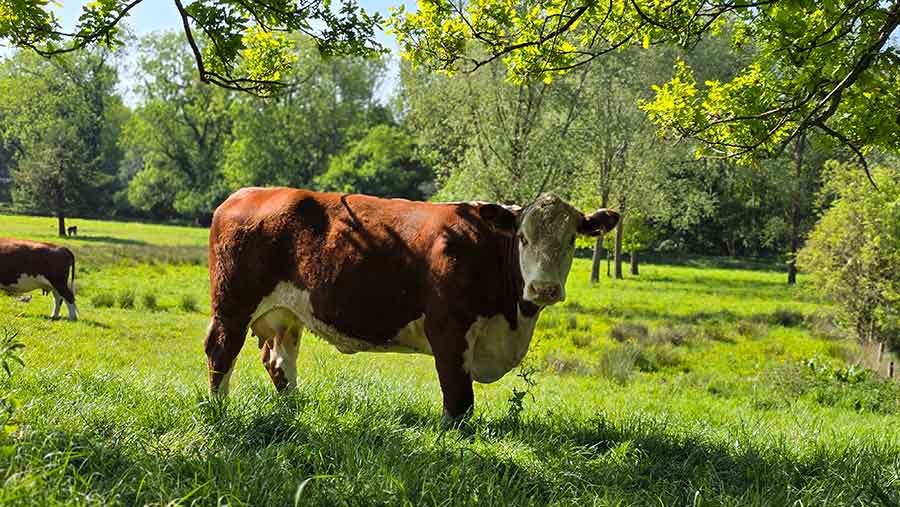
“With our land spread out, we see vaccination as an essential part of protecting our stock,” says Lucy. “We need our animals to be bulletproof.”
© MSD Animal Health
Find out more on MSD Animal Health’s youngstock range.
Farm facts
- Share farming agreement
- Calving 45 sucklers- 10 Herefords and the rest continental cross, but building back up to 30 Hereford cows
- 2 x stock bulls- Hereford and Blonde
- Some continental suckled calves sold through Thame Market in November, with the rest sold at 18- 20 months through market
- This year, 20 cows calved inside in Jan/Feb and 25 outside in May.
How vaccination works
- Bovilis Cryptium® is the first and only vaccine licensed in the UK to reduce clinical signs of cryptosporidiosis in calves.
- It raises antibodies in the dam’s colostrum, providing passive immunity to the calf at birth via colostrum and transition milk.
- Administer two doses in the third trimester of pregnancy, 4–5 weeks apart, with the final dose at least 3 weeks pre-calving.
- Booster annually in subsequent pregnancies.
- Can be used alongside Bovilis® Rotavec® Corona for broader scour protection against rotavirus, coronavirus, and E. coli F5 (K99) and F41.
References
- MSD Vet Manual https://www.msdvetmanual.com/digestive-system/cryptosporidiosis/cryptosporidiosis-in-animals
Provided by
MSD Animal Health, a division of Merck & Co., Inc., Kenilworth, NJ, USA, offers one of the industry’s most innovative portfolios, not only of products, but also of services and technologies, to prevent, treat and control diseases across all major farm and companion animal species.
We maintain commercial offices in more than 50 countries and business operations in more than 150 markets, and run a global network of manufacturing and R&D facilities.
Our mission – The Science of Healthier Animals – guides all of our work. Healthier animals mean a sustainable food supply, protection for humans against diseases passed from animals, and longer, healthier lives for pets.
We understand that veterinary surgeons, farmers and pet owners face challenges that are wider, more complex and evolving faster than ever, not least being how animal health connects with our own.
We are committed to providing the products, technologies, services and insights to help meet their needs.
For more information see our website MSD Animal Health