

Advice on treatment for vaginal prolapse in ewes
 © Tim Scrivener
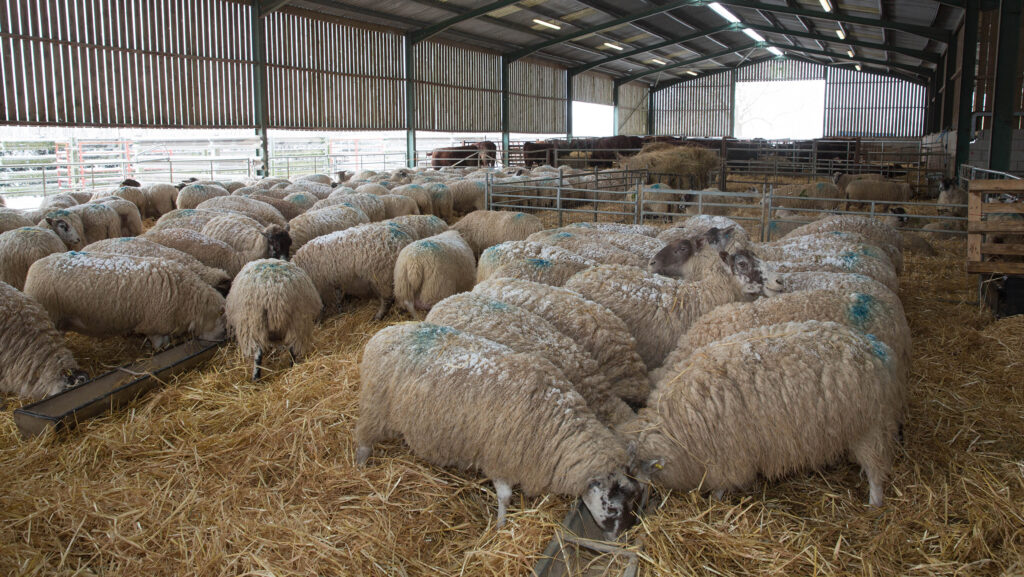
 Fitting a harness and administering anti-inflammatories is the best way to treat a very mild case of vaginal prolapse in a ewe.
Compared with spoons or sutures, this treatment is non-invasive, gives comfortable support and is easily removed at the first signs of lambing, according to vet Gina Rigby of Cross Counties Farm Vets.
“Contact your vet for advice in the first instance,” she said.
See also: Practical advice on reducing lamb losses from joint ill
“More severe cases will need the vet to give an epidural anaesthetic to stop the ewe pushing, while they replace the prolapse and give drugs if needed.”
Vaginal prolapse – where some or all of vagina is pushed out – is common in late pregnancy, and treatment must be prompt to reduce the risk of tissue damage and infection.
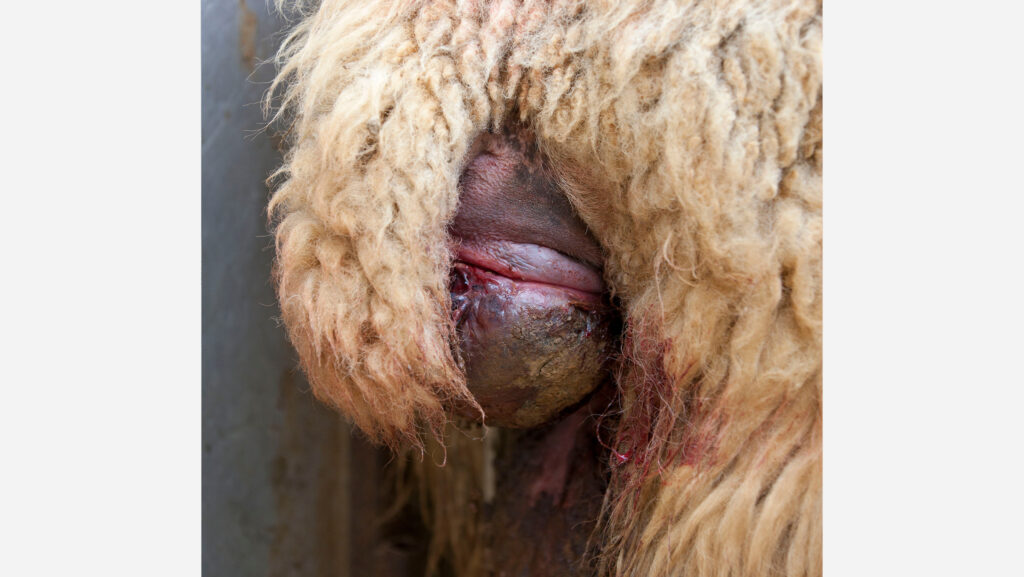
Vaginal prolapse must be treated promptly to reduce the risk of damage and infection © Tim Scrivener
The exact cause of this condition is not known, said Gina. However, there are risk factors:
- Excessive body condition
- Carrying multiple lambs
- A high-fibre diet (for example, root crops or lots of straw)
- Limited exercise in housed ewes
- Lameness – ewes are lying down more so there is more pressure on the gut
- Short-docked tails – the tail should cover the vulva to provide some support and pressure
- Sub-clinical hypocalcaemia.
Prevention
Adequate space in the lambing shed (1.4-1.8sq m a ewe at lambing), prompt treatment of lameness using foot-bathing and vaccination, and using pregnancy scanning data to ensure diets are correct will help limit these risk factors, she said.
“Watch carefully – these ewes are more likely to need assistance at lambing, as they will often prolapse again. And they are more at risk of abortion if infection has got in.
“Even once the prolapse has been replaced, keep a close eye because she’s more likely to have more issues – and cull before the following season, as she will likely prolapse again.”
Ewe body condition in the run-up to lambing
While excessive body condition is a risk factor for vaginal prolapse in ewes, attempting to adjust this in the final weeks of pregnancy is not advised.
“If you don’t think you’ve got it quite right, now’s not the time to panic and start underfeeding or overfeeding,” said vet Gina Rigby.
She adds that the aim should be to maintain body condition through the year.
“In the last six weeks, what you feed will help determine the birthweight of the lambs.
“So, feed to the number of lambs being carried in the last part of pregnancy, rather than to the condition of the ewe,” she explained.
“Don’t be tempted to be harsh on fat ewes, because that can lead to more problems than it will solve.
“Thin ewes are at risk of metabolic diseases, but trying to feed them too much in late pregnancy can lead to oversized lambs.”
Late-lambing flocks
However, it is safe to adjust body condition mid-pregnancy by about 0.5 score, so there may still be time for later lambing flocks to make corrections, she said.
For thin ewes, this can be done with additional forage, and concentrates if forage lacks energy and protein.
Fatter ewes can be put on poorer pasture to bring condition down a little.
“Bear in mind it takes about eight weeks to change body condition by 1 score, and this represents about 10% of ewe bodyweight, so it’s not a quick fix,” she pointed out.
Target body condition score at lambing
- Hill: 2.5
- Upland: 3
- Lowland: 3-3.5
Gina Rigby was speaking at an Rase Farm of the Future webinar on preparations for successful lambing.