

Farmer Focus: Calving reveals outcome of breeding decisions
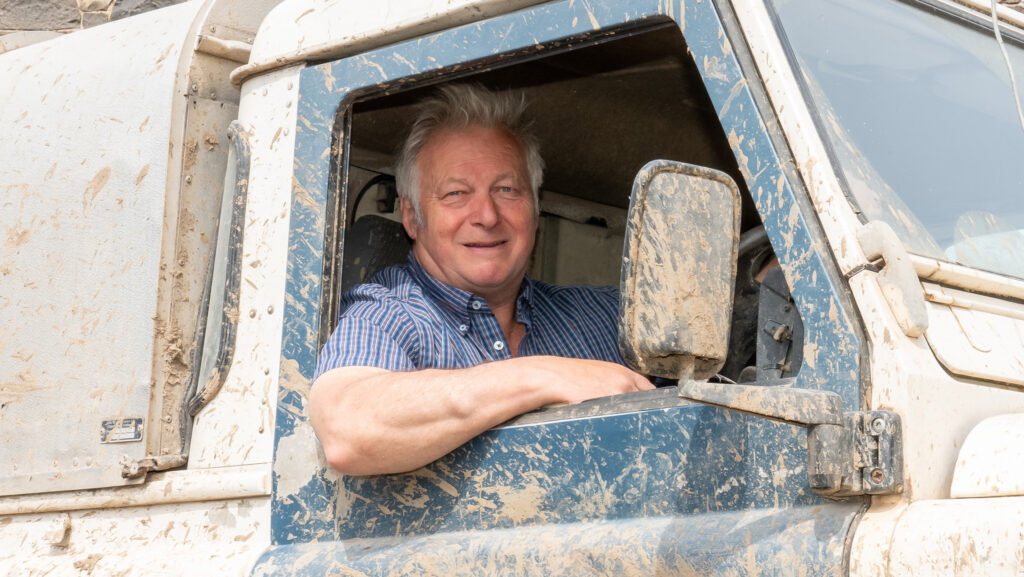 James Playfair-Hannay © Angus Findlay
 Calving and lambing have, on the whole, been going well. We have had a relatively mild winter and we have good grass growth for this time of year.
The ewes have produced some fairly large, strong lambs, despite having been on the hill since before Christmas.
See also: Benefits of annual testing for bull and ram fertility
About the author
And it has been very pleasing to turn cows with newborn calves straight out to the grass and not have to find forage to fill their bellies – a great bonus, as the silage clamp was emptying very quickly.
Last year, the grass didn’t grow until the end of May.
We expect to have 70% of the herd calved by 21 April, 200 cows and heifers (50%) have calved so far.
Now that the artificial insemination groups have virtually finished calving, our results make interesting reading.
Some 93 cows and heifers were synchronised for double inseminations and produced 53 calves.
One bull, the Australian Angus Texas Iceman, was used on nine cows, producing seven calves, all bulls.
Another bull, HW Mr Equilibrium, produced only three calves from the 16 heifers that were inseminated.
Our own Tofts Foremost Lord (whose semen was collected in Kelso and travelled to Devon by post to be processed by UK Sire Services) produced 10 calves from 11 matings.
We group our cows into their calving weeks to manage diets pre-calving, in the hope of controlling birthweights.
So far, our calves have been smaller than usual. However, the cows carrying the myostatin gene are producing considerably bigger calves.
These carriers appear to be the daughters of one bull and cows in two particular families.
The Shorthorns, on the other hand, are producing 50kg calves without myostatin.
The biggest calf yet was 63kg, yes, a Shorthorn out of an Angus that calved unassisted.
We will soon be semen testing the young bulls in preparation for sale, as we have a growing list of customers looking for Angus bulls this spring.
We will then weigh and pelvic measure the yearling heifers prior to turning out, to assess their suitability for breeding. Then it starts all over again.