

Farmer Focus: Dairy herd progress shaped by US study trips
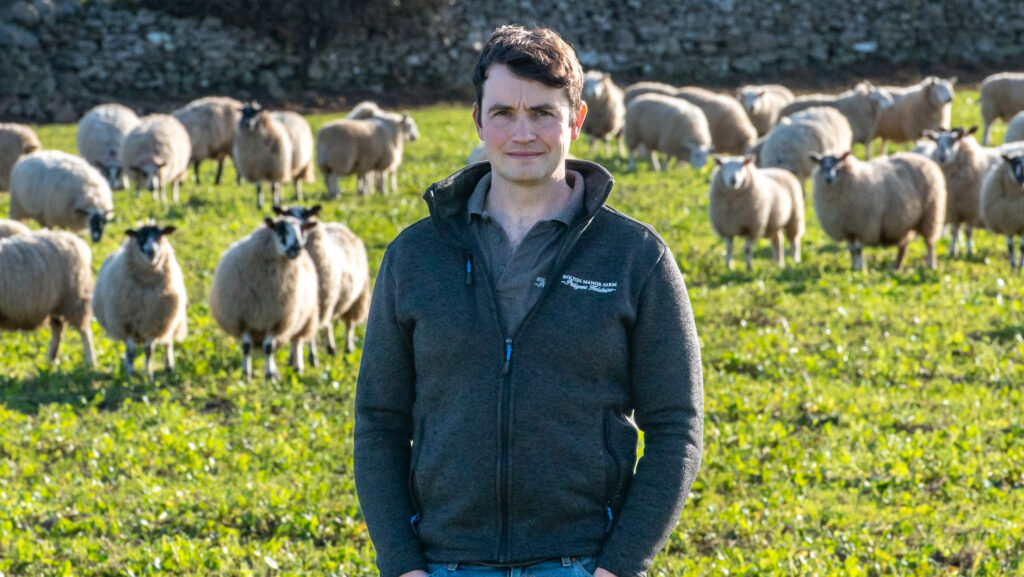 Tom Stable © John Eveson
 Spring doesn’t seem to know if it’s coming or going. We’ve had some glorious days, but never two together.
We’ve been spreading muck and ploughing ready for the maize, which we normally start the first week in April.
See also: 6 tips on delivering water for dairy cows
About the author

Making headway with the parlour has been equally slow: the first part – the slurry store – really needs some good ground conditions to begin.
Hopefully, by the time next time I write, we will have made some concrete progress.
In early March, I travelled to the US with Cogent to visit farms in Ohio and New York state. The trip included visits to 11 farms, the Cayuga Dairy site and Cornell University.
It’s 10 years since Anna and I were lucky enough to travel over there and, with the projects going on at home, I thought a refresher would be useful.
I didn’t realise how much our previous visit had shaped the changes Anna and I have made: sand bedding in cubicles, maize, three-times-a-day milking and stricter fertility protocols.
In certain aspects, we’ve managed to match the performance they are achieving out there.
Since our last visit, a lot of the farms have actually reduced the amount of milk they are selling a cow, but increased the kilograms of solids substantially.
The level of ambition was staggering, but it’s difficult to tell how much increase this will result in, or whether it’s just cows moving from one state to another.
The in-vogue places to milk cows 15 years ago (California and Texas) are fighting a shortage of water.
The ambition was clearest in the fantastic students we met at Cornell.
One was planning on returning home shortly, where they milked 8,000 cows; his dad had started with 200.
This student was adamant that he needed to increase the herd 40-fold, like his dad, to be able to call himself a success.
Another student, Tex, had a 60-point rotary just for milking his mastitis cows, and argued they weren’t big farmers because their neighbour milked 200,000.
I thoroughly enjoyed the trip and it gave me plenty of food for thought.
I’d like to thank Craig Watson and Kevin Ziemba for putting together a great itinerary and keeping us thoroughly entertained, and to Anna, my dad and the team at home for covering for me while I was away.