

Farmer Focus: Farming skills fêted at long-service awards
 © Angus Findlay
 Since I last wrote, a great deal has happened.
The Stirling Bull Sales, which I unfortunately missed, proved highly successful for both Aberdeen Angus and Beef Shorthorns, reflecting the buoyant beef trade.
See also: How to make sure suckler cows produce top-quality colostrum
About the author
I did, however, attend the NFU Scotland AGM in Glasgow, where the Scottish government pledged further support for agriculture over the coming years.
In uncertain times, that commitment provides a welcome degree of reassurance for the industry.
The Border Union Agricultural Society hosted a long-service awards lunch in partnership with the Royal Highland Agricultural Society of Scotland.
Silver medals and certificates were presented to those who have worked on the same farm or business for more than 30 years, with gold medals awarded to individuals reaching 50 years or more.
The stories shared and the breadth of experience represented were fascinating.
The skill sets these individuals have developed, whether in machinery, technology or livestock husbandry, are remarkable, particularly given the pace of change over the past half-century as our industry continues to adapt to feed a growing nation.
Their loyalty and dedication are truly deserving of recognition.
My wife and I also managed to fit in a short holiday to Barbados.
A small Caribbean island of roughly 20 miles by 10 with a population of about 285,000, Barbados imports much of its food and there seemed to be almost as many Waitrose outlets as we have in Scotland.
Sugar cane remains the dominant crop, alongside some tobacco, bananas and a limited amount of vegetables.
There appeared to be a considerable area of good land not currently in production.
Given the island’s warm, damp climate, I think there would be significant potential to grow more fruit and vegetables.
There were some farm animals to be seen, including Red Poll cattle and Barbados Black Belly sheep, a hair sheep. All pigs and poultry appeared to be housed.
Back on the farm, the cows are now housed in preparation for calving from 1 April.
Vaccinations for bovine viral diarrhoea are complete, along with treatments for lice and ticks.
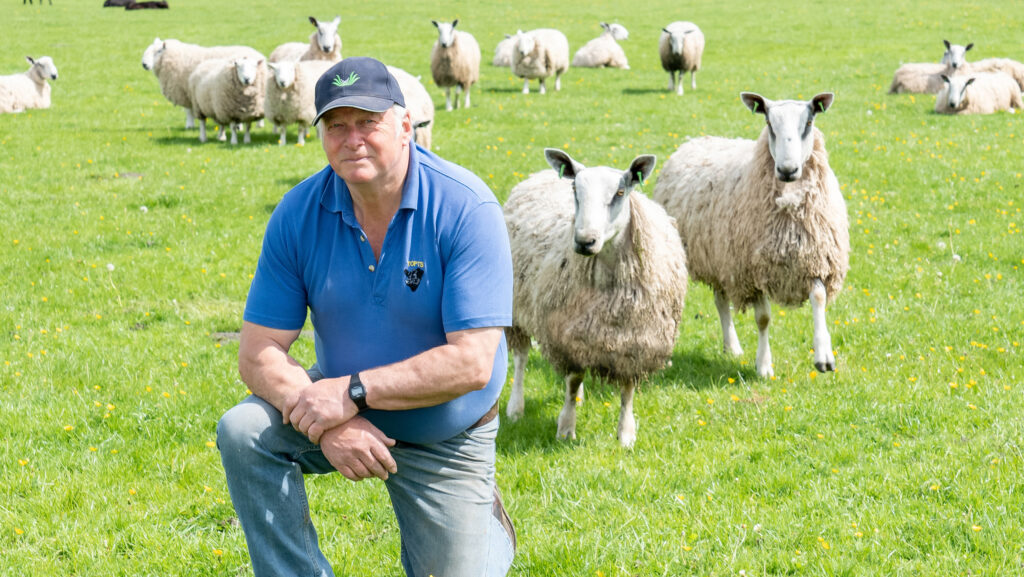
Lambing preparations are also well under way. Scanning results are slightly down, largely due to there being fewer triplets this year – but that may prove no bad thing in terms of workload.
Hopefully, spring is on its way.