

Farmer Focus: New baby and new bull lift winter gloom
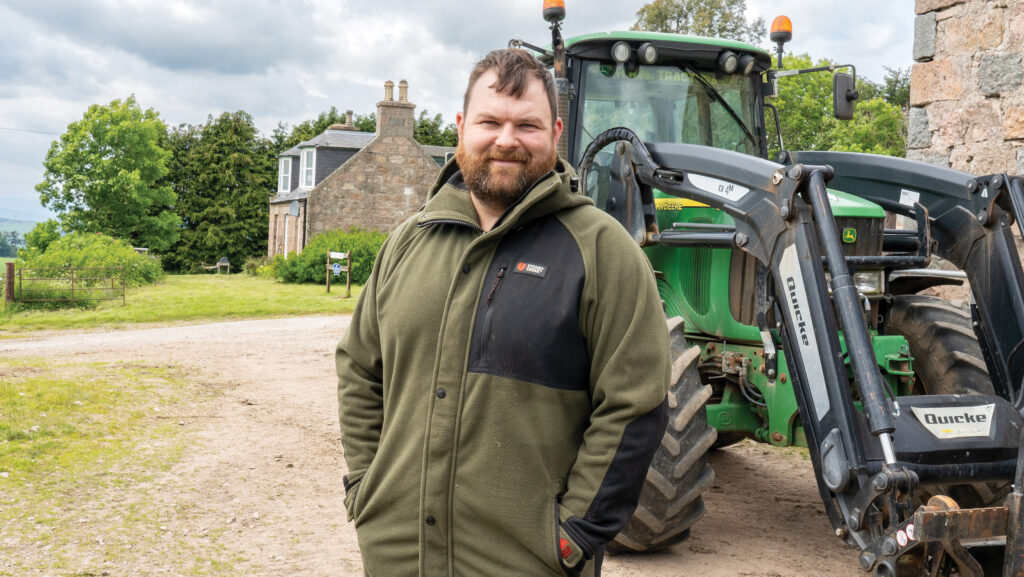 Duncan Morrison © Angus Findlay
 It’s been very, very wet. Since my last article, we have had the worst six weeks of winter weather I can remember for a long time.
The first days of January saw us get 90cm of snow followed by high winds, which created some pretty impressive drifts.
It lay for a fortnight, then it started raining on ground already sodden from the thaw.
See also: How to select a stock bull to breed herd replacements
About the author

Our nearest weather station has recorded more than 300mm of rain for the year, as I write, which equates to roughly one-third of our annual rainfall in little over a month.
The snow also caused the roof of a feed shed to collapse, which was as unexpected as it was disappointing.
The silver lining to that particular cloud is that, hopefully, it is an opportunity to replace it with something better and perhaps look at some other developments while there are shed builders on site.
We had some fences squashed by drifts too, so there will be some repairs needed before the spring.
It has not all been bad though, as we welcomed our second child in mid-January.
Thankfully, he was nine days late – had he been born on the due date, he would have been brought home from hospital through the snow drifts in the tractor.
We have also recruited a new Aberdeen Angus stock bull for the pedigree herd. Finding a stock bull that suits our criteria can be difficult, so I am delighted with our purchase.
He has tremendous feet and legs and moves smoothly. A thick and masculine bull, with lots of natural fleshing, should mean he breeds calves that suit our low-input system.
The past six weeks of weather are a prime example of why we need stock that are adapted to our system, and natural fleshing ability is key.
I was privileged to be asked to speak at a conference in Northern Ireland recently about how focusing on genetics improves profitability on our farm.
My talk centred on breeding stock that suit your farm and system, eliminating problems where possible, focusing on output a hectare rather than topping the market, and how meeting relevant KPI targets equals money in the bank.
While browsing a bull sale catalogue, I found a quote by E. James Rohn that seemed apt:
“Success is neither magical nor mysterious. Success is the natural consequence of consistently applying basic fundamentals.”