

Farmer Focus: Pig price has hit us harder than fuel crisis
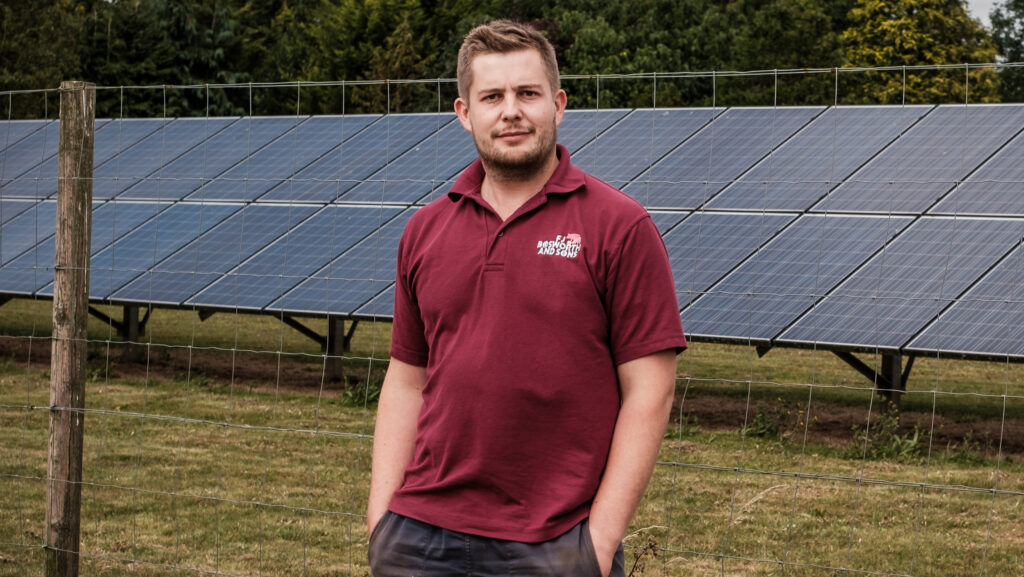 Jack Bosworth © MAG/Colin Miller
 It has been a busy few weeks since my last piece – and the contrast between ground conditions from then to now is staggering.
I was rather frustrated that we had been unable to achieve much in terms of tractor work with it being so wet, and yet here we are now desperate for a drop of rain.
See also: Ways two pig units build and develop their staff teams
About the author

Spring barley is in, nearly all the slurry is on, T0 fungicides on wheat are done, T1s on barley are done and most of the fertiliser has been applied.
On the topic of contrasts, we have recently undertaken our year-end valuation for our accounts.
While nearly everyone will be aware of the difference in fuel price, particularly its movement in the past seven weeks, there will be very few people looking at movement in pig pricing.
But the impact of this over the past 12 months is of far greater effect on our valuation.
Despite the headcount being similar to this time last year, the value of the herd is down by about 13%.
I think this probably isn’t covered enough, because although pricing has fallen over the past year, it is still far more attractive than where the standard pig price (SPP) has been over most of the past 10 years.
In fact, current pricing is up by more than 60% on this time of year a decade ago – but that shouldn’t mean we leave it at that.
We really need to see it head back towards the highs of mid- to late 2023, given how other costs have increased in that time, including buildings, labour, machinery and transport.
Back in April 2016, about 80,000 pigs were in the sample that fed into the SPP, at an average weight of about 85kg.
The sample is down to about 50,000 pigs and, although they are at a much higher weight of about 95kg, there is still 30% less weight in the sample, which may or may not relate to my understanding that there are fewer pigs in the UK than there were 10 years ago.
If that is the case, surely that indicates that what the UK pig industry has endured since 2016 has averaged out as being a case of surviving rather than thriving.
And that suggests there is still plenty of work to be done about pig pricing in relation to cost of production.