

Farmer Focus: Pig tent moves perfected with telehandler
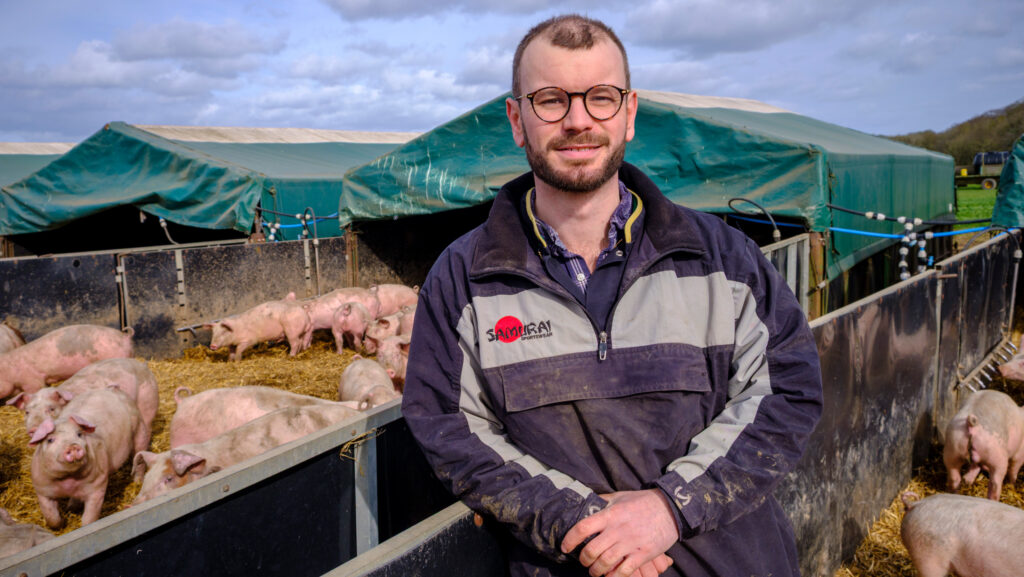 William de Feyter © Jason Bye
 The last of the store pigs from our outdoor unit left in the early part of the week with a much higher-than-expected average weight of nearly 50kg.
This was pleasing after a challenging batch, but it also meant the start of my least favourite job: moving the 35 tents and associated equipment ready for the washing contractors.
See also: Farmers Weekly 2024 Awards: Pig Farmer of the Year finalists
About the author

Effectively moving a farmyard every 10 weeks – albeit only 20m – is no small feat, but the operation has become quicker and more efficient since we started pig farming in 2022.
My wife, Sarah, takes charge of moving tents and patiently drags them into a perfect straight line with the telehandler.
I am usually sent to a far corner of the field out of the way, as my unique form of semaphore is seen as more of a hindrance than a help.
Thankfully, as we have also been lambing, I had a good excuse not to be there, for which I am sure she was grateful, much to the amusement of our staff.
The tents will be filled again in the first week of April, which will come around quickly.
Using contractors to wash and disinfect them, rather than our own staff, allows the team to have a quieter time after a fortnight of early starts loading pigs.
It’s also a chance to give our machinery a good going over between batches, which in the past has helped avoid frustrating breakdowns at critical times.
Lambing has been relatively straightforward, with less than 5% of the ewes requiring assistance, and we should be finished by April.
We scanned at 170%, with very few triplets – much to the disappointment of a friend’s daughter who rears our surplus lambs and, as a result, has built a little flock of her own over the years, which is great to see.
This is the first year we have fed barley straw to the ewes in place of hay.
It was not a decision taken lightly, but buying in extra hard feed was cheaper than buying in hay to feed to the ewes and meant we could maintain a continuous supply of hay to our long-standing livery yard customers.
It is likely that we will still run out of hay for them, but with spring upon us the grass is starting to grow.