

Farmer Focus: Price fall and dog walkers limit lamb cheque
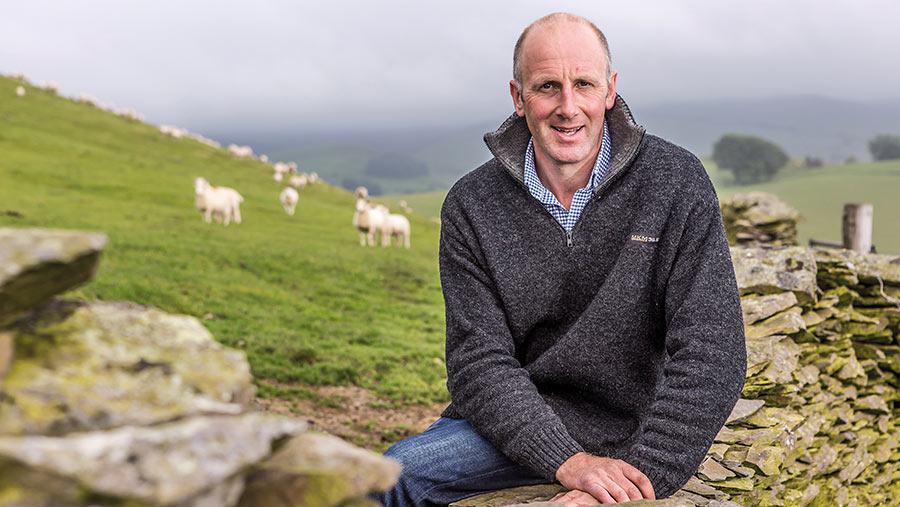 © Richard Stanton
 Here in mid-West Wales, we’ve just had enough rainfall to keep the grass growing slowly for most of the summer.
During the recent warm weather in mid-August, we had two fields harvested as second-cut red clover silage, which was made into big bales.
About the author

The conditions were ideal early the week before, but extreme heat was forecast later that week.
We find red clover prefers to be wilted slowly in the heat, but we try and avoid the burning sun, as the leaf turns black, which presumably leads to quality being lost.
See also: New red clover trial reveals positive effects on ewe fertility
If the analysis is favourable, this will be ideal for ewes leading up to lambing, and will save us a fortune on organic concentrates.
We’re aiming for 30-35% dry matter (DM), and an additive was used to help with the ensiling process.
Lambs have been fattening, and a few loads have been leaving the farm every month. We are very disappointed that the price went into freefall in mid-July.
We had a few loads go in late June/early July, coinciding with weaning. One load was from the singles, and one was from the twins, located away from the farm.
From the report we had from the abattoir, there were no health issues whatsoever with these.
The third load was from the young ewes, and according to the abattoir’s report, one in five of them had Cysticercus ovis – caused by tapeworm – leading one lamb to be fully condemned.
This condition is caused by picking up worms from dog faeces.
Coincidentally, the lambs were grazing in fields with a very popular footpath passing through.
We’ve had cases before, but never had so much evidence that there is a direct connection to the path.
We’ve got a sign on the entrance gate, warning dog owners not to let their dogs foul this area.
But we will need to increase signage on all path-related gates, and may even provide small plastic bags to encourage dog owners to pick up their litter.
I would like to congratulate my friends – many of them local farmers – for completing a gruelling 250-mile bike ride from Holyhead in north Wales to Cardiff Bay, in late August. This raised £36,035 at the latest count for the chemotherapy unit at Bronglais hospital in Aberystwyth.
Da iawn chi hogie (well done, boys).