

Farmer Focus: Rising costs prompt renewed efficiency focus
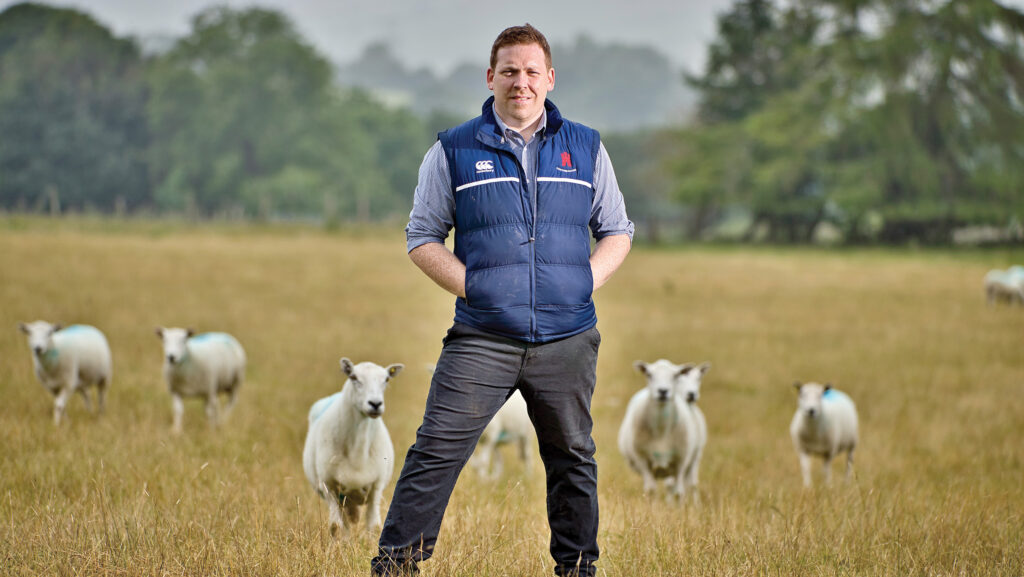 Joe Mault © Richard Stanton
 I’m writing this article on my phone in the lambing shed, waiting for a ewe to deliver her second lamb.
I prefer to let ewes lamb naturally with minimal intervention, though that approach can quickly change when it’s 3.30am and I want to get back to bed.
See also: Purpose-built hut reduces lambing intervention on mixed farm
About the author

We’ve been lambing the main flock for about a week now.
There were a few early setbacks, with some lambs arriving too soon and a couple of difficult cases involving hernias.
These sorts of challenges are never easy, and we tend to see most of them at the start of the lambing season – maybe because we are still finding our feet.
Our twin-bearing lowland ewes lamb indoors, while the rest of the flock stays outside. Long gone are the days when everything was indoors.
The shift towards outdoor lambing is part of a broader effort to reduce inputs and labour.
Over the past five to 10 years, cutting costs and improving efficiency have been a key focus.
Recent global events, including the war in Iran, have only reinforced the importance of this approach.
Unless you’re running an extremely low-input “dog and stick” system, most farming businesses are vulnerable to external pressures that squeeze already tight margins.
Despite our efforts to stay efficient, rising diesel and fertiliser costs will inevitably affect us, particularly as we prepare to plant our wholecrop and reseed clover.
Producing our own protein remains a priority, but it comes with increasing financial challenges that we must learn to manage.
We’ve also just come through Storm Dave. While we avoided the heavy rainfall seen in other areas, the strong winds blew off several skylights from the sheds, which is far from ideal at this busy time of year.
The fields are still too wet for ploughing, although they are beginning to dry out. I’ve seen some in the Vale of Clwyd start to plough, as conditions are good.
We’re keen to get out and spread muck as soon as conditions allow.
It’s an important step to kick-start grass growth and reduce our reliance on artificial fertiliser if we can.
For now, though, the focus remains on the lambing shed and this ewe, who looks like she might not keep me waiting much longer. Now where are my dog and stick?