

Farmer Focus: Three cattle dead after hare-coursing havoc
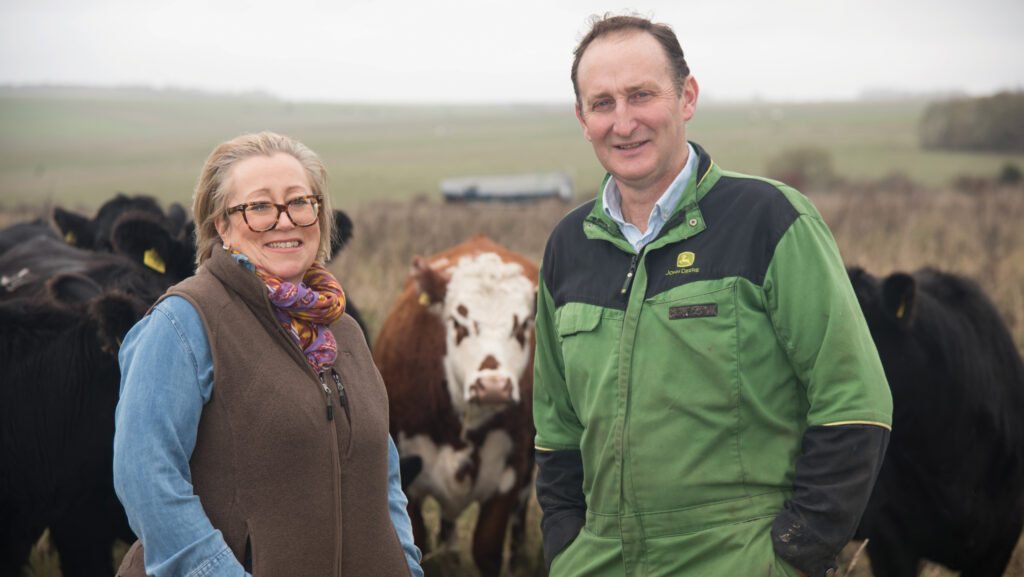 Catherine and Dan Mercer © Hugh Nutt
 Salisbury Plain’s unique landscape, with its wide-open chalk grassland stretching on for miles, is frequently used by members of the public.
However, not all of the visitors are welcome – and the most dreaded of all are hare coursers.
See also: Hare coursing surge in Wiltshire sparks police crackdown
About the author

Hare coursers are the bane of our lives, and they travel great distances to wreak havoc.
Having to deal with them on a regular basis is exhausting and a constant battle.
The most recent incident affecting us happened just before Christmas, when one of our worst fears came to pass.
A group of our young Angus stores got out on to the main road in the middle of the night.
Hare coursers had driven through their electric fence and three were subsequently hit by a passing car.
Their injuries too significant to survive, they sadly had to be euthanised on the spot.
By good fortune, most of the group made their way back towards home.
We eventually located the remaining cattle the following afternoon in our neighbour’s field.
Confronting these criminals while in the act is dangerous and just not worth the risk.
The police do what they can, but the resources just aren’t there to deal with the problem.
With the worry of it happening again over the festive period, we moved that group back to the yard.
With all the store cattle in the sheds and only the sucklers outside, the Christmas period feeding routine was an easy one.
Having good farming neighbours is a blessing, and thankfully we were lucky enough to have had their help that night.
Working together is essential and we always try to help each other out, whether it be assistance during bovine TB testing, moving cattle or lending an extra pair of hands during harvest.
Maintaining good working relationships and friendships is invaluable.
Next month we are TB testing, a task that no one relishes but unfortunately must be done.
The suckler cows will come back in the yard shortly in preparation for this.
They will remain there until they have calved in March, when they will return to grass with their calves.
Last spring was so dry that some of the calves born then never felt any rain on their backs until late last year.