

Farmer Focus: Turnip fields drying out to finish store lambs
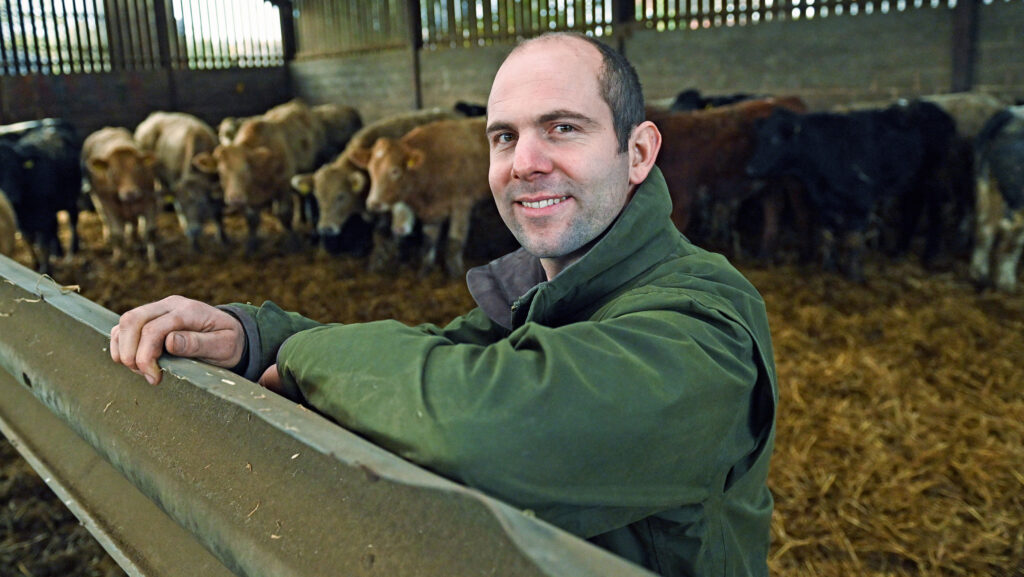 Dan Phillips © Richard Swingler
 Spring has arrived, and after such a prolonged wet winter, it couldn’t be more welcome.
I even managed to apply 125kg/ha of polysulphate to the oilseed rape before the end of February, with fields travelling better than expected.
Crops seem to be coming out of the winter well, which is pleasing given the amount of time they have spent sat in waterlogged soils.
See also: Farmer Focus: Biochar in broiler bedding on test
About the author

Good autumn establishment and strong root structures appear to have carried crops through, when in other years we may have seen oilseed rape and wheat dying off after such wet weather.
The drier weather has also been very timely for the store lambs.
Turnip fields were being trodden into the ground faster than we could move the electric fences, and we would have been in a tight spot had it not dried up.
We have been selling a few lambs each week, so as to free up shed space once groups have finished the fields of turnips they are on.
But our aim is to hold onto as many as possible, ready to sell in the weeks preceding the Eid festival, as well as Easter.
The better weather means the remaining patches of turnips should now last several weeks.
Trade has been lifting, with the last bunch sent to ABP averaging 22kg at £7.50/kg.
That leaves a workable margin, and I expect there will be a sharp rise towards the end of March that we can take advantage of.
Previously, I have written about the biochar trial we were undertaking in the broiler houses, mixing biochar with straw pellets to hopefully improve litter quality and bird welfare, and reduce ammonia emissions.
The trial has now finished and, unfortunately, the on-farm results have not been positive.
We have seen a negative impact on litter quality, especially in the higher, 20% mixture, with early litter capping and higher than normal levels of footpad legions.
The practicalities of incorporating and spreading the biochar were also challenging, leaving a film of black ash on all surfaces, and making it a particularly dusty environment for the first few days.
Litter samples have been sent off for analysis to see if there is any difference in ammonia levels.
But unless analysis shows a clear reduction in ammonia that would outweigh the on-farm drawbacks, we will be unlikely to be using biochar in future.