

Farmer Focus: Waste fruit and veg nothing new to pigs
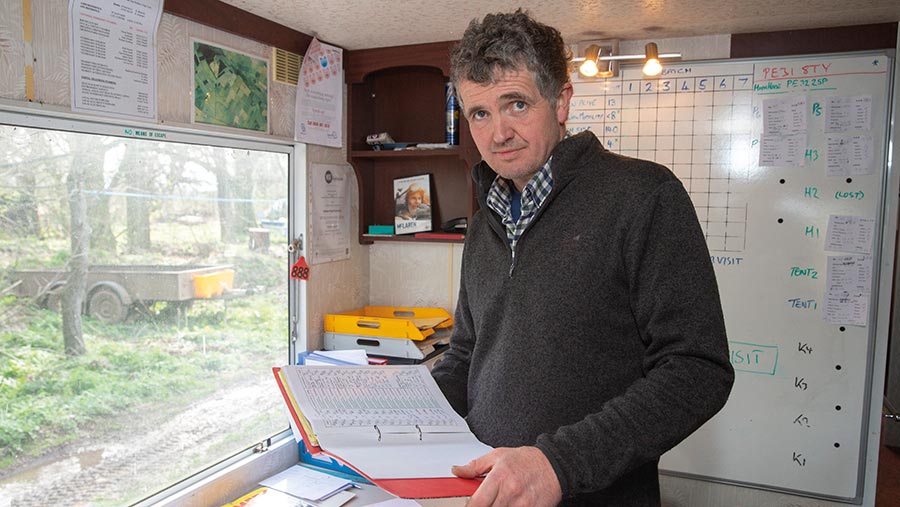 © Tim Scrivener
 I’m on holiday in a beautiful corner of rural Dorset. The hamlet is sandwiched tightly between Devon and Somerset, so I have three great farming counties to explore for the price of one.
My temporary abode is a traditional stone cottage on a small stock farm.
Alongside the cottage is an orchard full of fruit-laden trees, and next to that is a large pig pen where presently three friendly Tamworth-cross gilts reside.
My wife is taking some convincing that I had no knowledge of the porcine neighbours when our accommodation was booked.
See also: 7 ways to minimise heat stress in outdoor pigs
About the author
I take a trip to the orchard for an apple off a tree and an audience with the three pigs each morning.
By the time I arrive, the pigs are usually tucking into a breakfast trough of windfall apples and meal.
It’s an age-old practice that sees surplus or soiled produce fed, whether it be apples, root crops or green leaf tops.
By strange coincidence, while I’ve been away, back home in Norfolk a feed trial feeding ensiled beet pulp to a batch of sows has started.
Back in spring, just before the beet factories closed for the summer, we took delivery of 60t of wet beet pulp, packed by contractors into an Agbag sausage.
Facilities on farm were not ideal for the delivery or the subsequent handling of the pulp.
The stuff was very reluctant to leave the bulkers, even when fully tipped up. Things got messy, but eventually the bag was filled, sealed up and left to pickle.
Since then, we have acquired a Keenan Klassik feed wagon with a high side discharge shoot, which, after a few alterations, is now ideal for mixing and delivering the ration into our long troughs over the electric fence without any paddock changes.
The beet pulp is being mixed with a balancing ration (five parts beet pulp to four parts balancer), but as the trial progresses, that could well be adjusted.
Each sow is being fed 4.7kg a day (but this will change). It’s an interesting project to be involved with and one that, to my mind, has a lot to offer.
But, as my Dorset break has reminded me, this is nothing new – we are simply finding fresh ways of doing what others have done successfully for centuries.